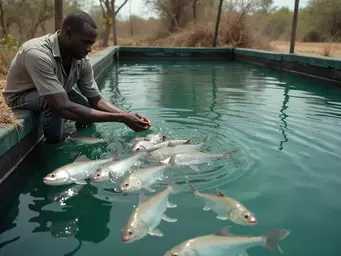
Mozambique Tilapia: Species Profile, Biology, and Farming Guide
Posted on: 2025-11-16
By: Yomi Adisa
When you're evaluating species for your African fish farm, Mozambique tilapia (Oreochromis mossambicus) deserves serious consideration—not because it's the fastest-growing tilapia, but because it might be the most forgiving.
This hardy cichlid has built its reputation on surviving where other species struggle, making it particularly valuable for farmers dealing with challenging water conditions or limited resources.
This comprehensive profile examines everything from its distinctive breeding colours to its remarkable salinity tolerance, helping you understand whether this adaptable species fits your farming objectives.
In This Guide
- → Introduction: The Importance of Mozambique Tilapia in African Aquaculture
- → Species Identification of Mozambique Tilapia
- → Biology and Natural Behaviour of Mozambique Tilapia
- → Reproduction and Life Cycle of Mozambique Tilapia
- → Farming Considerations for Mozambique Tilapia
- → Comparing Mozambique Tilapia to Related Species
- → Conclusion: Key Takeaways for Farmers Considering Mozambique Tilapia
1. Introduction: The Importance of Mozambique Tilapia in African Aquaculture
Mozambique tilapia occupies a unique position in African aquaculture—it's the species many farmers turn to when conditions aren't perfect for Nile tilapia.
Across the continent, from Nigeria's brackish coastal ponds to Kenya's alkaline waters, this species has proven its worth through consistent performance rather than spectacular growth rates.
Your choice of Mozambique tilapia makes particular sense if you're working with variable water quality, limited infrastructure, or marginal sites.
Unlike some aquaculture species that demand precise conditions, this fish adapts to what you can provide. That adaptability translates directly into lower risk and more predictable returns—crucial factors for small- to medium-scale operations.
The economic significance extends beyond individual farms. In regions like Tanzania and Mozambique, this species supports thousands of farming families whilst requiring minimal external inputs. Its tolerance for poor water quality and ability to utilise natural food sources make it accessible to farmers who might otherwise struggle with more demanding species.
2. Species Identification of Mozambique Tilapia
![]()
2.1 Scientific Classification
You'll find Mozambique tilapia listed under several names in different contexts, but the scientific designation remains constant: Oreochromis mossambicus (Peters, 1852). This species belongs to the family Cichlidae, specifically the subfamily Pseudocrenilabrinae, which includes all the commercially important tilapias.
Common names vary across regions—you might encounter "tilapia du Mozambique" in francophone Africa or simply "Mozambique tilapia" in English-speaking countries. Understanding these naming variations helps when sourcing fingerlings or discussing the species with other farmers and suppliers.
The species sits within the Oreochromis genus alongside Nile tilapia (O. niloticus) and Blue tilapia (O. aureus). These relationships matter because hybridisation between species occurs readily, sometimes producing offspring with characteristics different from pure strains.
2.2 Distinguishing Physical Features
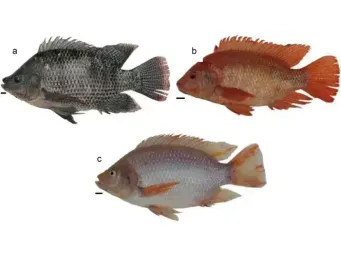
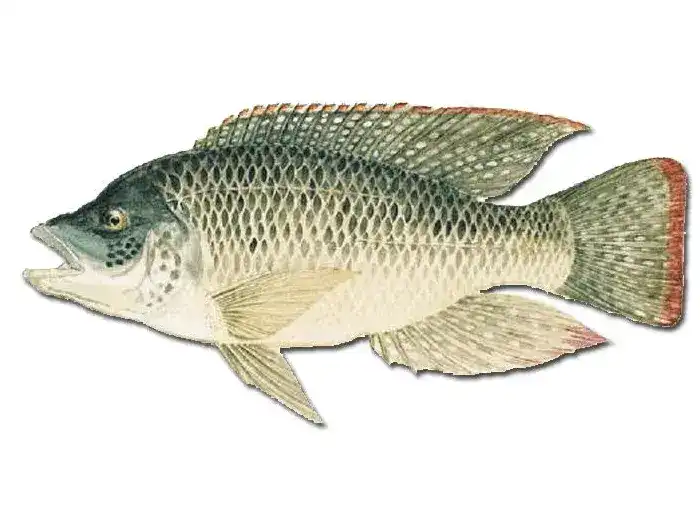
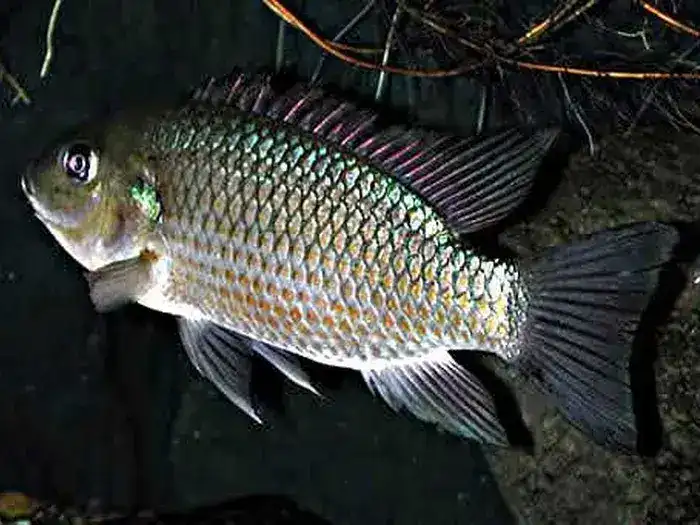
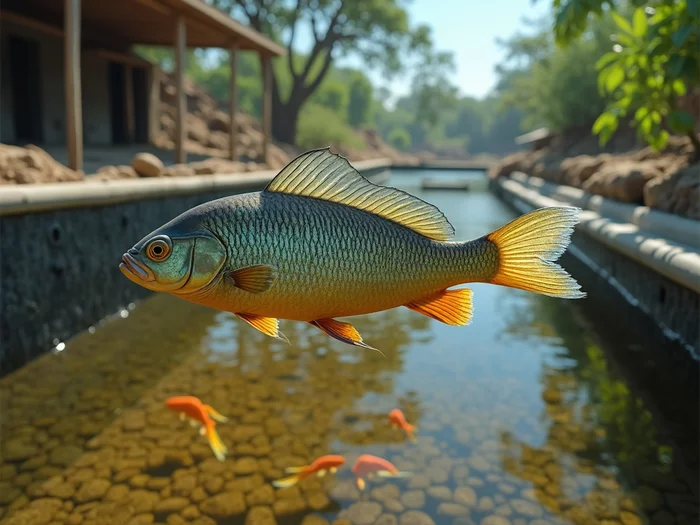
Recognising Mozambique tilapia requires attention to specific colour patterns and markings that distinguish it from related species. The basic body colour ranges from grey-green to blue-grey, with 2–5 dark blotches running along the mid-side of the body.
During breeding season, males undergo dramatic colour changes that make identification straightforward. Breeding males turn jet black with brilliant blue lips, a white lower head, and distinctive pink edges on both dorsal and tail fins. These colours serve as territorial and mating displays—understanding this helps you identify peak breeding condition in your broodstock.
Juveniles display different markings: 6–7 vertical bars across the body plus 3 spots on the flank and a characteristic dark spot at the base of the front soft dorsal fin rays. These juvenile markings fade as fish mature, typically disappearing by the time they reach 100–150g.
The fin structure provides additional identification markers. Count XVI spines in the dorsal fin and look for 17–18 simple lower gill rakers—these counts help distinguish Mozambique tilapia from other species when colour patterns aren't clear.
2.3 Size and Body Structure
Mozambique tilapia reaches a maximum length of approximately 40–50 cm under optimal conditions, with market-size fish typically weighing 300–500g at 6–9 months. In exceptional cases with excellent nutrition and management, individuals can approach 1.5–2 kg, though such sizes are uncommon in commercial operations.
The body structure reflects the species' adaptability. The laterally compressed form provides efficient swimming in various water depths, whilst the robust build indicates tolerance for crowded conditions. Fine teeth on the throat plate (pharyngeal teeth) reveal the omnivorous feeding strategy—these teeth can process both plant material and small prey items effectively.
Body proportions tend to be slightly deeper than Nile tilapia, giving a more compact appearance. This structural difference affects stocking calculations—you can typically stock Mozambique tilapia at similar densities to Nile tilapia without adjustment.
3. Biology and Natural Behaviour of Mozambique Tilapia
![]()
3.1 Habitat Preferences
In its native southeastern Africa, Mozambique tilapia inhabits river systems like the Limpopo, demonstrating remarkable flexibility in habitat selection. The species naturally occurs in fresh, brackish, and hypersaline waters—a tolerance range that directly translates to farming advantages.
Natural habitats include shallow coastal lagoons, river estuaries, and inland freshwater systems. This diversity explains why the species adapts so readily to different farming environments. Whether you're working with freshwater ponds in Uganda or brackish systems along the Nigerian coast, the species' natural behaviour patterns support successful culture.
Depth preferences in nature range from very shallow waters (less than 1 metre) to depths of 10 metres. This flexibility means your pond depth isn't critical—the species performs well in shallow earthen ponds typical of small-scale African aquaculture.
3.2 Environmental Tolerances
Temperature tolerance represents one of Mozambique tilapia's strongest assets for African farmers. Optimal growth occurs between 25–30°C, but the species survives much broader ranges. The lower lethal limit sits near 10°C, whilst the upper limit approaches 38°C—margins that accommodate most African climatic conditions.
pH tolerance spans 6.5–8.5, covering acidic through alkaline conditions. This range includes most natural water sources across Africa, reducing your need for costly pH adjustment. The species actually shows preference for slightly alkaline conditions (pH 7.5–8.0), which coincides with productive aquaculture systems.
Salinity tolerance sets Mozambique tilapia apart from many freshwater species. The fish survives and grows in salinities up to 30 parts per thousand (ppt), with some reports indicating tolerance to hypersaline conditions. This capability opens farming opportunities in coastal areas where freshwater is limited or expensive.
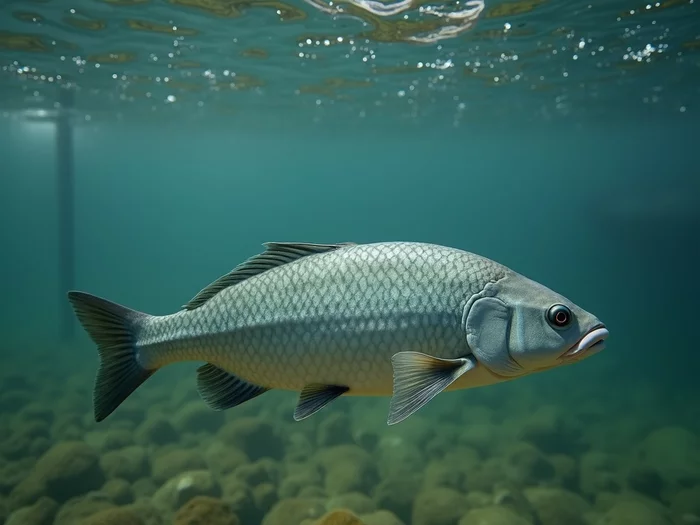
Dissolved oxygen requirements are modest—the species maintains good growth with levels above 3 mg/L, though optimal performance requires 5–6 mg/L. This tolerance helps during hot weather or equipment failures when oxygen levels might drop temporarily.
3.3 Feeding Habits
Mozambique tilapia's omnivorous nature simplifies feeding management whilst reducing costs. In natural environments, the species consumes algae, plant matter, detritus, and small invertebrates. This broad diet means your fish can utilise natural pond productivity effectively, supplementing whatever commercial feed you provide.
Feeding behaviour follows predictable patterns—most activity occurs during daylight hours, with peak feeding in early morning and late afternoon. Understanding these patterns helps you time feeding for maximum efficiency and minimal waste.
The species employs both filter feeding and grazing strategies. Fish will filter plankton from the water column whilst also scraping algae and organic material from surfaces. This dual approach means they utilise food resources other species might ignore, improving overall pond productivity.
In farming systems, optimal dietary protein ranges from 25–35% depending on fish size. Juveniles require higher protein levels (up to 35%) for rapid growth, whilst adults perform well on 25–30% protein diets. This flexibility allows you to adjust feeding strategies based on available feed ingredients and costs.
4. Reproduction and Life Cycle of Mozambique Tilapia
4.1 Breeding Behaviour
Sexual maturity arrives early in Mozambique tilapia—typically at 4–6 months under warm conditions (25–30°C). This rapid maturation can be advantageous for broodstock development but requires management to prevent unwanted reproduction in grow-out ponds.
The species exhibits classic mouthbrooding behaviour, with females incubating fertilised eggs in their mouths for approximately 12–14 days. This parental care strategy results in higher fry survival rates compared to species that scatter eggs, but it also means females don't feed during incubation, affecting their growth and condition.
Spawning triggers include temperature above 22°C and appropriate photoperiod. In tropical African conditions, this means year-round breeding potential, requiring careful broodstock management to control reproduction timing. Males establish territories and construct shallow nests in sandy or muddy substrates.
Courtship involves elaborate displays where males show their breeding colours whilst defending nest sites. Understanding these behaviours helps you design breeding systems and recognise when spawning is imminent.
4.2 Growth Stages
The life cycle begins with females releasing 100–500 eggs per spawn, depending on their size and condition. A 200g female typically produces around 200 eggs, whilst larger females (500g+) can produce 400–500 eggs per spawning event.
Egg incubation occurs entirely within the female's mouth, providing protection from predators and environmental fluctuations. Newly hatched fry remain in the mother's mouth for several additional days, emerging only when they've absorbed their yolk sacs and can feed independently.
Fry growth follows predictable patterns under good conditions. Newly released fry measure approximately 8–10 mm and weigh less than 0.1g. With adequate nutrition, they reach 1g within 4–6 weeks and 10g by 8–10 weeks.
Juvenile growth rates depend heavily on temperature, nutrition, and stocking density. Under optimal conditions (28–30°C, high-quality feed, appropriate stocking), fish can reach 100g in 3–4 months and market size (300–500g) in 6–9 months.
4.3 Lifespan and Size
In aquaculture systems, Mozambique tilapia typically lives 5–7 years, though most commercial operations harvest fish well before this age. Maximum size under optimal conditions approaches 50 cm length and 1.5–2 kg weight, though such large fish are uncommon in intensive culture.
Growth rates moderate after sexual maturity, as energy diverts to reproduction. This pattern affects production planning—you'll achieve best feed conversion ratios by harvesting fish before they begin extensive breeding activity.
Size at harvest depends on your market requirements and management intensity. Extensive systems might produce 200–300g fish in 8–12 months, whilst intensive systems with optimal feeding can achieve 400–500g in 6–8 months.
5. Farming Considerations for Mozambique Tilapia
![]()
5.1 Optimal Farming Practices
Water quality management for Mozambique tilapia focuses on maintaining adequate dissolved oxygen rather than precise parameter control. Target dissolved oxygen levels of 5–6 mg/L for optimal growth, though the species tolerates brief periods at 3 mg/L without significant mortality.
Feeding protocols should account for the species' omnivorous nature and natural feeding patterns. Provide commercial feed 2–3 times daily during daylight hours, calculating rations at 3–5% of body weight for juveniles and 2–3% for adults. Adjust feeding rates based on water temperature and fish response.
Stocking density calculations depend on your system intensity and management capability. Extensive pond systems work well with 2–5 fish per square metre, whilst intensive systems with aeration can support 10–20 fish per cubic metre. Higher densities require more active management but can significantly improve production per unit area.
Pond preparation should include adequate depth (minimum 1.5 metres) to buffer temperature fluctuations and provide refuge areas. Shallow areas (0.5–1 metre) support natural food production and provide breeding sites if you're maintaining broodstock.
5.2 Challenges and Solutions
Early sexual maturity creates management challenges in mixed-sex populations. Fish begin breeding at 4–6 months, diverting energy from growth and potentially overcrowding ponds with unwanted offspring. Solutions include sex reversal using hormones, manual sexing, or accepting lower individual growth rates whilst benefiting from natural recruitment.
Predation pressure affects fry and juvenile survival, particularly in extensive systems. Natural predators include birds, snakes, and other fish species. Mitigation strategies include covered nursery areas, adequate pond depth, and vegetation refuges.
Water quality fluctuations, whilst better tolerated than by some species, still affect performance. Monitor key parameters regularly and maintain backup aeration systems where possible. The species' tolerance helps during equipment failures, but consistent conditions produce better results.
Market size uniformity can be challenging due to individual growth variation. Grading fish during production and harvesting in multiple batches helps achieve more consistent market sizes.
5.3 Harvesting and Post-Harvest Management
Harvesting timing depends on target market size and seasonal demand patterns. Most markets prefer fish in the 300–500g range, typically achieved in 6–9 months under good management. Larger fish (500g+) command premium prices in some markets but require longer production cycles.
Harvesting methods should minimise stress and maintain flesh quality. Seine netting works well for partial harvests, whilst pond draining allows complete harvest with easier fish handling. Plan harvests during cooler periods (early morning) to reduce stress and maintain quality.
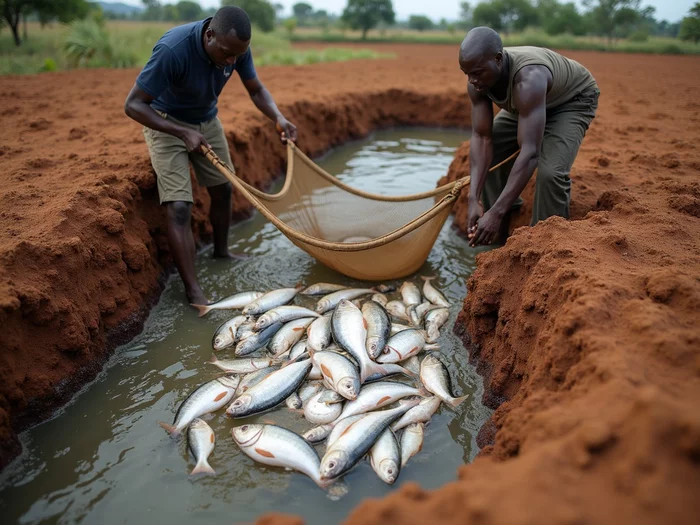
Post-harvest handling requires immediate cooling to maintain freshness. Ice slurry provides effective cooling, extending shelf life and maintaining market value. Processing facilities should be clean and well-ventilated to prevent contamination.
Marketing strategies should emphasise the species' eating quality and cultural familiarity where applicable. Direct sales to consumers often achieve better prices than wholesale markets, particularly for farmers near urban centres.
6. Comparing Mozambique Tilapia to Related Species
6.1 Key Differences with Nile Tilapia
Growth rate represents the most significant difference between these species. Under optimal conditions, Nile tilapia typically grows 10–20% faster than Mozambique tilapia, reaching market size in 5–7 months versus 6–9 months for Mozambique tilapia. However, this advantage diminishes when conditions aren't optimal.
Maximum size differs substantially—Nile tilapia can exceed 2 kg readily, whilst Mozambique tilapia rarely surpasses 1.5 kg in aquaculture systems. This difference affects market targeting, with Nile tilapia better suited for fillet markets requiring larger fish.
Environmental tolerance strongly favours Mozambique tilapia. Whilst Nile tilapia requires relatively stable freshwater conditions, Mozambique tilapia thrives in variable salinity, pH, and temperature conditions. This tolerance translates to more reliable production in challenging environments.
Feed conversion ratios are comparable between species under good conditions, but Mozambique tilapia maintains better FCRs when environmental conditions fluctuate or feed quality varies.
6.2 Advantages in Brackish Waters
Salinity tolerance gives Mozambique tilapia a decisive advantage in coastal aquaculture. The species grows well in salinities up to 15–20 ppt and survives much higher levels, opening opportunities where freshwater is scarce or expensive.
Brackish water culture often provides natural productivity advantages—higher mineral content supports plankton growth, reducing supplemental feeding requirements. Mozambique tilapia exploits this productivity effectively through its omnivorous feeding strategy.
Coastal location benefits include proximity to markets and potential integration with other marine activities. However, brackish systems require different management approaches, particularly regarding water exchange and salinity monitoring.
6.3 Regional Preferences and Introductions
Geographic distribution patterns reflect both natural occurrence and introduction success. In its native southeastern Africa, Mozambique tilapia remains the preferred species for many farmers due to local adaptation and market familiarity.
Introduction success outside Africa varies considerably. The species has established successfully in parts of Asia and the Americas, particularly in areas with variable water conditions or salinity challenges. However, growth performance often favours locally adapted species or strains.
Regional preferences depend heavily on local conditions and market requirements. Areas with stable freshwater and established Nile tilapia industries typically continue with that species, whilst regions with challenging conditions or specific market preferences may favour Mozambique tilapia.
Hybrid production combining Mozambique tilapia with other species creates opportunities to combine desirable traits. These crosses often exhibit improved environmental tolerance whilst maintaining reasonable growth rates, though breeding management becomes more complex.
7. Conclusion: Key Takeaways for Farmers Considering Mozambique Tilapia
Mozambique tilapia succeeds where reliability matters more than maximum growth rates. If your farming situation involves variable water quality, limited resources, or challenging environmental conditions, this species deserves serious consideration. The combination of environmental tolerance, modest input requirements, and consistent market acceptance creates a compelling package for many African aquaculture operations.
Your decision should weigh the species' moderate growth rates against its exceptional resilience. Whilst you might achieve faster growth with Nile tilapia under perfect conditions, Mozambique tilapia delivers more predictable results when conditions aren't optimal—a crucial consideration for risk management.
The species particularly suits farmers working with brackish water, limited freshwater supplies, or sites with fluctuating environmental conditions. Its ability to utilise natural pond productivity effectively reduces feed costs, whilst the straightforward breeding behaviour simplifies fingerling production.
Consider Mozambique tilapia as your primary species if you're starting aquaculture in challenging conditions, need a resilient backup species, or operate in markets where the species enjoys cultural acceptance. The modest growth rates are often offset by lower mortality, reduced input costs, and more predictable harvests—factors that frequently determine long-term farming success more than maximum possible growth rates.


Yomi Adisa Lead Researcher
Yomi Adisa is the lead researcher at Fish Farming Business, where he studies what makes aquaculture ventures profitable across Africa. His research focuses on market patterns, buyer preferences, and the business decisions that determine success or failure in fish farming.