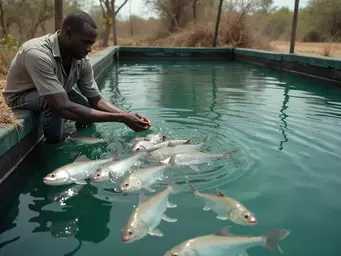
Top Profit Tips for Tilapia Farmers Using Aquaponic Systems
Posted on: 2025-11-24
By: Yomi Adisa
Table of Contents
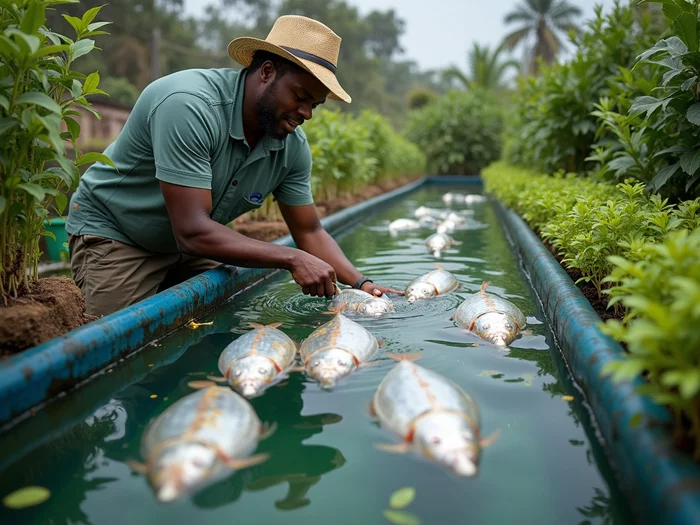
You've built your tilapia pond, stocked it with healthy fingerlings, and started feeding regularly—yet your fish keep dying unexpectedly. The water looks clear, the fish seemed fine yesterday, but this morning you're pulling out dead tilapia with no obvious explanation. This heartbreaking scenario plays out on farms across Africa, often destroying months of investment and hard work.
Disease outbreaks are one of the biggest threats to profitable tilapia farming, whether you're raising Nile tilapia or Blue tilapia. Poor water quality, overcrowding, and stress create perfect conditions for bacterial infections, parasites, and viral diseases to spread rapidly through your stock. Without proper prevention strategies, a single outbreak can wipe out your entire harvest.
This comprehensive guide teaches you how to prevent common tilapia diseases before they strike and manage outbreaks when they occur. You'll learn to recognise early warning signs, implement biosecurity measures, and use both natural and commercial treatments effectively. By the end, you'll have the knowledge to protect your investment and maintain healthy, productive fish throughout the growing cycle.
🎯 What You'll Learn
- Effective tilapia stocking and feeding strategies to maximise growth and profitability.
- How to set up and maintain an efficient aquaponic system for dual production of fish and vegetables.
- Key water quality management techniques to ensure a healthy environment for tilapia.
Tilapia Farming Techniques
You can have the best pond design and perfect water quality, but without proper farming techniques, your tilapia operation will struggle to turn a profit. The difference between successful and failing tilapia farms often comes down to three critical decisions: how many fish you stock, what you feed them, and when you harvest. Get these wrong, and you'll watch your investment swim away—literally.
Most new tilapia farmers make the same costly mistakes: overstocking because they want maximum production, feeding whatever's cheapest without considering nutrition, and harvesting too early or too late. These errors compound quickly in African conditions where temperatures fluctuate and quality feed can be expensive. A farmer in Kisumu lost KES 180,000 worth of Nile tilapia because he stocked 8 fish per square metre instead of the recommended 3-5, leading to stunted growth and high mortality.
Mastering these fundamental techniques separates profitable farmers from those who struggle. Here's how to optimise your stocking, feeding, and harvesting strategies for maximum returns from your tilapia operation.
Stocking Density and Species Selection
You need to stock 20-40 kg/m³ for Nile tilapia and 15-30 kg/m³ for Blue tilapia to achieve optimal growth rates without overcrowding stress. Higher densities might seem attractive for maximum production, but they lead to poor water quality, increased disease risk, and stunted fish that never reach market size. Your fingerlings need space to grow, and cramped conditions trigger territorial behaviour that wastes energy on fighting instead of growth.
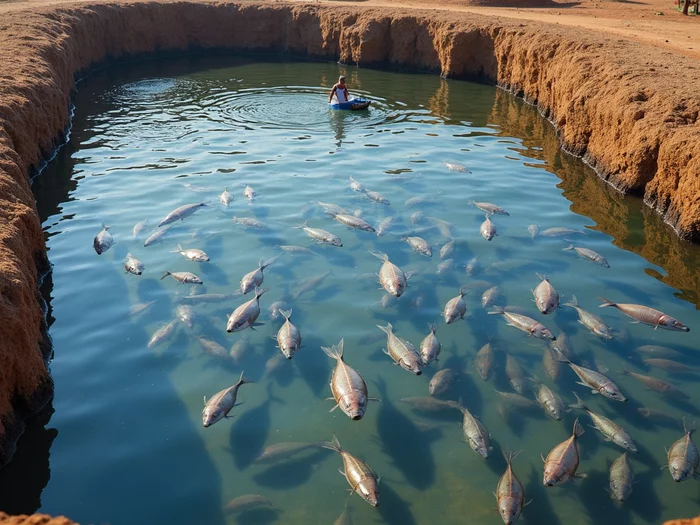
Choose Nile tilapia (Oreochromis niloticus) if you're farming in warmer regions like northern Nigeria or southern Kenya where temperatures stay above 25°C consistently. This species grows faster and tolerates higher temperatures better than Blue tilapia. In cooler highland areas like central Kenya or parts of Uganda, Blue tilapia (Oreochromis aureus) performs better in temperatures between 20-25°C and shows better cold tolerance during seasonal temperature drops.
Start with 3-5 fingerlings per square metre in earthen ponds, or calculate based on final harvest weight if you know your target market size. For 500g market fish, stock 40-60 fingerlings per cubic metre of water volume. Always source fingerlings from reputable hatcheries that can guarantee single-sex populations to prevent unwanted breeding that reduces growth rates.
Feeding Protocols and Nutritional Needs
You must provide 32-40% protein content for fingerlings and reduce to 25-30% protein for adult tilapia to support optimal growth without wasting expensive feed. Feed 2-3 times daily at consistent intervals—morning, midday, and evening work well for most farms. Nile tilapia requires higher protein during early growth stages compared to Blue tilapia, so adjust your feed formulation accordingly if you're raising both species.
Calculate feed amounts based on 3-5% of total fish body weight daily, adjusting as your stock grows. For 1000 fingerlings weighing 10g each (10kg total), feed 300-500g of quality pellets daily. Monitor feeding response carefully—uneaten feed after 30 minutes indicates overfeeding, which pollutes water and wastes money. In Ghana and Nigeria, locally available ingredients like fishmeal, soybean meal, and maize bran can reduce feed costs by 20-30% when properly formulated.
Reduce feeding during cooler months when fish metabolism slows, and increase slightly during peak growing season. Store feed in dry, rodent-proof containers and use within 3 months of purchase to maintain nutritional value. Poor quality or stale feed leads to slow growth and increased susceptibility to diseases.
Harvesting Strategies and Timing
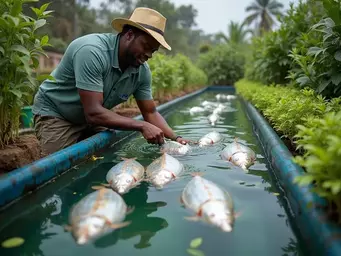
You should harvest when your tilapia reach 500g-1kg, which represents the optimal balance between growth efficiency and market demand across most African markets. Fish smaller than 400g fetch lower prices per kilogram, while fish over 1.2kg grow more slowly and consume more feed per gram of weight gain. Nile tilapia typically reaches market size 2-4 weeks faster than Blue tilapia under similar conditions.
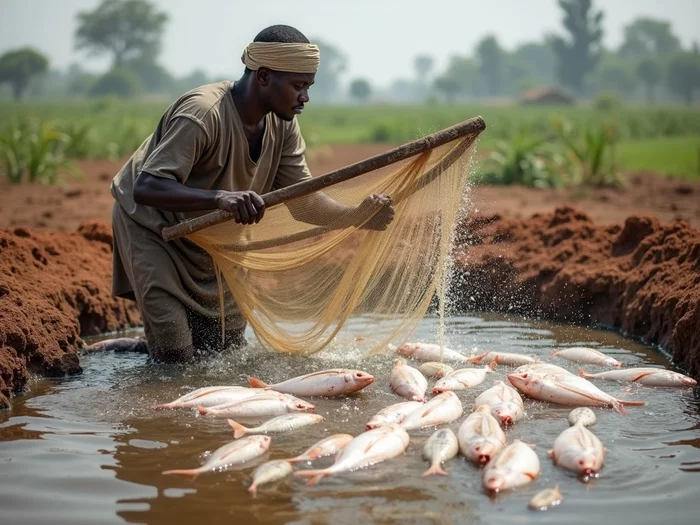
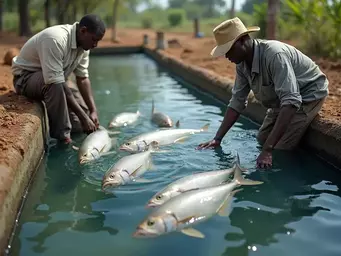
Plan harvesting for early morning hours when temperatures are cooler and fish are less stressed. Use seine nets or drain-down methods to minimise handling stress that can bruise flesh and reduce market value. In Tanzania, farmers who harvest before 8 AM consistently get better prices because their fish stay fresher for afternoon market sales.
Implement partial harvesting strategies to maintain cash flow—remove market-sized fish monthly while allowing smaller ones to continue growing. This approach works particularly well with mixed-age stocking systems. Handle harvested fish gently, keep them in clean water until processing, and get them to market or processing facilities within 4-6 hours for best quality and prices.
Aquaponic System Setups
You can transform your tilapia farming operation from a simple fish pond into a profitable dual-production system that grows both fish and vegetables simultaneously. Aquaponics combines fish farming with hydroponic plant cultivation, using nutrient-rich fish waste to fertilise crops while the plants naturally filter and clean the water for your tilapia. This closed-loop system can double your income potential while reducing feed costs and water usage by up to 90% compared to traditional farming methods.
The key to successful aquaponic tilapia farming lies in choosing the right system design for your space, budget, and local conditions. Whether you're working with a small backyard setup in Lagos or planning a commercial operation in rural Kenya, the system type you select determines your production capacity, maintenance requirements, and profitability. Many African farmers struggle because they choose overly complex systems or fail to match their setup to local resource availability.
This section guides you through selecting, building, and optimising aquaponic systems specifically for tilapia production in African conditions. You'll learn which system works best for your situation, what equipment you actually need, and how to construct reliable setups using locally available materials.
Types of Aquaponic Systems for Tilapia
You should start with media-based systems if you're new to aquaponics, as they're the most forgiving and work exceptionally well with both Nile tilapia and Blue tilapia. These systems use gravel, expanded clay pebbles, or locally available volcanic rock as growing medium, providing excellent biological filtration and root support for vegetables. The media acts as a biofilter, converting fish waste into plant nutrients while maintaining stable water conditions that tilapia prefer.
Deep Water Culture (DWC) systems offer higher plant production rates and work well for leafy greens like lettuce and spinach, which fetch good prices in urban African markets. Your tilapia swim in tanks while plants float on rafts in separate channels filled with nutrient-rich water. In Egypt, commercial farmers successfully combine DWC systems with Nile tilapia to supply fresh vegetables to Cairo markets year-round, achieving 40% higher plant yields than media beds.
Nutrient Film Technique (NFT) systems require more technical skill but offer the highest space efficiency for urban farmers with limited area. Water flows continuously through sloped channels, delivering nutrients to plant roots while returning to fish tanks. These systems work best in controlled environments and suit experienced farmers who can monitor water flow and nutrient levels closely.
💡 Pro Tip: Start Simple for Success
Begin with a media-based system using local gravel or clay pellets. You can always expand to more complex systems once you've mastered the basics and understand your local market demands.
Essential Equipment for Aquaponic Systems
You need a minimum 1000-litre fish tank for every 100-150 adult tilapia, with water pumps capable of circulating the entire system volume every 2-3 hours. Choose submersible pumps rated at least 1000 L/h for small systems, increasing to 3000-5000 L/h for commercial setups. In Kenya and Nigeria, reliable Chinese-made pumps cost KES 8,000-15,000 and provide good value for money when properly maintained.
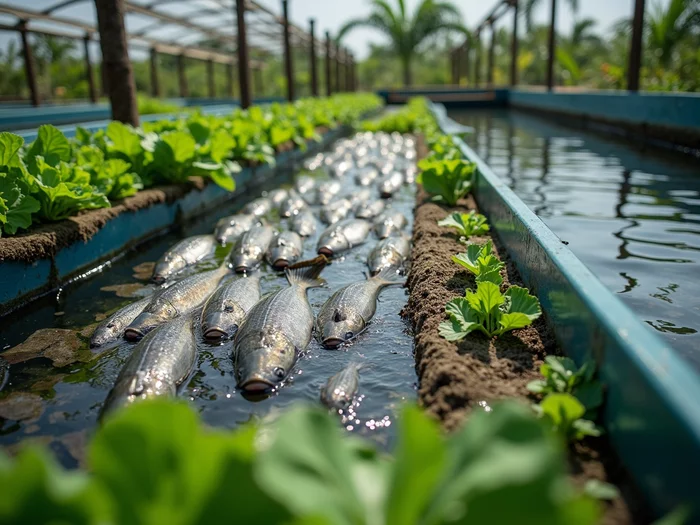
Your grow beds should hold 30-45cm depth of growing media, with a surface area ratio of 1:1 to 2:1 compared to your fish tank surface area. Use food-grade plastic containers, concrete blocks, or locally fabricated steel frames lined with pond liner. Aeration equipment including air pumps, stones, and tubing ensures adequate dissolved oxygen levels—budget KES 3,000-8,000 for a complete aeration system depending on tank size.
Install bell siphons or timer-controlled valves to create flood-and-drain cycles in media beds, which prevents root rot and maintains healthy growing conditions. Source PVC pipes, fittings, and basic plumbing supplies locally—most African cities have hardware stores stocking these materials at competitive prices. A complete small-scale system typically costs $500-1,500 depending on size and local material availability.
Setting Up Media Beds and Raft Systems
You must prepare your media beds with proper drainage and support structures before adding growing medium. Construct beds 30-45cm deep using concrete blocks, wooden frames, or plastic containers, ensuring they can support the weight of saturated media—approximately 1.5 tonnes per cubic metre when full. Install outlet pipes 5cm from the bottom to maintain water levels and prevent complete drainage that could stress plant roots.
Fill media beds with washed gravel (10-20mm diameter), expanded clay pebbles, or locally available volcanic rock after testing pH neutrality. Rinse media thoroughly until runoff water runs clear—unwashed media can cause pH swings that stress both fish and plants. In Zambia, farmers successfully use river sand mixed with small stones, creating effective growing medium at minimal cost while supporting healthy plant growth.
For raft systems, construct floating platforms using polystyrene sheets or locally made wooden frames with sealed plastic containers for buoyancy. Create planting holes 5-8cm apart for leafy greens, ensuring rafts float 2-3cm above water surface. Connect all components with appropriate pipe sizes—use 50mm pipes for main circulation and 25mm for distribution to individual beds, maintaining gentle water flow that doesn't disturb fish or damage plant roots.
Water Quality Management
You can have the perfect aquaponic setup and healthy tilapia fingerlings, but poor water quality will kill your fish and destroy your plants within days. Water serves as the lifeblood of your entire system—it carries nutrients to plants, provides oxygen for fish, and houses the beneficial bacteria that convert fish waste into plant food. When water parameters drift outside optimal ranges, your tilapia become stressed, stop eating, and become vulnerable to diseases that can wipe out your entire stock.
Most aquaponic system failures trace back to water quality problems that farmers either didn't monitor or didn't know how to correct. A slight pH swing can lock out essential nutrients from plants while simultaneously stressing fish. High ammonia levels from overfeeding or inadequate filtration can kill tilapia overnight. In Ghana, a farmer lost 800 Nile tilapia worth GHS 4,200 because he didn't test his water for two weeks and missed a dangerous ammonia spike.
Maintaining excellent water quality requires understanding key parameters, implementing proper filtration, and monitoring your system regularly. This section teaches you exactly what to measure, when to test, and how to correct problems before they become disasters.
Key Water Parameters for Tilapia Health
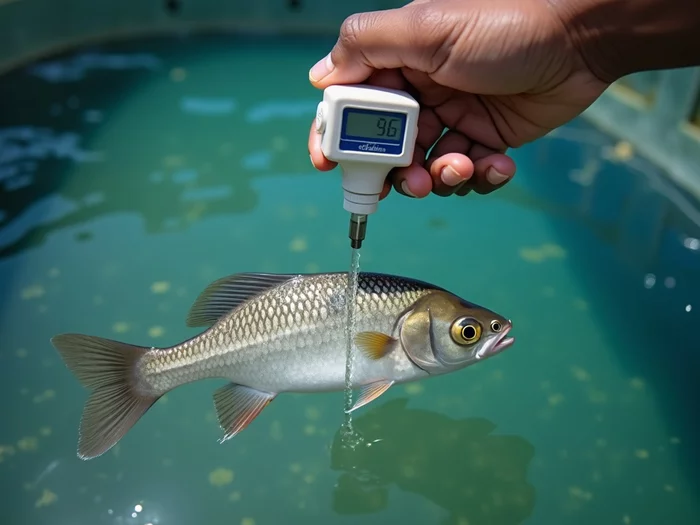
You must maintain pH between 6.5-8.5 for optimal tilapia health, with 7.0-7.5 being ideal for both Nile tilapia and Blue tilapia in aquaponic systems. pH affects nutrient availability for plants and fish metabolism—levels below 6.0 stress fish and reduce beneficial bacteria activity, while levels above 9.0 can cause ammonia toxicity. Test pH daily during system startup and weekly once established, using either digital meters or reliable test strips available in most African agricultural supply stores.
Temperature control is critical—maintain 24-30°C for Nile tilapia and 22-28°C for Blue tilapia to ensure optimal growth rates and feeding response. Nile tilapia tolerates higher temperatures better, making it suitable for warmer regions like northern Nigeria and southern Kenya. Install shade cloth during hot seasons and consider insulation or greenhouse covers in cooler highland areas like central Kenya or parts of Uganda where temperatures drop below 20°C.
Dissolved oxygen must stay above 5 mg/L, with 6-8 mg/L being optimal for healthy tilapia growth and reproduction. Low oxygen levels cause fish to gasp at the surface, reduce feeding, and increase disease susceptibility. Monitor oxygen levels with digital meters or use simple observation—if fish gather near water inlets or surface frequently, oxygen levels are likely too low and require immediate aeration system upgrades.
Filtration and Aeration Techniques
You need mechanical filtration to remove solid waste particles before they decompose and pollute your system water. Install pre-filters or settling tanks before water enters your biofilter, using simple mesh screens, sponge filters, or locally constructed settling chambers. In Tanzania, farmers successfully use 200-litre plastic drums with gravel beds as mechanical filters, removing 80% of solid waste before water reaches plant growing areas.
Biological filtration converts toxic ammonia from fish waste into nitrates that plants can use as fertiliser. Establish biofilter media using plastic bio-balls, ceramic rings, or locally available materials like broken pottery or volcanic rock. Provide 1 kg of bio-media surface area per 1000 litres of system water volume. Your biofilter needs 4-6 weeks to fully establish beneficial bacteria colonies, so start with very light fish stocking during this cycling period.
Aeration systems must provide continuous oxygen supply and water circulation throughout your aquaponic system. Use air pumps rated for at least twice your system volume, with multiple air stones distributed throughout fish tanks and biofilter areas. In Uganda, farmers create effective low-cost aerators using PVC pipes with small holes, powered by locally available air pumps. Backup aeration is essential—power failures can kill fish within hours if oxygen levels drop too low.
Ammonia and Nitrite Control Methods
You must understand the nitrogen cycle to maintain safe ammonia and nitrite levels in your aquaponic system. Fish produce ammonia through respiration and waste, beneficial bacteria convert ammonia to nitrites, then other bacteria convert nitrites to nitrates that plants absorb. This process takes 4-6 weeks to establish fully, during which ammonia and nitrite levels can spike dangerously high without proper management.
Test ammonia and nitrite levels daily during system startup and weekly once established, maintaining ammonia below 0.5 mg/L and nitrites below 1.0 mg/L for tilapia health. Use commercial test kits available in major African cities, or invest in digital meters for frequent testing. If levels spike, reduce feeding immediately, increase aeration, and perform partial water changes of 10-20% daily until levels stabilise.
Establish emergency protocols for ammonia or nitrite spikes that can occur from overfeeding, dead fish, or biofilter disruption. Keep zeolite or activated carbon on hand to absorb excess ammonia temporarily while your biofilter recovers. In Kenya, farmers successfully use locally available zeolite deposits to control ammonia spikes, adding 1 kg per 1000 litres of system water during emergencies. Always have backup aeration and be prepared to harvest fish early if water quality cannot be restored quickly.
⚠️ Warning: Never Ignore Water Testing
Skipping regular water tests is the fastest way to lose your entire tilapia stock. Invest in reliable test kits and check parameters consistently—it's far cheaper than replacing dead fish.
Economic Considerations and Profitability
You might have mastered the technical aspects of tilapia farming, but without understanding the economics, your operation will struggle to generate sustainable profits. Many African farmers focus entirely on production while ignoring costs, market prices, and cash flow management. This approach leads to situations where farmers produce healthy fish but can't afford to continue operations or discover their selling price barely covers production costs.
Successful tilapia farming requires treating your operation as a business from day one. You need to track every expense, understand your local market dynamics, and implement cost-saving strategies that don't compromise fish health or growth rates. A farmer in Kisumu spent KES 85,000 setting up his tilapia ponds but never calculated his break-even point—after 18 months, he realised he was losing KES 12,000 per harvest cycle because feed costs exceeded his selling prices.
This section provides the financial framework you need to build a profitable tilapia farming enterprise. You'll learn to calculate true production costs, identify the most profitable market opportunities, and implement proven cost-reduction strategies used by successful farmers across Africa.
Cost-Benefit Analysis for Tilapia Farming
You need to calculate your total setup costs including pond construction, equipment, and initial stock before starting any tilapia farming operation. Basic earthen pond systems cost $800-2,500 per 1000m² depending on location and soil conditions, while concrete ponds require $2,000-5,000 for similar capacity. Add equipment costs of $300-800 for aeration, pumps, and basic tools, plus $200-500 for initial fingerling stock and first month's feed supply.
Operating costs typically run $0.40-0.80 per kilogram of fish produced, with feed representing 60-70% of total production expenses. Calculate feed costs based on 1.5-2.0 kg of quality feed per kilogram of fish growth—if feed costs $0.50 per kg, your feed expense alone is $0.75-1.00 per kg of fish produced. In Nigeria, successful farmers achieve feed conversion ratios of 1.6:1 with Nile tilapia, keeping feed costs manageable while maintaining good growth rates.
Revenue projections depend heavily on local market prices and your production efficiency. Market prices for 500g tilapia range from $1.20-2.50 per kg across different African markets, with urban areas typically paying premium prices. Calculate break-even production at 80% of market price to account for seasonal fluctuations and marketing costs. A well-managed 1000m² pond can produce 2,000-3,000 kg annually, generating $2,400-7,500 gross revenue depending on local prices and production efficiency.
Market Dynamics and Sales Strategies
You must understand your local market demand patterns and seasonal price fluctuations to maximise profitability from tilapia sales. Urban markets typically offer higher prices but require consistent quality and reliable supply, while rural markets may pay less but accept more variable quality. In Lagos, restaurants pay premium prices for 800g-1kg tilapia, while local markets prefer smaller 400-600g fish at lower prices per kilogram.
Develop multiple sales channels to reduce risk and maximise revenue opportunities. Direct sales to consumers at local markets often provide the highest margins but require time and transportation costs. Wholesale to restaurants or fish traders offers lower prices but guaranteed volume sales and immediate payment. In Kampala, farmers who supply both hotel restaurants and local markets report 25% higher average prices compared to single-channel sellers.
Build relationships with buyers through consistent quality, reliable delivery schedules, and competitive pricing. Offer value-added services like cleaning, filleting, or smoking to command premium prices—processed tilapia can sell for 40-60% more than whole fish. Invest in proper post-harvest handling including ice, clean containers, and rapid transport to maintain quality that justifies higher prices. Brand your operation with consistent packaging and quality standards to build customer loyalty and word-of-mouth referrals.
Cost-Saving Techniques in Aquaponics
You can significantly reduce feed costs by incorporating locally available ingredients and food waste into your tilapia feeding programme. Kitchen scraps, brewery waste, and agricultural by-products can supplement commercial feeds when properly prepared and balanced. In Zambia, farmers reduce feed costs by 30% using maize bran, soybean meal, and fish offal from local markets, maintaining good growth rates with Nile tilapia.
Implement water recycling and conservation strategies to reduce pumping and treatment costs. Aquaponic systems naturally recycle water through plant uptake and evaporation, but you can further reduce water usage by collecting rainwater, reusing system drainage water for irrigation, and optimising pump operation schedules. Solar-powered pumps and aerators eliminate electricity costs while providing reliable operation during power outages common in many African regions.
Source equipment and materials locally whenever possible to avoid import costs and currency fluctuations. PVC pipes, plastic tanks, and basic pumps are available in most African cities at competitive prices. Build your own biofilters, growing beds, and support structures using local materials and labour. In Ghana, farmers construct effective grow beds using concrete blocks and pond liner at 60% less cost than imported plastic systems, achieving similar production results with locally sourced materials. Understanding proper record keeping systems helps track these cost savings and identify the most effective strategies for your specific operation.
Common Challenges and Solutions
You will face challenges in your tilapia farming operation—it's not a matter of if, but when. Equipment failures, seasonal weather changes, predator attacks, and disease outbreaks can threaten your investment and livelihood. The difference between successful and failed tilapia farmers lies not in avoiding problems entirely, but in recognising challenges early and responding effectively with proven solutions.
Most tilapia farming challenges follow predictable patterns based on seasonal changes, system design flaws, or management practices. A farmer in Mwanza lost 60% of his Blue tilapia stock during the dry season because he didn't prepare for increased water temperatures and reduced oxygen levels. Another farmer in Accra watched birds destroy his fingerling population because he delayed installing protective netting, thinking the problem would resolve itself.
This section prepares you for the most common challenges facing tilapia farmers across Africa and provides practical solutions you can implement immediately. You'll learn to anticipate seasonal problems, troubleshoot system failures, and protect your fish from predators and diseases before they cause significant losses.
Seasonal Challenges in Aquaponic Systems
You must prepare your tilapia farming system for extreme temperature fluctuations that occur during dry and rainy seasons across Africa. During hot seasons, water temperatures can exceed 35°C, causing oxygen levels to drop and fish to stop feeding. Install shade cloth providing 50-70% coverage over fish tanks and use evaporative cooling techniques like wet burlap covers during peak heat hours. In northern Nigeria, farmers successfully maintain optimal temperatures using palm frond shading and increased aeration during harmattan season.
Cold season challenges require different strategies, particularly in highland areas where temperatures drop below 20°C. Nile tilapia becomes sluggish and stops feeding when temperatures fall below 18°C, while Blue tilapia shows better cold tolerance but still requires protection. Use greenhouse covers, insulation materials, or solar heating systems to maintain water temperatures above 22°C. Reduce feeding frequency during cooler months and monitor fish behaviour closely for signs of temperature stress.
Rainy season flooding and water quality changes pose significant risks to pond-based systems. Heavy rains can overflow ponds, allowing fish to escape while introducing contaminated runoff water. Install proper drainage systems, pond covers, and water level controls to prevent losses. In Kenya, farmers use simple overflow pipes and concrete channels to manage excess rainwater while maintaining system integrity during heavy rains.
Troubleshooting Common Issues
You need systematic approaches to diagnose and resolve equipment failures that can kill fish within hours if not addressed quickly. Pump failures are the most common emergency—always maintain backup pumps or manual aeration methods like paddle wheels or air stones connected to car batteries. Create troubleshooting checklists covering pump operation, electrical connections, and water flow patterns to quickly identify problems during emergencies.
Water quality problems often develop gradually before becoming critical. Monitor fish behaviour daily—reduced feeding, surface gasping, or unusual swimming patterns indicate developing problems. Keep emergency supplies including water conditioners, beneficial bacteria supplements, and backup aeration equipment readily available. Test water parameters immediately when fish show stress signs, and implement corrective measures before problems become fatal.
Algae blooms can quickly overwhelm aquaponic systems, depleting oxygen and blocking light from plants. Prevent blooms by controlling nutrient levels, providing adequate shade, and maintaining proper water circulation. If blooms occur, reduce feeding, increase aeration, and consider adding beneficial bacteria to compete with algae for nutrients. In Uganda, farmers successfully control algae using locally available water hyacinth as natural biofilters while providing additional plant production.
Preventing Predation and Disease Management
You must protect your tilapia from aerial predators including herons, kingfishers, and other fish-eating birds that can devastate fingerling populations overnight. Install bird netting with 2-3cm mesh over all fish tanks and ponds, ensuring complete coverage without gaps. Use scare devices like reflective tape, predator decoys, or motion-activated alarms to deter persistent predators. In Tanzania, farmers report 90% reduction in bird predation using simple netting systems costing less than $50 per 1000m² pond.
Terrestrial predators including cats, snakes, and monitor lizards pose threats to both fish and system equipment. Construct secure fencing around your operation and eliminate hiding places near ponds where predators might ambush fish. Install motion-sensor lighting and maintain clear sight lines around all tanks. Remove vegetation that provides cover for predators while ensuring adequate shade for fish comfort.
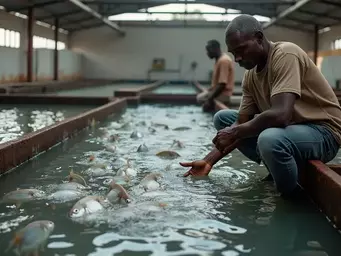
Disease prevention requires strict biosecurity measures including quarantine procedures for new fish, equipment disinfection, and visitor restrictions. Maintain separate nets, buckets, and tools for each pond to prevent cross-contamination. Monitor fish daily for signs of disease including unusual behaviour, visible lesions, or mortality patterns. Establish relationships with local veterinarians or extension officers who can provide disease diagnosis and treatment recommendations when problems occur. Keep basic medications including salt, potassium permanganate, and antibiotics approved for food fish on hand for emergency treatment.
💡 Pro Tip: Prevention Pays
Invest in predator protection and disease prevention from day one. It's far cheaper to install netting and maintain biosecurity than to replace lost fish and restart production cycles.
| Parameter | Optimal Range | Frequency | Action if Outside Range |
|---|---|---|---|
| pH | 6.5 - 8.5 (ideal 7.0 - 7.5) | Daily (startup), Weekly (established) | Adjust with buffers, monitor closely |
| Temperature | 24 - 30°C (Nile), 22 - 28°C (Blue) | Daily | Use shade cloth or insulation |
| Dissolved Oxygen | > 5 mg/L (optimal 6-8 mg/L) | Daily | Increase aeration immediately |
| Stocking Density | 3-5 fish/m² (Nile), 15-30 kg/m³ (Blue) | At stocking | Reduce stocking if overcrowded |
| Feeding Frequency | 2-3 times daily | Daily | Adjust feed based on fish response |
| Harvest Size | 500g - 1kg | When fish reach size | Harvest early if underweight |
Conclusion
You now have the complete framework for building a profitable tilapia farming operation using aquaponic systems. From selecting the right species and stocking densities to managing water quality and preventing diseases, these proven techniques work consistently across African conditions. The key is starting with proper system design, maintaining excellent water parameters, and implementing biosecurity measures from day one.
Your success depends on treating tilapia farming as a business that requires daily attention and systematic record-keeping. Monitor your fish behaviour, test water regularly, and track your costs against revenue to identify what works best in your specific location. With practice, you'll develop the instincts to spot problems early and make adjustments that keep your operation profitable.
Begin with a small system to master the fundamentals before expanding your operation. Focus on perfecting your feeding protocols and water management first—these skills transfer directly to larger commercial systems. As your confidence grows, consider adding value through processing or exploring direct sales to restaurants and markets that pay premium prices for quality tilapia.
Frequently Asked Questions
What if my aquaponic system's pH drops below 6.0, stressing my tilapia?
If your pH drops too low, you can safely raise it by adding calcium carbonate (crushed coral or limestone) or potassium bicarbonate in small, controlled amounts. Monitor the pH closely after each addition to avoid overshooting, aiming for the ideal 7.0-7.5 range for both Nile and Blue tilapia.
How often should I clean my mechanical filter in an aquaponic system?
You should clean your mechanical filter whenever you notice a significant reduction in water flow or visible accumulation of solid waste, typically every 2-3 days for heavily stocked systems or weekly for lighter loads. Regular cleaning prevents organic matter from decomposing and negatively impacting water quality.
Can I mix different tilapia species like Nile and Blue tilapia in the same aquaponic system?
While technically possible, it's generally not recommended to mix Nile and Blue tilapia in the same system due to their slightly different optimal temperature ranges and growth rates. Keeping them separate allows you to fine-tune environmental conditions and feeding protocols to best suit each species, optimising their growth and health.
Why is it important to use single-sex tilapia fingerlings, especially in aquaponics?
Using single-sex (all-male) tilapia fingerlings is crucial because it prevents uncontrolled breeding, which can lead to overpopulation and stunted growth as fish divert energy from growth to reproduction. This ensures your tilapia reach market size faster and more uniformly, maximising your harvest efficiency and profitability.
What's the best way to introduce new fingerlings to an established aquaponic system without stressing them?
To minimise stress, float the sealed bag of new fingerlings in your fish tank for 15-20 minutes to equalise water temperature. Then, gradually add small amounts of your tank water into the bag over another 15-20 minutes before gently releasing the fingerlings into the system. This 'acclimation' process helps them adjust to new water parameters.


Yomi Adisa Lead Researcher
Yomi Adisa is the lead researcher at Fish Farming Business, where he studies what makes aquaculture ventures profitable across Africa. His research focuses on market patterns, buyer preferences, and the business decisions that determine success or failure in fish farming.