Managing Dissolved Oxygen in Tilapia Ponds: Practical Aeration Techniques for Healthy Fish Growth
Posted on: 2025-10-16
By: Yomi Adisa
Managing Dissolved Oxygen in Tilapia Ponds: Practical Aeration Techniques for Healthy Fish Growth
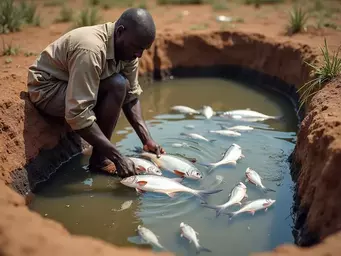
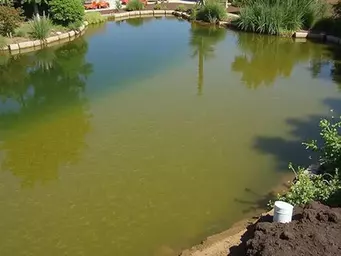
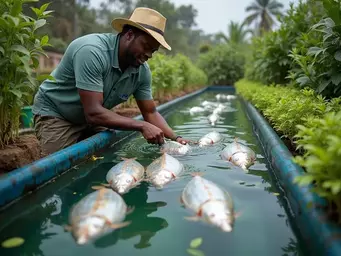
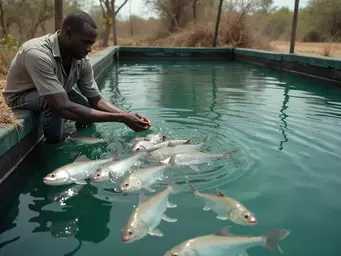
Picture this: You arrive at your tilapia pond early morning to find your fish gasping at the surface, their gills working frantically as they struggle for breath. The water looks murky, and several fingerlings float lifeless near the edge. This devastating scene plays out across countless African farms when dissolved oxygen levels crash overnight, wiping out months of careful feeding and investment in a matter of hours.
📑 Table of Contents
Managing dissolved oxygen isn't just another technical detail in tilapia farming – it's the foundation that determines whether your fish thrive or merely survive. Poor oxygen management is the silent killer behind most tilapia production failures, yet it's completely preventable with the right knowledge and techniques. The difference between proper aeration and inadequate systems can mean the difference between 5% mortality rates and catastrophic losses of 50% or more.
Your fish need consistent oxygen levels to convert feed efficiently, grow rapidly, and resist disease – without it, even the best feeding programmes and water quality management fall apart. This comprehensive guide provides you with the complete technical knowledge needed to master dissolved oxygen management, from understanding the science behind oxygen dynamics to implementing practical aeration systems that work within African farming contexts. You'll learn how to select appropriate aeration equipment, position aerators for maximum efficiency, monitor oxygen levels effectively, and respond to emergency situations before they destroy your stock.
Whether you're managing earthen ponds in rural Nigeria or concrete tanks in urban Kenya, these techniques will transform your tilapia production from a constant worry into a predictable, profitable enterprise. The knowledge you'll gain here directly impacts your bottom line – proper oxygen management increases feed conversion efficiency by 15-20%, reduces mortality rates from 30% down to under 5%, and accelerates growth rates that can mean the difference between harvesting 250g fish versus 400g fish in the same timeframe.
🎯 What You'll Learn
- Master practical aeration techniques to maintain optimal dissolved oxygen levels of 6-8 mg/L for healthy tilapia growth
- Discover effective monitoring protocols to identify and respond to low oxygen levels before they impact fish health and survival
- Learn how to strategically position aerators to ensure uniform water circulation and prevent dead zones in your tilapia ponds
Understanding Dissolved Oxygen and Its Importance in Tilapia Farming
Dissolved oxygen forms the invisible foundation of successful tilapia production, yet many farmers struggle to grasp its dynamics until crisis strikes. Understanding how oxygen behaves in your pond water, what factors influence its availability, and how much your tilapia actually need empowers you to create optimal growing conditions rather than simply reacting to problems after they occur. This knowledge directly impacts your fish's ability to convert feed efficiently and resist disease pressure.
What is Dissolved Oxygen?
Dissolved oxygen represents the amount of oxygen gas mixed into your pond water, measured in milligrams per litre or parts per million. Think of it as the underwater equivalent of the air your fish breathe – except unlike terrestrial animals that extract oxygen directly from air, your tilapia must extract dissolved oxygen molecules from water through their gills. This process becomes increasingly difficult as oxygen concentrations drop, forcing fish to work harder just to maintain basic metabolic functions.
Your tilapia use dissolved oxygen for every biological process: digesting feed, building muscle tissue, maintaining immune function, and reproducing. When oxygen levels drop below optimal ranges, fish divert energy from growth toward survival, explaining why poorly aerated ponds produce stunted fish despite adequate feeding. A farmer in Ibadan discovered this firsthand when his 100 fingerlings per square metre stocking density produced average weights of only 180g after eight months in a poorly aerated earthen pond, while his neighbour's identical setup with proper aeration achieved 320g average weights in the same period.

Factors Affecting Dissolved Oxygen Levels
Temperature exerts the most significant influence on dissolved oxygen availability in your tilapia ponds. As water temperature rises from 22°C to 32°C, oxygen solubility decreases by approximately 20%, meaning hot afternoon water naturally holds less oxygen than cool morning water. This creates the dangerous dynamic where your fish need more oxygen for increased metabolism precisely when less oxygen is available.
Maintaining water temperatures between 26-29°C optimises both tilapia growth rates and oxygen availability, though you'll need stronger aeration during hot seasons when temperatures regularly exceed 30°C. Salinity affects oxygen solubility differently across tilapia farming systems – freshwater holds more dissolved oxygen than brackish water, which explains why Nile tilapia in pure freshwater systems typically show better growth rates than those in slightly saline conditions.
Biological factors create complex oxygen dynamics that change throughout your production cycle. Phytoplankton produces oxygen during daylight hours through photosynthesis but consumes oxygen at night through respiration, creating daily fluctuations that intensify as your pond ecosystem matures. Fish biomass directly correlates with oxygen consumption – 1,000 fingerlings weighing 10g each consume far less oxygen than the same 1,000 fish at 300g each, meaning your aeration needs increase dramatically as fish grow.
Optimal Dissolved Oxygen Levels for Tilapia
Tilapia require minimum dissolved oxygen concentrations of 3mg/L for survival, but this survival threshold falls far short of optimal production levels. Your target range should be 5-7mg/L for acceptable growth and health, with 6-8mg/L representing optimal conditions for maximum feed conversion efficiency and growth rates. Concentrations above 9mg/L provide no additional benefits and may indicate excessive aeration that wastes electricity without improving fish performance.
Understanding these ranges helps you interpret what your dissolved oxygen meter readings actually mean for fish welfare and production outcomes. Readings between 4-5mg/L indicate stressed conditions where fish survive but show reduced appetite, slower growth, and increased susceptibility to disease. A commercial farm in Kisumu documented 40% higher mortality rates and 25% slower growth when dissolved oxygen averaged 4.2mg/L compared to ponds maintained at 6.5mg/L.
Tilapia's tolerance for lower oxygen levels compared to species like trout or salmon makes them excellent choices for African aquaculture, but this tolerance shouldn't excuse poor management. While tilapia can survive brief periods at 2mg/L, such conditions halt growth entirely and create physiological stress that persists even after oxygen levels recover. Your goal should be maintaining consistent levels above 5mg/L rather than allowing dramatic fluctuations that stress fish unnecessarily.
| Oxygen Level (mg/L) | Fish Health Status | Growth Rate Impact | Recommended Action |
|---|---|---|---|
| Below 3 mg/L | Fish mortality risk | Stunted growth | Emergency aeration needed |
| 3-4 mg/L | Stress conditions | Reduced appetite | Increase aeration |
| 5-7 mg/L | Acceptable growth | Normal behaviour | Maintain aeration |
| 6-8 mg/L | Optimal growth | High feed conversion efficiency | Continue monitoring |
| Above 9 mg/L | No additional benefits | N/A | Monitor for excessive aeration |
Aeration Techniques and DO Management Strategies for Tilapia Ponds
Effective dissolved oxygen management requires understanding different aeration technologies, strategic equipment placement, and cost-effective solutions that match your farm's scale and budget. The key lies not in purchasing the most expensive equipment, but in selecting appropriate systems and implementing them correctly to maintain consistent oxygen levels throughout your production cycle. Success depends on matching your aeration strategy to your specific pond conditions, stocking densities, and local resources.
Types of Aeration Systems
Hydraulic aerators work by creating water movement and surface agitation that increases the contact area between water and air, allowing more oxygen to dissolve naturally. Paddle wheel aerators represent the most common hydraulic system, using rotating paddles to throw water into the air where it absorbs oxygen before falling back into the pond. A 0.75kW paddle wheel aerator effectively serves 800-1,200 square metres of pond surface, making them ideal for larger earthen ponds common in rural farming operations.

Installation requires positioning the aerator so water circulation reaches all pond areas without creating dead zones where waste accumulates. Fountain aerators provide another hydraulic option, shooting water high into the air to maximise oxygen absorption through droplet formation and surface turbulence. These units work particularly well in smaller concrete tanks or ornamental ponds where aesthetics matter alongside function.
Air diffusion systems operate differently by pumping compressed air through diffusers placed on the pond bottom, creating streams of bubbles that rise through the water column. This method achieves superior oxygen transfer efficiency compared to hydraulic systems because tiny air bubbles provide enormous surface area for gas exchange. Diffusion systems work especially well in deeper ponds exceeding 1.5 metres depth, where hydraulic aerators struggle to circulate bottom water effectively.
Setting up an air diffusion system requires an air compressor, airline tubing, and diffuser stones or membranes distributed across the pond bottom. A 1.5kW air compressor can operate 20-30 diffusers covering up to 2,000 square metres, though actual coverage depends on pond depth and desired oxygen levels. The main advantage lies in lower operating costs per cubic metre of water treated, making diffusion systems economical for intensive operations with high stocking densities.
| Aeration Type | Description | Ideal Pond Type | Coverage Area | Initial Cost | Operating Cost |
|---|---|---|---|---|---|
| Paddle Wheel Aerators | Uses rotating paddles to agitate water, increasing oxygen absorption. | Earthen ponds | 800-1,200 m² | 45,000-65,000 Naira | 2-3 Naira/hour |
| Fountain Aerators | Shoots water into the air for oxygen absorption via droplet formation. | Smaller concrete tanks | 400 m² | 25,000-35,000 Naira | 2-4 Naira/hour |
| Air Diffusion Systems | Pumps air through diffusers, creating bubbles that rise to the surface. | Deeper ponds | 1,500-2,000 m² | 80,000-120,000 Naira | 30% less than paddle wheels |
| Venturi Aerators | Uses water flow to create suction that draws air into the water. | Small operations | 300-500 m² | 15,000-25,000 Naira | 1-2 Naira/hour |
| Solar-Powered Aerators | Operates on solar energy, reducing electricity costs. | High sunlight areas | Varies; depends on setup | 150,000-200,000 Naira | Free during sunlight |
| Wind-Powered Aerators | Uses wind energy to drive aeration systems. | Exposed locations | Varies; depends on wind | Varies; typically lower | Free after installation |
Strategic Aerator Placement
Proper aerator placement determines whether your investment in aeration equipment delivers optimal results or creates expensive dead zones where fish suffer from poor water quality. Position aerators to create circular water circulation patterns that gradually move water from the pond centre toward edges, then back along the bottom toward the centre. This circulation pattern prevents stratification where surface water holds adequate oxygen while bottom water becomes depleted and toxic.
For rectangular earthen ponds, place paddle wheel aerators along the shorter sides pointing toward the centre, creating a circulation loop that moves water the entire pond length. Avoid positioning aerators in corners where circulation becomes restricted, and ensure adequate distance from pond edges to prevent erosion. A successful farmer in Kaduna operates 50m x 20m earthen ponds with two 0.75kW paddle wheels positioned 5 metres from each short end, creating circulation that maintains uniform oxygen levels throughout the 1,000 square metre surface area.
In circular or square ponds, position aerators slightly off-centre to establish circulation that prevents dead zones in corners or along edges. Multiple smaller aerators often provide better circulation than single large units, allowing you to adjust aeration intensity based on fish biomass and seasonal requirements. Consider prevailing wind patterns when positioning equipment, as strong winds can either assist or hinder circulation depending on aerator orientation.

Cost-Effective Aeration Solutions
Budget constraints shouldn't prevent you from maintaining adequate dissolved oxygen levels, as several cost-effective solutions provide reliable aeration for small to medium-scale operations. Venturi aerators offer excellent value, using water flow through specially designed tubes to create suction that draws air into the water stream. These systems require only a water pump and venturi fittings, making them accessible for farmers with limited capital.
A venturi system using a 0.5kW water pump can effectively aerate 300-500 square metres while consuming less electricity than comparable paddle wheel systems. Solar-powered aerators eliminate ongoing electricity costs while providing reliable daytime aeration when photosynthetic oxygen production supplements mechanical systems. Modern solar aerators include battery backup for night operation, though battery life typically limits night-time operation to 4-6 hours.
Emergency aeration equipment represents another cost-effective investment that pays for itself during the first crisis. Battery-powered air pumps designed for fishing or aquarium use can maintain critical oxygen levels during power outages or equipment failures. Stock several units with fresh batteries as insurance against catastrophic oxygen crashes that could destroy your entire harvest.
Seasonal Considerations for DO Management
Seasonal changes dramatically affect dissolved oxygen dynamics, requiring you to adjust aeration strategies throughout the year rather than maintaining static systems. Hot season management becomes critical as rising temperatures reduce oxygen solubility while increasing fish metabolism and oxygen demand. During peak hot months when daily temperatures exceed 35°C, increase aeration runtime by 30-50% and consider adding supplementary systems to maintain adequate oxygen levels.
Rainy season presents different challenges as cloud cover reduces photosynthetic oxygen production while organic matter runoff increases biological oxygen demand. Heavy rains also dilute pond water and can introduce pollutants that consume oxygen during decomposition. Monitor dissolved oxygen more frequently during rainy periods and be prepared to increase aeration to compensate for reduced natural oxygen production.
Harmattan winds in West Africa create unique challenges by increasing evaporation rates and introducing dust that can clog aerator intakes. Clean equipment more frequently during dusty periods and consider covering sensitive components when not in operation. The dry conditions also concentrate dissolved minerals that can affect oxygen solubility and equipment performance.
Monitoring and Managing Dissolved Oxygen Levels
Successful dissolved oxygen management depends on consistent monitoring using appropriate tools, establishing regular protocols that catch problems early, and knowing how to respond effectively when oxygen levels drop dangerously. Without systematic monitoring, you're essentially flying blind, discovering oxygen problems only after fish begin dying. The investment in proper monitoring equipment and protocols pays for itself many times over by preventing catastrophic losses.
Tools for Measuring Dissolved Oxygen
Digital dissolved oxygen metres provide the most accurate and convenient method for monitoring oxygen levels in your tilapia ponds. Modern metres display readings in mg/L or ppm with temperature compensation that adjusts for water temperature effects on oxygen solubility. Quality metres cost 15,000-25,000 naira in Lagos, 8,000-12,000 shillings in Nairobi, or 300-500 kwacha in Lusaka, representing a worthwhile investment for any serious tilapia operation.
Choose metres with replaceable probes and calibration solutions, as probe maintenance determines long-term accuracy. Calibrate your dissolved oxygen metre monthly using zero oxygen solution and air-saturated water to ensure accurate readings. Store the probe in distilled water between uses and replace it annually or when readings become inconsistent.
Chemical test kits offer a backup monitoring method using reagent drops that change colour based on dissolved oxygen concentration. While less precise than digital metres, test kits provide reliable readings without batteries or calibration requirements. The Winkler titration method gives laboratory-quality results but requires more time and skill than simple test strips.

Regular Monitoring Protocols
Establish a monitoring schedule based on your pond's risk factors rather than following arbitrary daily routines. High-density ponds with heavy feeding require twice-daily monitoring, while extensive ponds with low stocking densities may need only every other day checks. Monitor at consistent times to identify daily patterns – early morning readings reveal minimum overnight oxygen levels, while late afternoon readings show maximum photosynthetic production.
Record dissolved oxygen readings along with water temperature, weather conditions, fish behaviour observations, and feeding amounts in a logbook or mobile app. This data reveals patterns that help predict oxygen crashes before they occur. A farmer in Mwanza noticed that dissolved oxygen dropped below 4mg/L every morning following heavy feeding days, allowing him to adjust feeding schedules and prevent fish stress.
Create action triggers based on your monitoring results – specific oxygen levels that prompt immediate responses rather than waiting for fish to show obvious stress. Establish protocols such as: activate backup aeration when dissolved oxygen drops below 4mg/L, reduce feeding when morning readings fall below 5mg/L, and implement emergency procedures when levels approach 3mg/L.
Emergency Aeration Procedures
Power outages represent the most common emergency threatening dissolved oxygen levels, particularly during hot nights when oxygen consumption peaks while photosynthetic production stops. Maintain battery-powered backup aerators or portable generators specifically for pond aeration during outages. A 12V car battery can operate small air pumps for 6-8 hours, providing critical overnight aeration during emergencies.
When dissolved oxygen drops below 3mg/L, implement immediate emergency procedures regardless of the hour. Add fresh water if available, as incoming water typically contains higher oxygen levels than pond water. Use garden hoses or buckets to create water circulation and surface agitation manually if mechanical aerators fail.
Create emergency response kits containing battery-powered air pumps, airline tubing, air stones, extension cords, and basic tools needed for quick aerator repairs. Store kits in accessible locations near your ponds rather than in distant storage areas. Test emergency equipment monthly to ensure batteries hold charge and pumps operate properly when needed.
Troubleshooting Common Dissolved Oxygen Issues
Morning oxygen crashes occur when overnight respiration by fish, bacteria, and algae consumes oxygen faster than it can be replenished through aeration or photosynthesis. This problem intensifies during hot weather when higher temperatures increase metabolic rates while reducing oxygen solubility. Prevent morning crashes by increasing night-time aeration, reducing evening feeding amounts, or installing timer-controlled aerators that activate automatically during pre-dawn hours.
Thermal stratification creates layers of different temperature water that don't mix naturally, leading to oxygen-rich surface water over oxygen-depleted bottom water. Deep ponds exceeding 2 metres depth are particularly susceptible, especially during calm weather with minimal wind mixing. Break stratification using bottom-mounted air diffusers that force vertical water circulation, or install circulation pumps that move bottom water to the surface for oxygenation.
Overstocking creates oxygen demand that exceeds your system's capacity to maintain adequate levels even with proper aeration. Calculate your pond's carrying capacity based on aeration capacity, not just surface area. A general rule suggests 1kW of aeration per 1,000kg of fish biomass, though this varies with temperature, feeding rates, and water quality management conditions.
Economic Considerations in Aeration
Understanding the economics of aeration helps you make informed decisions that balance initial investment costs against long-term production benefits and operating expenses. The goal isn't minimising upfront costs but maximising return on investment through improved fish survival, growth rates, and feed conversion efficiency. Smart aeration investments pay for themselves through reduced mortality and faster growth cycles that increase annual production capacity.
Cost-Effective Aeration Solutions
Paddle wheel aerators offer excellent value for larger earthen ponds, with initial costs of 45,000-65,000 naira for 0.75kW units in Nigeria, 25,000-35,000 shillings in Kenya, or 800-1,200 kwacha in Zambia. Operating costs average 2-3 naira per hour in areas with grid electricity, making them economical for continuous operation. Calculate total cost of ownership including electricity, maintenance, and replacement parts over the aerator's 5-7 year lifespan rather than focusing solely on purchase price.
Air diffusion systems require higher initial investment for compressors and distribution networks but offer lower operating costs per cubic metre of water aerated. A complete system serving 1,500 square metres costs 80,000-120,000 naira initially but consumes 30% less electricity than equivalent paddle wheel systems. The investment pays for itself within 18-24 months through reduced operating costs, making diffusion systems attractive for intensive operations with high electricity usage.
Used equipment markets offer opportunities to reduce initial costs, particularly for paddle wheel aerators with simple, repairable designs. Inspect used aerators carefully for motor condition, bearing wear, and paddle damage before purchasing. Factor in refurbishment costs when comparing used equipment prices to new systems, as motor rebuilds can cost 30-40% of new aerator prices.

Comparing Traditional vs. Modern Aeration Equipment
Traditional aeration methods including manual water splashing, bamboo water wheels, or simple air pumps provide basic oxygenation at minimal cost but require significant labour and offer limited effectiveness. These methods work for small-scale operations with low stocking densities but cannot support intensive production systems. A farmer in rural Ghana successfully uses a manually operated paddle system for his 200 square metre pond, spending 30 minutes twice daily creating surface agitation that maintains adequate oxygen levels for 500 fingerlings.
Modern electric aerators provide consistent, reliable operation with minimal labour requirements but demand higher initial investment and ongoing electricity costs. Electric systems allow precise control over aeration timing and intensity, enabling you to optimise oxygen levels for different production phases. The reliability becomes critical during emergency situations when manual systems cannot provide adequate response speed.
Return on investment calculations should include reduced mortality rates, improved feed conversion ratios, and faster growth cycles that increase annual production capacity. A properly aerated pond producing 400g fish in 8 months generates significantly more profit than a poorly aerated system producing 250g fish in the same timeframe, even accounting for higher equipment and operating costs.
Conclusion
Mastering dissolved oxygen management is the single most important skill that separates successful tilapia farmers from those who struggle with poor growth and high mortality. By maintaining oxygen levels between 5-7mg/L through proper aeration equipment, strategic placement, and consistent monitoring, you create the foundation for profitable fish production. Remember: invest in reliable monitoring equipment first, position aerators to create proper water circulation, and always have emergency backup plans for power outages or equipment failures.
You now possess the technical knowledge to prevent those devastating morning scenes of gasping fish and floating fingerlings. Start with the monitoring protocols outlined here—check dissolved oxygen levels twice daily during your first few production cycles until you understand your pond's patterns. Every pond behaves differently based on stocking density, feeding rates, and local conditions, so practical experience will fine-tune your theoretical knowledge.
Don't feel overwhelmed by all the technical options available. Many successful farmers begin with simple paddle wheel aerators or air diffusion systems, then upgrade as their operations grow. Focus on consistency rather than perfection—reliable basic aeration beats expensive equipment that's poorly maintained or incorrectly operated.
With solid dissolved oxygen management established, you're ready to optimise your feeding strategies and stocking densities. These three elements—water quality, nutrition, and fish management—work together to maximise your tilapia production success. Master dissolved oxygen first, and the other pieces will fall into place more easily.
Frequently Asked Questions
Why do my tilapia gasp at the surface early in the morning, even if they seemed fine the night before?
This common issue, known as a 'morning oxygen crash', happens because fish, bacteria, and algae consume oxygen overnight, and without sunlight, there's no photosynthesis to replenish it. This is especially dangerous in hot weather when fish metabolism is higher and water holds less oxygen. Increasing night-time aeration or reducing evening feeding can help prevent this.
How can I tell if my digital dissolved oxygen metre is giving accurate readings?
You should calibrate your dissolved oxygen metre monthly using a zero oxygen solution and air-saturated water to ensure accuracy. It's also important to store the probe in distilled water between uses and replace it annually, as a degraded probe can lead to incorrect readings. Keep a chemical test kit as a backup to verify readings if you suspect an issue.
What are the most cost-effective aeration options for a small-scale tilapia pond with limited electricity access?
For small-scale operations with limited electricity, venturi aerators are excellent value as they only require a water pump. Solar-powered aerators are also a great option, eliminating ongoing electricity costs, though they have higher upfront investment and may need battery backup for night-time. Wind-powered aerators can also be used, especially in exposed locations, but are best combined with a backup for calm periods.
Should I change my aeration strategy during different seasons, like the hot or rainy seasons?
Yes, absolutely. During hot seasons, you must increase aeration runtime by 30-50% due to reduced oxygen solubility and increased fish metabolism. In the rainy season, you might need to increase aeration to compensate for reduced photosynthetic oxygen production caused by cloud cover and increased organic matter runoff.
Can overfeeding my tilapia impact the dissolved oxygen levels in my pond?
Yes, overfeeding significantly contributes to oxygen depletion. Uneaten feed decomposes, and the increased waste products stimulate bacterial growth, both of which consume large amounts of dissolved oxygen. Reducing evening feeding amounts can help prevent morning oxygen crashes.


Yomi Adisa Lead Researcher
Yomi Adisa is the lead researcher at Fish Farming Business, where he studies what makes aquaculture ventures profitable across Africa. His research focuses on market patterns, buyer preferences, and the business decisions that determine success or failure in fish farming.