Water Exchange and Filtration for African Tilapia Farms
Posted on: 2025-11-11
By: Yomi Adisa
Table of Contents
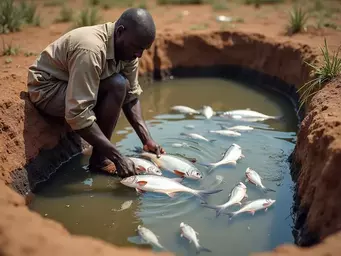
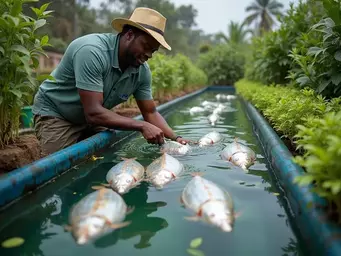
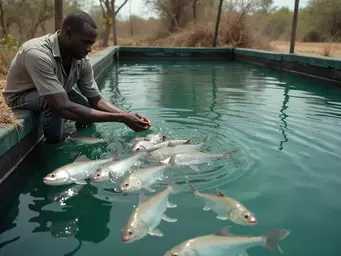
You've built your tilapia ponds, stocked them with healthy fingerlings, and started feeding regularly—yet your fish keep dying unexpectedly. The water looks clear, the fish seemed fine yesterday, but this morning you're pulling out dozens of dead Nile tilapia. This devastating scenario repeats across African fish farms when farmers miss the early warning signs of disease.
Disease outbreaks can wipe out entire tilapia stocks within days, destroying months of investment and hard work. Blue tilapia and Nile tilapia are generally robust fish, but they're still vulnerable to bacterial infections, parasites, and viral diseases—especially when water quality deteriorates or fish become stressed. Early detection makes the difference between losing a few fish and losing your entire harvest.
This guide teaches you how to spot the first signs of disease in your tilapia before it spreads throughout your ponds. You'll learn to recognise symptoms, understand what causes common tilapia diseases, and take immediate action to protect your stock and safeguard your farming investment.
🎯 What You'll Learn
- How to monitor key water quality parameters to ensure tilapia health.
- Effective water exchange techniques to maintain optimal conditions in your ponds.
- Best practices for implementing and maintaining filtration systems for tilapia farming.
Importance of Water Quality in Tilapia Farming
Water quality determines whether your tilapia thrive or simply survive—and the difference shows directly in your harvest weight and profit margins. Poor water conditions stress your fish, slow their growth, and make them vulnerable to diseases that can wipe out entire ponds within days. You might feed premium pellets and stock the best fingerlings, but if your water parameters are wrong, you're wasting money on inputs that won't deliver results.
Most tilapia farmers focus on feeding schedules and stocking densities whilst ignoring the invisible factors that control fish health. Dissolved oxygen, pH levels, and toxic compounds like ammonia change constantly in your ponds, especially during hot weather or heavy rains. Nile tilapia (Oreochromis niloticus) can tolerate some water quality fluctuations, but sustained poor conditions will reduce their growth rate by 30-50% compared to optimal environments.
The good news is that water quality management doesn't require expensive equipment or complex chemistry knowledge. You need to understand five critical parameters, test them regularly, and know how to correct problems before they kill your fish. Here's what every successful tilapia farmer must monitor to protect their investment.
Key Water Quality Parameters for Tilapia
You must maintain water temperature between 25-30°C for optimal Nile tilapia growth, though they can survive in temperatures from 15-35°C. Blue tilapia (Oreochromis aureus) tolerate slightly cooler water but grow fastest in the same 25-30°C range. Temperature affects everything from feeding behaviour to oxygen levels—when water exceeds 32°C, your fish will eat less and grow slower even with perfect feeding schedules.
pH levels must stay between 6.5-8.5 for healthy tilapia production, with 7.0-8.0 being ideal for maximum growth rates. You can measure pH using digital meters (costing ₦3,500-8,000 in Nigerian agricultural stores) or simple test strips for daily monitoring. Nile tilapia become stressed when pH drops below 6.0 or rises above 9.0, leading to reduced appetite and increased disease susceptibility.
Dissolved oxygen is your most critical parameter—you need minimum 5mg/L for healthy growth, though 6-8mg/L produces the best results. Levels below 3mg/L will kill your tilapia within hours, especially during hot nights when oxygen naturally drops. A basic dissolved oxygen meter costs KES 12,000-18,000 in Nairobi and pays for itself by preventing a single major fish kill.
Ammonia must stay below 0.02mg/L because higher levels burn tilapia gills and stress their immune systems. Nitrite should remain under 0.5mg/L, whilst nitrates can be tolerated up to 50mg/L but should be kept lower through regular water changes. You can test these using combination test kits available at agricultural supply stores across Ghana for GHS 80-150.
Effects of Poor Water Quality on Tilapia Health
Poor water quality creates chronic stress that reduces your tilapia's growth rate by 20-40% even when they appear healthy. Stressed fish convert feed less efficiently, meaning you'll spend more on pellets to achieve the same weight gain. Nile tilapia under stress also reproduce poorly, producing fewer viable fry if you're breeding your own fingerlings.
Disease outbreaks multiply rapidly in poor water conditions because stressed fish have weakened immune systems. Common problems like fin rot, gill disease, and bacterial infections spread faster when dissolved oxygen is low or ammonia levels are high. Blue tilapia show slightly better resistance to water quality stress than Nile tilapia, but both species suffer significant mortality when conditions deteriorate rapidly.
Growth rates plummet when water parameters fall outside optimal ranges—your 6-month harvest cycle might stretch to 8-9 months with the same feed costs. During Uganda's rainy season, many tilapia farmers report 30% yield decreases when pond water becomes diluted and oxygen levels drop from organic matter decomposition. You can prevent these losses by monitoring water quality twice daily during weather changes.
Monitoring and Testing Water Quality
You need to test dissolved oxygen and temperature daily, especially during hot weather when levels fluctuate most dramatically. Check pH and ammonia levels weekly under normal conditions, but increase to daily testing if you notice fish behaving strangely or staying near the surface. Digital meters provide the most accurate readings, but test strips work for routine monitoring if you calibrate them monthly against known standards.
Test water at the same times each day—early morning (6-7 AM) when oxygen is lowest, and late afternoon (4-5 PM) when it peaks from photosynthesis. Record your results in a simple logbook to spot trends before they become problems. Many Kenyan farmers use basic pH test strips and thermometers for daily checks, upgrading to digital meters only after their first major loss teaches them the importance of accurate monitoring.
Your biggest mistake will be neglecting to calibrate digital equipment regularly—uncalibrated meters can be off by 20-30%, giving you false confidence whilst your fish suffer. Clean probe sensors weekly and store them properly according to manufacturer instructions. Blue tilapia can tolerate wider parameter fluctuations than Nile tilapia, so you might reduce testing frequency slightly if you're farming the more resilient Blue species, but never skip more than two days without checking dissolved oxygen levels.
Water Exchange Techniques for Tilapia Farms
Water exchange is your most powerful tool for maintaining healthy tilapia populations, yet many African farmers either exchange too little water and watch their fish suffocate, or exchange too much and shock their stock with sudden parameter changes. Proper water exchange removes accumulated waste, replenishes dissolved oxygen, and dilutes harmful compounds before they reach toxic levels. The key is finding the right balance for your specific farm conditions and tilapia species.
Your water exchange strategy must account for stocking density, feeding rates, and seasonal weather patterns that affect your pond's natural filtration capacity. Nile tilapia produce more waste per kilogram than Blue tilapia, requiring slightly higher exchange rates to maintain optimal water quality. During Ghana's harmattan season, evaporation increases water exchange needs by 15-20%, whilst Uganda's rainy season may require reduced exchanges to prevent temperature shock from cold rainwater.
The three main water exchange systems—recirculating aquaculture systems (RAS), flow-through systems, and partial exchange methods—each offer distinct advantages depending on your water availability, budget, and technical expertise. Understanding these systems helps you choose the most cost-effective approach for your farm's specific conditions and growth objectives.
Overview of Water Exchange Methods
Water exchange involves replacing a portion of your pond water with fresh water to maintain quality parameters within acceptable ranges for tilapia health. You're essentially diluting accumulated waste products whilst replenishing dissolved oxygen and essential minerals that your fish need for optimal growth. The basic principle is simple: remove old water containing fish waste, uneaten feed, and metabolic byproducts, then replace it with clean water that supports healthy fish metabolism.
Most successful tilapia farmers exchange 10-20% of their total water volume daily, though this varies based on stocking density and feeding intensity. A 1,000-litre tank stocked with 50 Nile tilapia fingerlings might need 100-150 litres of fresh water daily, whilst the same tank with 100 fish requires 200-250 litres daily. Blue tilapia can tolerate slightly lower exchange rates due to their hardier nature, but don't reduce exchanges by more than 25% compared to Nile tilapia requirements.
Your biggest mistake will be sudden, massive water changes that shock your fish with rapid temperature or pH shifts. Egyptian tilapia farmers report 15-30% mortality when they replace more than 50% of pond water in a single day, especially during temperature transitions between seasons. Instead, spread large water changes over 2-3 days, replacing 20-25% daily until you've achieved the desired water renewal.
Implementing Recirculating Aquaculture Systems (RAS)
RAS systems pump water through biological and mechanical filters before returning it to your fish tanks, allowing you to reuse 95-99% of your water whilst maintaining excellent quality. You'll need tanks, a biofilter, mechanical filter, water pump, and aeration system—total setup costs range from ₦150,000-400,000 for a small system in Nigeria. The biofilter contains beneficial bacteria that convert toxic ammonia to less harmful nitrates, whilst mechanical filters remove solid waste particles.
Your RAS setup requires a pump that circulates the entire tank volume 2-4 times per hour, so a 1,000-litre tank needs a pump rated for 2,000-4,000 litres per hour. Kenyan suppliers offer suitable pumps for KES 8,000-15,000, though you'll also need backup power during outages to prevent fish kills. The biofilter should be 10-15% of your total tank volume and filled with plastic media or gravel that provides surface area for bacterial growth.
Both Nile and Blue tilapia thrive in properly managed RAS, often showing 20-30% faster growth rates than pond-raised fish due to consistent water quality and controlled feeding. However, RAS requires daily monitoring and technical knowledge—pump failures, biofilter crashes, or power outages can kill your entire stock within hours. Urban farmers in Nairobi increasingly choose RAS for space efficiency, but rural farmers with abundant land and water often find simpler systems more practical.
⚠️ Warning: RAS System Failures
Never rely on a single pump or biofilter in your RAS setup. Tanzanian farmers report losing entire stocks when single-point failures occur during power outages. Always have backup pumps and emergency aeration ready, especially during the dry season when power cuts are frequent.
Flow-Through Systems: Advantages and Disadvantages
Flow-through systems continuously introduce fresh water at one end of your pond or tank whilst allowing old water to exit at the other end, providing natural filtration without complex equipment. You need a reliable water source, simple inlet and outlet structures, and gravity or pump-driven water flow. Construction costs are minimal—Ghanaian farmers build effective flow-through systems for GHS 500-1,500 using local materials like concrete pipes and mesh screens.
The main advantage is simplicity: no biofilters to maintain, no pumps to repair, and natural water quality management through continuous dilution. Flow-through systems work exceptionally well in areas with abundant clean water, such as highland regions of Kenya or areas near natural springs. Blue tilapia particularly excel in flow-through systems because they adapt well to the slight temperature and quality variations that occur with natural water sources.
However, flow-through systems waste significant water—a 1,000-litre tank might require 500-1,000 litres of fresh water daily, making them impractical in water-scarce regions. Zambian farmers in drought-prone areas report abandoning flow-through systems during dry seasons when water becomes too valuable for continuous discharge. Additionally, you have less control over water parameters, and disease outbreaks can spread more easily if your water source becomes contaminated upstream.
Managing Water Exchange Rates Effectively
Calculate your optimal exchange rate based on fish biomass, feeding rate, and water temperature—the general rule is 10-20% daily exchange for moderate stocking densities. Young tilapia fingerlings under 50g require higher exchange rates (15-25% daily) because they're more sensitive to water quality fluctuations. Adult Nile tilapia over 200g can tolerate lower exchange rates (8-15% daily) but need increased exchanges during heavy feeding periods or hot weather.
Seasonal adjustments are crucial for maintaining consistent water quality throughout the year. During Tanzania's rainy season, reduce exchange rates by 20-30% to prevent temperature shock from cold rainwater, but increase monitoring frequency to catch quality problems early. In dry seasons, increase exchange rates by 10-15% to compensate for higher evaporation and concentrated waste products in smaller water volumes.
Monitor your fish behaviour to fine-tune exchange rates—if tilapia gather at water inlets or stay near the surface, increase exchanges immediately. Ugandan farmers successfully use simple observation schedules: check fish behaviour at 6 AM, 12 PM, and 6 PM daily, adjusting water exchange based on activity levels and feeding response. Blue tilapia show stress symptoms later than Nile tilapia, so don't wait for obvious signs before increasing exchange rates in mixed-species systems.
Filtration Systems for Optimal Water Management
Filtration systems are the backbone of successful tilapia farming, yet many African farmers underestimate their importance until they face their first major fish kill from ammonia poisoning. Your tilapia produce waste continuously—uneaten feed, faeces, and metabolic byproducts that accumulate in pond water and create toxic conditions within days if not properly filtered. Without adequate filtration, even perfect feeding schedules and premium fingerlings won't prevent devastating losses.
The three types of filtration—biological, mechanical, and chemical—work together to maintain water quality that supports optimal tilapia growth and health. Biological filtration converts toxic ammonia to less harmful compounds through beneficial bacteria, mechanical filtration removes solid waste particles, and chemical filtration addresses specific water quality issues like pH imbalances or heavy metals. Understanding how these systems work helps you choose the most cost-effective approach for your farm's specific conditions.
Your filtration needs depend on stocking density, feeding intensity, and local water conditions, but the basic principle remains constant: remove waste faster than it accumulates. Nile tilapia produce more waste per kilogram than Blue tilapia, requiring slightly more robust filtration systems to maintain optimal water quality parameters.
Understanding Biological Filtration
Biological filtration relies on beneficial bacteria that convert toxic ammonia from fish waste into nitrite, then into relatively harmless nitrate through the nitrogen cycle. These bacteria colonise surfaces in your biofilter media—plastic rings, gravel, or specially designed ceramic materials that provide maximum surface area for bacterial growth. A properly established biofilter can process ammonia as fast as your tilapia produce it, maintaining safe water conditions indefinitely.
Your biofilter needs 4-6 weeks to establish sufficient bacterial populations, during which ammonia levels may spike dangerously high. Kenyan farmers often seed new biofilters with gravel from established systems to reduce establishment time to 2-3 weeks. You can also purchase bacterial starter cultures from agricultural suppliers in Lagos for ₦2,500-4,000, though natural colonisation works just as well with patience.
The biofilter should be 10-15% of your total water volume for moderate stocking densities, increasing to 20% for intensive systems. A 1,000-litre tank needs a 100-150 litre biofilter filled with media that provides 200-300 square metres of surface area per cubic metre. Nile tilapia produce approximately 30-40g of ammonia per kilogram of fish daily, whilst Blue tilapia produce slightly less at 25-35g per kilogram, affecting your biofilter sizing requirements.
💡 Pro Tip: Biofilter Establishment
Never clean your entire biofilter at once—this kills beneficial bacteria and crashes your system. Ghanaian farmers clean only 25% of biofilter media weekly, rotating sections to maintain bacterial populations whilst removing accumulated debris.
Mechanical and Chemical Filtration Techniques
Mechanical filtration removes solid waste particles before they decompose and create ammonia, using sand filters, settling tanks, or mesh screens to trap debris. Sand filters work exceptionally well for tilapia farms—water flows through layers of graded sand that trap particles whilst allowing beneficial bacteria to colonise the sand surface. Zambian farmers build effective sand filters using local river sand (fine grade) over coarser gravel, with total construction costs under ZMW 500 for small systems.
Your sand filter should process your entire tank volume 2-4 times daily, requiring a pump rated accordingly. Layer sand from finest (top) to coarsest (bottom) to maximise filtration efficiency—0.5mm sand over 2mm sand over 5mm gravel works well for most tilapia systems. Clean the top sand layer weekly by gentle stirring and siphoning, replacing it monthly to maintain filtration effectiveness.
Chemical filtration addresses specific water quality problems using activated carbon, zeolite, or pH adjustment chemicals. Activated carbon removes dissolved organic compounds and medications, whilst zeolite absorbs ammonia directly from water. Nigerian suppliers offer activated carbon for ₦800-1,200 per kilogram, lasting 4-6 weeks in typical tilapia systems. However, avoid overusing chemical treatments—Blue tilapia tolerate chemical filtration better than Nile tilapia, which can be stressed by sudden chemical changes in their water.
Equipment Needed for Filtration Systems
Your pump is the heart of any filtration system—choose models that can circulate your entire water volume 3-4 times daily whilst maintaining adequate pressure through filter media. For a 1,000-litre system, you need pumps rated for 3,000-4,000 litres per hour, available from Kenyan suppliers for KES 8,000-15,000. Submersible pumps work well for small systems, whilst external pumps offer better maintenance access for larger operations.
Filter housing can be built using local materials—concrete rings, plastic drums, or fibreglass tanks all work effectively for biofilters. Ugandan farmers successfully use 200-litre plastic drums with inlet/outlet fittings for UGX 150,000-200,000 complete systems. Ensure your filter housing allows easy access for cleaning and media replacement without disrupting the entire system.
Aeration equipment maintains dissolved oxygen levels throughout your filtration system, especially important in biofilters where bacteria consume oxygen whilst processing ammonia. Air pumps rated for 5-10 watts per 1,000 litres of system volume provide adequate aeration for most tilapia filtration systems. Tanzanian agricultural stores stock suitable air pumps for TSH 45,000-80,000, though you'll need backup power during outages to prevent system crashes.
Maintenance Practices for Filtration Systems
Daily maintenance involves checking pump operation, water flow rates, and cleaning pre-filters or settling tanks that trap large debris. Your pumps should maintain consistent flow—reduced flow indicates clogging that requires immediate attention. Clean mechanical pre-filters daily during heavy feeding periods, reducing to every 2-3 days during lighter feeding schedules.
Weekly maintenance includes partial biofilter cleaning, testing system performance, and replacing or cleaning mechanical filter media. Never clean more than 25% of your biofilter media at once—this preserves beneficial bacteria whilst removing accumulated waste. Rinse filter media in pond water, not tap water, because chlorine kills the bacteria your system depends on for ammonia processing.
Monthly maintenance involves complete system inspection, pump servicing, and media replacement as needed. Check all fittings for leaks, calibrate monitoring equipment, and replace activated carbon or other chemical filter media. Malawian farmers report that consistent monthly maintenance prevents 80% of filtration system failures, whilst neglected systems fail during critical periods when fish are most vulnerable. Keep spare pump parts and backup aeration equipment ready—Nile tilapia show stress symptoms within 2-4 hours of filtration failure, whilst Blue tilapia may tolerate brief system outages slightly better.
Environmental Sustainability in Tilapia Aquaculture
Environmental sustainability determines whether your tilapia farm can operate profitably for decades or faces closure due to pollution regulations and community opposition. Many African tilapia farmers focus solely on maximising short-term yields whilst ignoring the long-term environmental impacts that threaten their farming future. Nutrient runoff, water waste, and ecosystem disruption create problems that affect entire communities—and increasingly, government regulations target unsustainable aquaculture practices.
Sustainable tilapia farming isn't just about environmental responsibility—it's about protecting your investment and ensuring long-term profitability. Farms that implement sustainable practices often achieve 15-25% higher yields through improved resource efficiency and reduced input costs. Nile tilapia and Blue tilapia both thrive in well-managed sustainable systems that recycle nutrients, conserve water, and integrate with local ecosystems rather than competing against them.
The key to sustainable tilapia aquaculture lies in viewing your farm as part of a larger ecosystem rather than an isolated production unit. This approach reduces operating costs, improves fish health, and creates additional income streams through integrated farming systems that maximise every input whilst minimising waste.
Minimising Nutrient Discharge and Pollution
Nutrient discharge from tilapia farms creates algae blooms, oxygen depletion, and fish kills in natural water bodies—problems that bring unwanted government attention and community complaints. Your farm's effluent contains nitrogen and phosphorus from uneaten feed and fish waste, compounds that fertilise downstream waters and disrupt natural ecosystems. Implementing buffer zones and sedimentation ponds reduces nutrient discharge by 60-80% whilst creating additional farming opportunities.
Construct sedimentation ponds that hold your effluent for 24-48 hours before discharge, allowing solids to settle and nutrients to be absorbed by aquatic plants. These ponds should be 10-15% of your main production area—a 1,000 square metre tilapia farm needs 100-150 square metres of sedimentation pond. Ghanaian farmers plant water hyacinth and other aquatic vegetables in sedimentation ponds, harvesting them for livestock feed whilst cleaning their effluent naturally.
Feed management directly affects nutrient discharge because uneaten feed becomes pollution rather than fish growth. Use high-quality pellets with 85-90% digestibility to reduce waste, and implement precise feeding schedules that eliminate overfeeding. Nile tilapia convert feed more efficiently when fed smaller amounts 3-4 times daily rather than large amounts twice daily, reducing waste by 20-30%. Blue tilapia show similar efficiency improvements with frequent feeding, though they tolerate feeding schedule variations better than Nile tilapia.
Best Practices for Sustainable Water Use
Rainwater harvesting reduces your dependence on groundwater or municipal supplies whilst providing soft water that many tilapia prefer over hard well water. Install gutters and storage tanks to capture rainwater from buildings, greenhouse roofs, and other structures—a 100 square metre roof can collect 80,000-100,000 litres annually in areas receiving 800-1,000mm rainfall. Kenyan farmers use simple plastic tank systems costing KES 15,000-25,000 that pay for themselves within 2-3 years through reduced water bills.
Water recycling through constructed wetlands treats your farm effluent whilst producing additional crops like rice, vegetables, or fodder plants. These systems use natural processes to remove nutrients and purify water for reuse in your tilapia ponds. Ugandan farmers report 70-85% water savings using constructed wetlands that also produce UGX 200,000-400,000 annually in additional crops per hectare.
Monitor your water use efficiency by calculating litres used per kilogram of tilapia produced—efficient farms use 2,000-4,000 litres per kilogram, whilst inefficient operations may use 8,000-12,000 litres per kilogram. Nile tilapia require slightly more water per kilogram than Blue tilapia due to their higher oxygen demands and waste production, but both species benefit from water conservation practices that maintain quality whilst reducing consumption.
Integrating Polyculture for Enhanced Productivity
Polyculture systems combine tilapia with other species that utilise different food sources and occupy different pond zones, increasing total productivity whilst reducing environmental impact. Catfish consume bottom debris that tilapia ignore, whilst silver carp filter algae from water that might otherwise cause oxygen problems. Zambian farmers report 30-50% higher total yields from polyculture systems compared to tilapia monoculture, with reduced feed costs and better water quality.
Choose companion species carefully based on compatibility, market demand, and local availability. Catfish work well with both Nile and Blue tilapia because they occupy different feeding niches and tolerate similar water conditions. Avoid aggressive species or those with significantly different temperature requirements—your polyculture system should simplify management rather than complicate it.
Stock ratios typically favour tilapia at 60-70% of total biomass, with companion species making up the remainder. A 1,000 square metre pond might stock 600-700 tilapia with 200-300 catfish and 100-150 silver carp, depending on local market preferences and species availability. Nigerian farmers successfully integrate tilapia with local catfish species, achieving combined yields of 4-6 tonnes per hectare compared to 2-3 tonnes for tilapia alone. Blue tilapia adapt slightly better to polyculture systems than Nile tilapia due to their more flexible feeding behaviour and stress tolerance.
Practical Applications and Case Studies
Real-world success stories provide the most valuable learning opportunities for tilapia farmers because they demonstrate how theoretical knowledge translates into practical results under actual African farming conditions. These case studies reveal the specific challenges, solutions, and outcomes that farmers experience when implementing water management and filtration systems across different climates, scales, and resource levels. Understanding what works—and what doesn't—in similar situations helps you avoid costly mistakes whilst adapting proven strategies to your specific circumstances.
The most successful tilapia farms across Africa share common characteristics: consistent water quality monitoring, appropriate filtration systems for their scale and budget, and adaptive management practices that respond to seasonal and environmental changes. However, the specific implementation details vary significantly based on local conditions, available resources, and market demands. Learning from both successes and failures helps you develop realistic expectations and practical solutions for your own operation.
These case studies also highlight the importance of community knowledge sharing and local adaptation of international best practices. What works in Egypt's arid climate may need significant modification for Uganda's tropical conditions, whilst techniques successful in large commercial operations often require scaling down for smallholder farmers with limited resources.
Successful Filtration and Water Exchange in African Farms
Samuel Ochieng's 2-hectare tilapia farm in Kisumu, Kenya, demonstrates how proper filtration transforms farm productivity and profitability. Before installing biofilters in 2019, Samuel's Nile tilapia averaged 180g after 6 months with 25% mortality rates during dry seasons. His simple sand and gravel biofilter system, costing KES 45,000 to construct, now produces 250g fish in the same timeframe with mortality below 8% year-round.
Samuel's system processes 15,000 litres daily through three biofilter tanks filled with local river gravel and sand. He exchanges only 5% of pond water daily compared to 20% before filtration, saving KES 180,000 annually in pumping costs whilst achieving 40% higher yields. His secret lies in consistent maintenance—cleaning 25% of biofilter media weekly and monitoring ammonia levels twice daily during feeding periods.
In Ghana's Ashanti region, Akosua Mensah's cooperative manages 12 small ponds using a shared RAS system that serves multiple farmers. Their community investment of GHS 25,000 supports 8 families producing 2.5 tonnes of Blue tilapia annually. The system includes backup pumps and shared monitoring equipment, reducing individual costs whilst maintaining professional-level water quality. Mortality rates dropped from 30% to 12% after implementation, with fish reaching market size 3-4 weeks earlier than traditional pond systems.
Local Adaptations for Different African Climates
Egyptian tilapia farmers in the Nile Delta face unique challenges from high salinity and extreme temperatures, leading to innovative adaptations of standard filtration techniques. Ahmed Hassan's farm near Alexandria uses solar-powered pumps and locally-made clay filters that remove salt whilst maintaining beneficial bacteria populations. His clay filters, constructed using traditional pottery techniques, cost 60% less than imported alternatives whilst performing equally well in the harsh desert climate.
During summer months when temperatures exceed 35°C, Ahmed's system includes shade structures and evaporative cooling that maintains water temperatures within optimal ranges for Nile tilapia. His adaptation of Mediterranean aquaculture techniques to African conditions produces 4.2 tonnes per hectare annually despite challenging environmental conditions. The key innovation involves using local date palm fronds as biofilter media, providing excellent bacterial colonisation surfaces whilst utilising agricultural waste.
Tanzanian highland farmers face opposite challenges—cool temperatures and high rainfall that dilute pond nutrients and slow tilapia growth. Grace Mwalimu's farm at 1,800 metres elevation uses greenhouse covers and thermal mass techniques to maintain optimal temperatures year-round. Her biofilters incorporate local volcanic rock that provides excellent surface area whilst adding beneficial minerals to the water. This adaptation allows Blue tilapia production at elevations previously considered unsuitable, opening new farming opportunities in highland regions.
Common Mistakes and Solutions in Water Management
The most frequent mistake among new tilapia farmers is inadequate water testing, leading to gradual water quality deterioration that stresses fish before symptoms become obvious. James Mutua's farm in central Kenya lost 800 fingerlings over three weeks because he relied on visual water assessment rather than testing ammonia levels. His water looked clear and fish seemed active, but ammonia had gradually increased to toxic levels that weakened their immune systems.
After installing a simple test kit costing KES 3,500, James discovered his biofilter was undersized for his stocking density. Expanding the biofilter and implementing daily testing reduced his mortality to normal levels within two weeks. His lesson: test water parameters daily during the first month of operation, then maintain weekly testing schedules with daily checks during feeding increases or weather changes.
Overcleaning biofilters represents another common error that crashes established filtration systems. Mary Nakato's Ugandan farm experienced complete biofilter failure when she cleaned all filter media simultaneously, killing beneficial bacteria and causing ammonia spikes that killed 60% of her Nile tilapia stock. The solution involves cleaning only 25% of biofilter media weekly, allowing bacterial populations to recover between cleaning cycles.
Power outages create particular challenges for farms dependent on electrical pumps and aeration systems. Successful farmers maintain backup systems—manual pumps, battery-powered aerators, or gravity-fed water exchange systems that function during power cuts. Zambian farmers report that simple backup aeration systems costing ZMW 800-1,200 prevent losses worth ZMW 15,000-25,000 during extended power outages. These water management challenges directly impact fish farm profitability, making proper systems essential for sustainable operations.
Community-Based Water Management Approaches
The Mwanza Tilapia Farmers Cooperative in Tanzania demonstrates how community collaboration reduces individual costs whilst improving water management outcomes for all members. Twenty-three farmers pooled resources to purchase professional water testing equipment, sharing costs and expertise to maintain optimal conditions across multiple farms. Their cooperative approach reduced individual testing costs by 75% whilst improving average yields by 35% through consistent monitoring and knowledge sharing.
Their system includes monthly group testing sessions where farmers bring water samples for comprehensive analysis, followed by group problem-solving sessions that address common challenges. The cooperative also maintains shared emergency equipment—backup pumps, aerators, and treatment chemicals that members can access during crises. This approach proves particularly valuable during seasonal challenges when multiple farms face similar problems simultaneously.
Community knowledge sharing extends beyond equipment to include technique development and adaptation. The Mwanza cooperative developed standardised biofilter designs using local materials, tested different maintenance schedules, and documented results that benefit all members. Their collaborative research approach identified optimal stocking densities for local conditions, seasonal feeding adjustments, and emergency response procedures that individual farmers couldn't develop alone.
Uganda's Mukono District Fish Farmers Association takes community cooperation further by establishing shared water treatment facilities that serve multiple small farms. Their central biofilter and water exchange system processes water for 15 farmers, reducing individual infrastructure costs whilst maintaining professional-level water quality. Members contribute labour for maintenance and share operational costs based on their production volumes, creating sustainable financing that supports long-term system operation.
| Parameter | Optimal Range | Frequency | Action if Outside Range |
|---|---|---|---|
| Water Temperature | 25-30°C (survival range: 15-35°C) | Daily | Adjust aeration or shade as necessary. |
| pH Levels | 6.5-8.5 (ideal: 7.0-8.0) | Weekly | Adjust with pH buffers if necessary. |
| Dissolved Oxygen | Minimum 5mg/L (optimal: 6-8mg/L) | Daily | Increase aeration immediately. |
| Ammonia Levels | Below 0.02mg/L | Weekly | Perform water exchange and check filtration. |
| Water Exchange Rate | 10-20% daily | Daily | Avoid sudden large changes; spread over days. |
| Filtration Maintenance | Clean 25% of biofilter weekly | Weekly | Do not clean all at once; rotate sections. |
Conclusion
Proper water management and filtration form the foundation of profitable tilapia farming. By maintaining dissolved oxygen above 5mg/L, pH between 6.5-8.5, and ammonia below 0.02mg/L, you create conditions where your Nile and Blue tilapia can thrive rather than merely survive. Regular testing, appropriate filtration systems, and sustainable water exchange practices protect your investment whilst reducing operating costs.
You now understand the key principles that separate successful tilapia farmers from those who struggle with recurring fish kills and poor growth rates. Start with daily water quality monitoring and choose filtration systems that match your budget and technical skills. Your experience will grow with each production cycle as you learn to read your ponds and respond to changing conditions.
With solid water management skills established, turn your attention to optimising feeding strategies and disease prevention. These three pillars—water quality, nutrition, and health management—work together to create the consistent, profitable tilapia production that transforms farming from survival to prosperity.
Frequently Asked Questions
What if my pond water looks clear, but my tilapia are still dying?
Clear water can be deceiving; toxic compounds like ammonia and nitrite are invisible but deadly. You must test your water parameters (ammonia, nitrite, pH) even if the water looks good, as these can build up and stress or kill your fish, especially Nile tilapia. Visual inspection alone is not enough to guarantee healthy water quality.
How often should I clean my biofilter, and what's the best way to do it without harming the beneficial bacteria?
You should clean only about 25% of your biofilter media weekly to avoid killing the beneficial bacteria. Rinse the media gently using water from your pond, never tap water, as chlorine will destroy the bacterial colonies. This rotating cleaning schedule ensures your biofilter remains effective in converting toxic ammonia.
Can I use a simple sand filter for mechanical filtration in my tilapia pond, and how do I build one?
Yes, a simple sand filter is very effective and can be built using local materials like concrete rings or plastic drums. Layer fine river sand over coarser gravel, ensuring your pump circulates the entire pond volume 2-4 times daily through the filter. Clean the top sand layer weekly by gently stirring and siphoning out debris.
Why is dissolved oxygen so critical, and what can I do if levels drop suddenly, especially during the night?
Dissolved oxygen is vital because tilapia, like all fish, need it to breathe; levels below 3mg/L can kill them within hours. If levels drop suddenly, especially at night when plants aren't producing oxygen, immediately increase aeration with air pumps or manually agitate the water. Reduce feeding temporarily to lessen oxygen demand.
What's the best way to manage water exchange rates if I have limited access to fresh water?
If fresh water is scarce, focus on efficient filtration systems like RAS or robust biofilters to reuse water, reducing your need for daily exchanges. Implement rainwater harvesting and consider constructed wetlands to treat and recycle your farm effluent. Aim to exchange only 5-10% of your water daily, combined with excellent filtration, to conserve resources.


Yomi Adisa Lead Researcher
Yomi Adisa is the lead researcher at Fish Farming Business, where he studies what makes aquaculture ventures profitable across Africa. His research focuses on market patterns, buyer preferences, and the business decisions that determine success or failure in fish farming.