Top Tips for Tilapia Farming in Tanks to Maximise Production
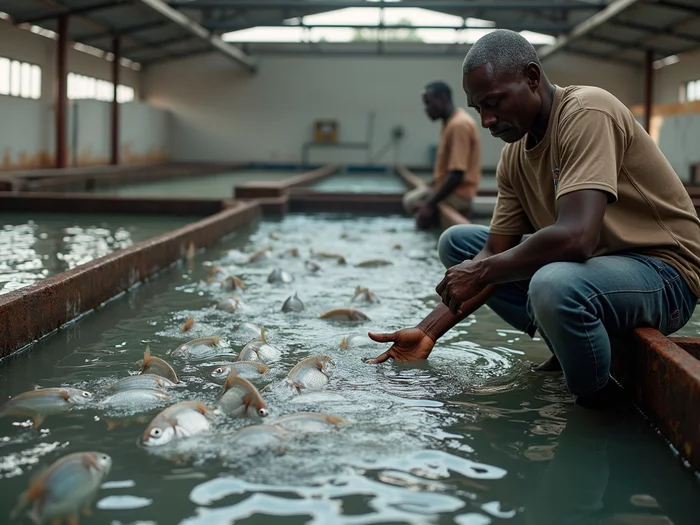
Posted on: 2025-11-29
By: Yomi Adisa
Table of Contents
You've carefully selected your tilapia breeding stock, set up proper spawning conditions, yet your hatchery produces inconsistent results. Some batches yield thousands of healthy fry, whilst others barely produce a handful of survivors. This frustrating cycle costs you money and delays your production schedule.
Successful tilapia reproduction requires more than just putting males and females together in a pond. Nile tilapia and Blue tilapia have specific breeding requirements that must be met consistently. Temperature, nutrition, stocking ratios, and timing all play critical roles in achieving reliable spawning success.
This comprehensive guide reveals the proven techniques that experienced tilapia farmers use to maximise their breeding success. You'll learn how to condition your broodstock, optimise spawning environments, and manage the entire breeding cycle for consistent, profitable results season after season.
🎯 What You'll Learn
- How to design tank systems that promote optimal tilapia growth and health.
- Effective strategies for managing stocking densities and ensuring consistent fish growth.
- Key water quality parameters to monitor for successful tilapia farming.
Tank Setup and Design
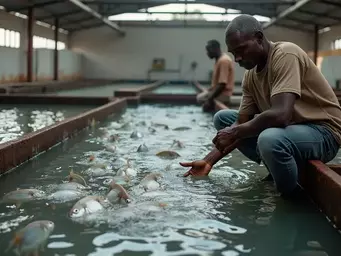
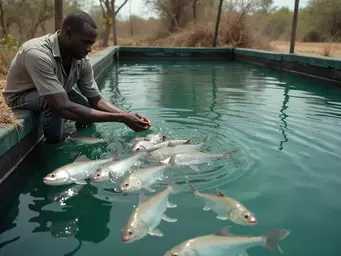
Your tank design determines whether your tilapia thrive or merely survive, yet many farmers rush into construction without understanding the critical factors that affect fish health and growth. The wrong tank material can leach chemicals, poor sizing leads to overcrowding stress, and inadequate water flow creates dead zones where waste accumulates. These mistakes cost you money in lost fish and reduced growth rates. Nile tilapia (Oreochromis niloticus) and Blue tilapia (Oreochromis aureus) adapt well to tank systems, but they need proper conditions to reach their growth potential. Tank material affects water chemistry, size determines stocking capacity, and water flow patterns influence oxygen levels and waste removal. Getting these fundamentals right from the start saves you from expensive modifications later.
The investment in proper tank setup pays for itself through higher survival rates, faster growth, and easier management. Here's how to design a tank system that maximises your tilapia production whilst minimising ongoing problems.
Choosing the Right Tank Material
You have three main options for tank construction: fibreglass, HDPE (high-density polyethylene), and concrete, each with distinct advantages for tilapia farming. Fibreglass tanks offer excellent durability and smooth surfaces that resist algae buildup, but they cost KES 80,000-120,000 for a 5,000-litre capacity. HDPE tanks provide the best balance of cost and performance—they're lightweight, chemical-resistant, and won't crack like concrete, making them popular amongst Nigerian farmers who pay ₦150,000-250,000 for similar capacity.Concrete tanks cost the least initially (KES 40,000-60,000 for 5,000 litres) and work well in rural areas where skilled labour is affordable. However, concrete requires proper curing to prevent pH fluctuations that stress tilapia, and it's prone to cracking in areas with temperature extremes. You'll find concrete tanks common in Uganda's rural farms, whilst urban operations in Kenya favour HDPE for easier installation.
Both Nile and Blue tilapia tolerate all three materials once properly prepared, but consider your local suppliers and maintenance capabilities. Agricultural supply stores in Nairobi stock HDPE tanks, whilst fibreglass requires specialised suppliers in major cities. Choose based on your budget, expected lifespan, and local technical support availability.
Optimal Tank Size and Shape
Your production scale determines tank size requirements: small-scale operations need 1,000-3,000 litres per tank, medium farms use 5,000-10,000 litres, and commercial operations often exceed 20,000 litres per unit. Circular tanks provide superior water circulation because they eliminate dead corners where waste accumulates, making them popular in Uganda where farmers report 15-20% better growth rates compared to rectangular designs. Rectangular tanks work well in space-constrained areas common in Kenyan urban farms, but you need careful inlet and outlet placement to ensure proper flow.
Tank depth affects oxygen exchange and fish behaviour—maintain 1.2-1.5 metres depth for optimal surface area to volume ratio. Shallow tanks (under 1 metre) overheat quickly in tropical conditions, whilst tanks deeper than 2 metres create stratification problems where bottom water becomes oxygen-depleted. Nile tilapia grow larger than Blue tilapia (up to 2kg versus 1.5kg), so plan tank volume accordingly if you're targeting maximum size fish.
Surface area matters more than total volume for oxygen exchange. A 5,000-litre tank measuring 3m diameter × 1.4m deep provides better conditions than a narrow 2m × 2m × 1.25m rectangular tank of similar volume. Calculate 0.5-1 square metre of surface area per kilogram of fish biomass for adequate oxygen levels.
Designing Efficient Water Flow and Aeration
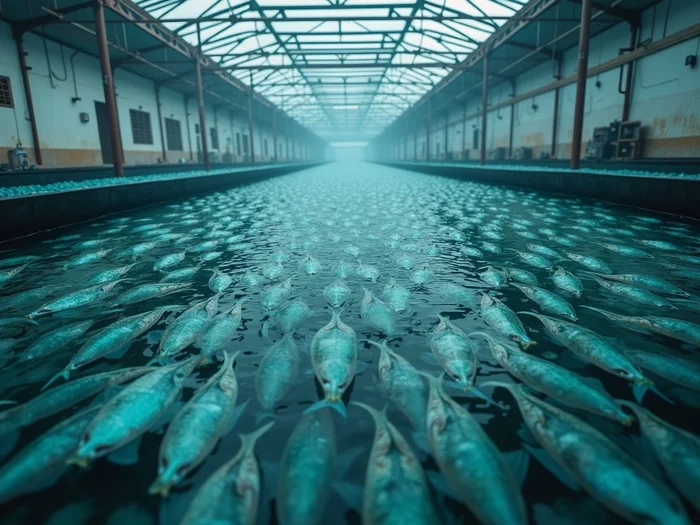
Water circulation removes waste, distributes oxygen, and prevents temperature stratification that stresses tilapia. Position water inlets at the top of one side and outlets at the bottom of the opposite side to create a circular flow pattern that sweeps waste toward the drain. You want complete water turnover every 2-4 hours depending on stocking density—a 5,000-litre tank needs 1,250-2,500 litres per hour flow rate. Aeration systems supplement natural oxygen exchange, especially critical during hot weather when dissolved oxygen drops. Paddlewheel aerators work best for large tanks (10,000+ litres), providing 2-4kg oxygen per hour whilst creating beneficial water movement. Air stone systems cost less (KES 15,000-25,000 for a complete setup) and suit smaller operations—use one air stone per 1,000 litres of tank volume connected to a 0.5-1 horsepower blower.Solar-powered aeration reduces electricity costs, particularly valuable in Zambia where grid power is unreliable. A 100-watt solar panel with battery backup can run air stones for 8-12 hours daily, maintaining oxygen levels during critical overnight periods. Nile tilapia tolerate dissolved oxygen levels down to 3mg/L briefly, but sustained levels below 5mg/L slow growth and increase disease susceptibility for both species.
Stocking Density and Management
Your stocking density decisions directly impact fish growth rates, feed conversion efficiency, and overall profitability. Many farmers make the costly mistake of overstocking tanks to maximise short-term production, only to discover that crowded fish grow slowly, consume more feed per kilogram of weight gain, and suffer higher mortality rates. This approach reduces your profit margins and extends production cycles.
Proper stocking density management requires understanding the relationship between fish biomass, tank volume, and water quality parameters. Nile tilapia and Blue tilapia respond differently to crowding stress, with optimal densities varying based on fish size, water temperature, and feeding strategies. Getting this balance right maximises your return on investment whilst maintaining healthy fish.
The key lies in calculating appropriate densities for each growth phase and adjusting stocking levels as your fish develop. This systematic approach ensures consistent growth rates, efficient feed utilisation, and predictable harvest schedules that align with market demands.
Calculating Stocking Density for Tilapia
Start with 20-30 kilograms of fish biomass per cubic metre of tank volume for optimal growth conditions. For fingerlings weighing 10-20 grams, this translates to 1,000-3,000 fish per cubic metre initially, but you must reduce numbers as fish grow to maintain proper density. A 5,000-litre tank can hold 100-150 kilograms of fish biomass at maximum capacity, requiring careful monitoring as your stock approaches this limit.
Calculate your current biomass by sampling 10% of your fish monthly and multiplying average weight by total fish count. When biomass exceeds 25kg/m³, growth rates slow significantly and feed conversion ratios worsen from 1.5:1 to 2.5:1 or higher. Nigerian farmers using intensive systems often push densities to 40kg/m³ with excellent aeration and filtration, but this requires advanced management skills and higher operational costs.
Nile tilapia tolerate higher densities better than Blue tilapia due to their more efficient oxygen utilisation and feeding behaviour. Blue tilapia become territorial when crowded, leading to uneven growth and increased aggression. Plan for Nile tilapia maximum densities of 30kg/m³ and Blue tilapia at 25kg/m³ to maintain optimal conditions.
💡 Pro Tip: Simple Biomass Calculation
Weigh 20 fish randomly selected from different areas of your tank, calculate the average weight, then multiply by your total fish count. Update this calculation monthly to track biomass growth and plan harvesting or restocking decisions.
Phased Growth and Split Stocking Techniques
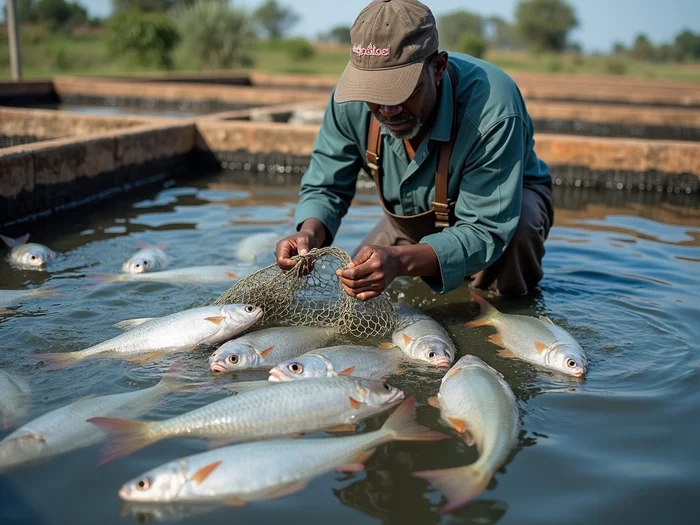
Implement split stocking to maintain continuous production and steady cash flow throughout the year. Stock new fingerlings every 2-3 months whilst harvesting market-size fish from previous batches, creating overlapping production cycles that generate monthly income. Ghanaian farmers using this system report 40% higher annual revenues compared to single-batch production methods.Divide your tanks into three groups: nursery tanks for fingerlings (0-50g), grow-out tanks for juveniles (50-200g), and finishing tanks for market-size fish (200g+). This segregation prevents larger fish from competing with smaller ones for feed and reduces cannibalism that occurs when size differences exceed 30%. Transfer fish between tanks when they reach appropriate size thresholds to maintain optimal densities.
Time your stocking based on local market demands—stock fingerlings 4-6 months before peak selling seasons like Christmas or Ramadan when fish prices increase 20-30%. Nile tilapia reach 250-300 grams in 4-5 months under good conditions, whilst Blue tilapia require 5-6 months for similar weights. Plan your stocking schedule accordingly to hit target harvest dates.
Monitoring Growth Rates and Adjusting Stocking
Weigh a sample of 20 fish weekly using a digital scale accurate to 1 gram, recording individual weights and calculating average daily gain. Healthy tilapia should gain 2-4 grams per day during optimal growing conditions, with Nile tilapia typically outperforming Blue tilapia by 15-20%. When growth rates drop below 1.5 grams daily, investigate stocking density, water quality, or feeding issues immediately.Maintain detailed records showing stocking dates, fish counts, average weights, feed consumption, and water quality parameters. Tanzanian farmers using simple logbooks report better decision-making and 25% improved profitability compared to those relying on memory alone. Create monthly summaries comparing actual growth against expected performance to identify trends early.
Reduce stocking density when fish reach 150-200 grams by harvesting the largest individuals or transferring them to finishing tanks. This selective harvesting maintains optimal growing conditions for remaining fish whilst providing early cash flow from premium-size fish that command higher market prices.
Water Quality Management
Water quality determines whether your tilapia thrive or struggle to survive, yet many farmers underestimate how quickly conditions can deteriorate in tank systems. Poor water quality causes stress that reduces growth rates by 30-50%, increases disease susceptibility, and can kill your entire stock within hours if ammonia or nitrite levels spike. These problems often develop gradually, making early detection crucial for preventing catastrophic losses.
Tank systems concentrate fish waste and uneaten feed in a small volume, creating rapid changes in water chemistry that don't occur in natural ponds. Nile tilapia and Blue tilapia have specific tolerance ranges for pH, dissolved oxygen, ammonia, and temperature—exceeding these limits triggers stress responses that compromise immune function and growth performance. Understanding these parameters helps you maintain optimal conditions consistently.
Effective water quality management requires regular monitoring, proper filtration, and quick response to problems. The investment in testing equipment and filtration systems pays for itself through higher survival rates, faster growth, and reduced medication costs. Here's how to maintain water quality that maximises your tilapia production.
Key Parameters for Tilapia Water Quality
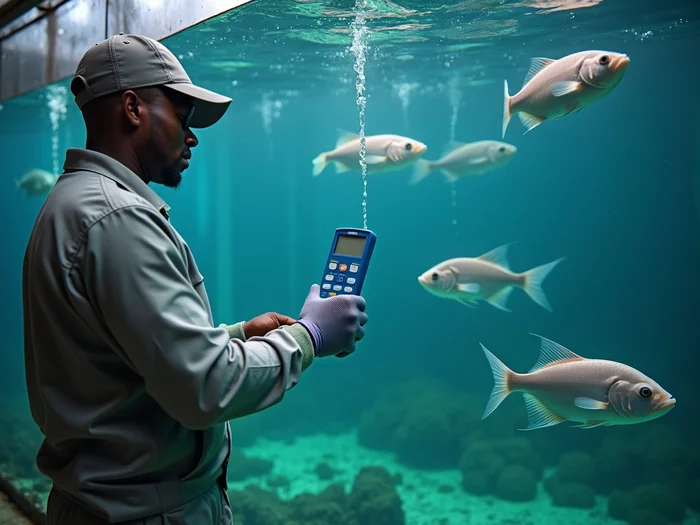
Maintain pH between 6.5-8.5 for optimal tilapia health, with 7.0-8.0 being ideal for both Nile and Blue tilapia growth and reproduction. pH below 6.0 causes gill damage and reduces oxygen-carrying capacity of blood, whilst levels above 9.0 increase ammonia toxicity dramatically. Test pH daily using digital meters (KES 3,000-5,000) or test strips (KES 500 for 50 tests) available from agricultural suppliers in Nairobi and Lagos. Keep ammonia levels below 0.02mg/L and nitrite under 0.1mg/L to prevent chronic stress and gill damage. Nile tilapia tolerate slightly higher ammonia levels than Blue tilapia, but both species show reduced feeding and growth when ammonia exceeds 0.05mg/L. High-density systems in Egyptian farms often struggle with ammonia buildup, requiring daily testing and immediate water changes when levels rise.Dissolved oxygen must stay above 5mg/L for optimal growth, though both species survive brief periods at 3mg/L. Water temperature affects oxygen solubility—at 30°C, water holds 25% less oxygen than at 20°C, making aeration critical during hot weather. Ugandan farmers report best growth rates when maintaining dissolved oxygen at 6-8mg/L through continuous aeration systems.
Implementing Effective Filtration Systems
Install three-stage filtration combining mechanical, biological, and chemical processes to maintain water quality in intensive tank systems. Mechanical filtration removes solid waste using filter pads or settling tanks—allow 10-15 minutes retention time for particles to settle before water returns to fish tanks. Biological filtration converts toxic ammonia to less harmful nitrates using beneficial bacteria grown on plastic media or gravel beds. Build a simple biofilter using a 200-litre drum filled with gravel or plastic bio-media, with water pumped from the bottom and flowing out the top. Size your biofilter at 20-30% of your total tank volume for adequate bacterial colonisation—a 5,000-litre fish tank needs a 1,000-1,500 litre biofilter. Kenyan farmers often use locally available volcanic rock as bio-media, which provides excellent surface area for bacterial growth at low cost.Chemical filtration using activated carbon removes dissolved organics and medications, but replace carbon monthly as it becomes saturated. UV sterilisers control harmful bacteria and parasites by exposing water to ultraviolet light—size UV units to treat your total system volume every 2-4 hours. Solar-powered UV systems work well in rural areas where grid electricity is unreliable, with 40-watt units adequate for 10,000-litre systems.
Regular Water Testing and Maintenance Practices
Test water quality parameters daily during the first month of operation, then reduce to weekly testing once your system stabilises. Record all measurements in a logbook noting date, time, temperature, pH, ammonia, nitrite, and dissolved oxygen levels. Tanzanian farmers using consistent testing schedules report 40% fewer disease outbreaks compared to those testing irregularly.Perform partial water changes of 10-20% weekly to remove accumulated nitrates and replenish minerals, increasing to daily changes if ammonia or nitrite levels rise above safe limits. Calculate water change volumes carefully—a 5,000-litre tank needs 500-1,000 litres of fresh water weekly under normal conditions. Use dechlorinated water or allow tap water to stand 24 hours before adding to tanks, as chlorine kills beneficial bacteria in biofilters.
Clean mechanical filters weekly or when water flow reduces noticeably, backwashing gravel filters or replacing filter pads as needed. Monitor biofilter performance by testing ammonia and nitrite levels—properly functioning biological filtration should convert ammonia to nitrite within 6-12 hours, then nitrite to nitrate within 24 hours. Zambian farmers often share water testing resources between neighbouring farms to reduce costs whilst maintaining regular monitoring schedules.
⚠️ Warning: Ammonia Spike Emergency
If ammonia levels exceed 0.1mg/L, immediately change 50% of tank water and increase aeration. Stop feeding until ammonia drops below 0.02mg/L, as uneaten feed worsens the problem. This emergency response can save your entire stock from ammonia poisoning.
Feeding and Nutrition Strategies
Feed represents 60-70% of your total production costs in tank farming, making feeding efficiency crucial for profitability. Many farmers waste money by overfeeding, using poor-quality feeds, or failing to adjust feeding rates as fish grow. These mistakes increase feed conversion ratios from an optimal 1.5:1 to wasteful 3:1 or higher, directly reducing your profit margins.
Proper nutrition affects growth rates, disease resistance, and final product quality in both Nile and Blue tilapia. These species have different feeding behaviours and nutritional requirements that influence feeding strategies—Nile tilapia are more aggressive feeders, whilst Blue tilapia browse more selectively. Understanding these differences helps you optimise feeding schedules and feed types for maximum efficiency.
Successful feeding strategies balance nutritional requirements with cost considerations, using locally available ingredients where possible whilst maintaining growth performance. The goal is achieving consistent daily weight gains of 3-4 grams per fish whilst minimising feed waste and maintaining water quality.
Understanding Tilapia Feed Conversion Ratio (FCR)
Calculate FCR by dividing total feed consumed by total weight gained—an FCR of 1.5 means 1.5kg of feed produces 1kg of fish growth. Target FCR of 1.5-2.0 for commercial viability, with ratios above 2.5 indicating feeding problems or poor fish health. Nile tilapia typically achieve better FCR (1.4-1.8) than Blue tilapia (1.6-2.2) due to their more efficient metabolism and aggressive feeding behaviour.
Monitor FCR monthly by weighing fish samples and recording total feed consumption for each tank. Ghanaian farmers tracking FCR report 25% better profitability compared to those feeding without measurement. Poor FCR often results from overfeeding, low-quality feed, incorrect pellet size, or suboptimal water conditions that reduce fish appetite and digestion efficiency.
Improve FCR by feeding smaller amounts more frequently rather than large meals twice daily. Fish digest food more efficiently when fed 3-4 times daily at 2-3% of body weight, compared to twice-daily feeding at 4-6% body weight. Water temperature affects metabolism—reduce feeding rates by 50% when temperatures drop below 20°C, as fish cannot digest food efficiently in cold conditions.
Selecting Quality Feed and Formulated Diets
Choose feeds with 28-32% protein for growing tilapia, reducing to 24-28% protein for fish approaching market size to improve FCR and reduce costs. High-quality pellets should sink slowly, maintain integrity for 30 minutes in water, and have a fresh smell without rancidity. Avoid feeds with excessive dust or broken pellets, which indicate poor manufacturing or storage conditions.Source feeds from reputable manufacturers who provide guaranteed analysis showing protein, fat, fibre, and moisture content. In Nigeria, companies like Coppens and Skretting produce specialised tilapia feeds, whilst local manufacturers offer cost-effective alternatives using regional ingredients. Compare cost per unit of protein rather than just price per bag—a ₦8,000 feed with 30% protein offers better value than a ₦6,000 feed with 20% protein.
Store feeds in dry, cool conditions to prevent mould growth and nutrient degradation. Use feeds within 3 months of manufacture for optimal nutritional value, as vitamins deteriorate over time. Ugandan farmers often buy feeds in smaller quantities more frequently to ensure freshness, despite slightly higher per-kilogram costs.
Supplementary Feeding Techniques for Optimal Growth
Supplement commercial feeds with locally available ingredients like rice bran, maize bran, or soybean meal to reduce costs whilst maintaining nutrition. Mix supplements at 10-20% of total feed volume, ensuring protein levels remain adequate for growth. Tanzanian farmers successfully use cassava leaves and sweet potato vines as vitamin-rich supplements, reducing feed costs by 15-20%.Adjust feeding frequency based on water temperature and fish behaviour—feed 4 times daily when temperatures exceed 25°C, reducing to twice daily below 20°C. Observe fish during feeding to ensure all individuals compete for food; dominant fish may prevent smaller ones from feeding adequately. Scatter feed across the tank surface rather than feeding in one location to ensure even distribution.
Time feeding sessions for maximum efficiency: early morning (6-7 AM), late morning (10-11 AM), afternoon (2-3 PM), and evening (5-6 PM) when fish are most active. Avoid feeding during the hottest part of the day (12-2 PM) when dissolved oxygen levels are lowest and fish appetite is reduced. Stop feeding if fish don't consume food within 15 minutes, as uneaten feed pollutes water and encourages bacterial growth.
Disease Prevention and Biosecurity
Disease outbreaks can destroy months of investment within days, making prevention far more cost-effective than treatment. Many farmers focus on treating sick fish rather than preventing disease, leading to recurring problems that reduce profitability and increase mortality rates. A single disease outbreak can kill 50-80% of your stock whilst contaminating your entire system.
Tank systems concentrate fish in small volumes, creating ideal conditions for rapid disease transmission if pathogens enter your system. Stress from poor water quality, overcrowding, or handling weakens fish immune systems, making them susceptible to bacteria, viruses, and parasites that healthy fish normally resist. Both Nile and Blue tilapia show similar disease susceptibilities, though their stress responses differ slightly.
Effective biosecurity prevents disease introduction whilst maintaining fish health through optimal environmental conditions. This proactive approach costs less than treating diseases and ensures consistent production without the losses that devastate poorly managed farms. Here's how to protect your investment through comprehensive disease prevention.
Common Tilapia Diseases and Symptoms
Tilapia Lake Virus (TiLV) represents the most serious threat to African tilapia farming, causing 90% mortality in affected stocks within 7-10 days. Infected fish show lethargy, loss of appetite, skin darkening, and eye lesions before dying rapidly. This virus spreads through water, contaminated equipment, and infected fish—Egyptian farms lost millions of fish to TiLV outbreaks between 2018-2020, highlighting the importance of strict biosecurity.Columnaris disease appears as white patches on skin, fins, and gills, caused by Flavobacterium bacteria that thrive in warm water above 25°C. Affected fish gasp at the surface, show frayed fins, and develop cotton-like growths on their bodies. This disease spreads rapidly in crowded conditions with poor water quality, making it common in overstocked tanks with inadequate filtration.
Streptococcosis causes fish to swim erratically, develop cloudy eyes, and show abdominal swelling before death occurs within 2-3 days. This bacterial infection spreads through direct contact and contaminated water, often following stress from handling, transport, or poor water conditions. Kenyan farmers report higher streptococcosis incidence during hot, dry seasons when water temperatures exceed 28°C consistently.
Implementing Biosecurity Measures on Your Farm
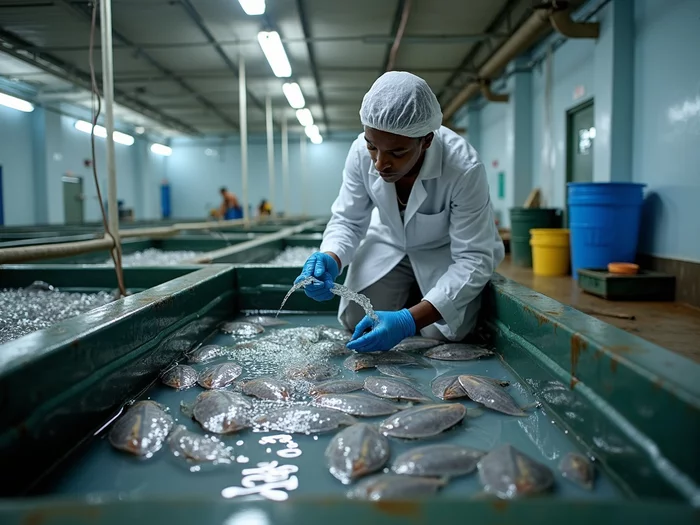
Establish a quarantine system for all new fish, equipment, and visitors to prevent disease introduction to your main production tanks. Quarantine new stock for 14-21 days in separate tanks, monitoring for disease symptoms before mixing with existing fish. Disinfect all equipment moving between tanks using 200ppm chlorine solution or potassium permanganate, allowing contact time of 10-15 minutes before rinsing. Control access to your farm by installing gates, fencing, and visitor registration systems that limit unauthorised entry. Provide disinfection footbaths containing lime or bleach solution at all entry points, requiring everyone to step through before entering production areas. Ugandan farmers using strict access controls report 60% fewer disease outbreaks compared to farms with unrestricted access.Maintain separate equipment for each tank or production unit to prevent cross-contamination between healthy and potentially infected fish. Use different nets, buckets, and tools for quarantine areas versus main production tanks, storing them separately and disinfecting after each use. Source fingerlings only from certified disease-free hatcheries that provide health certificates and vaccination records.
Regular Health Checks and Record-Keeping
Conduct daily health observations during feeding times, noting fish behaviour, appetite, swimming patterns, and any visible abnormalities. Healthy tilapia swim actively throughout the tank, respond quickly to feeding, and show bright colours with clear eyes. Record daily mortality counts, water temperature, feeding rates, and any unusual observations in a farm logbook for pattern analysis.Perform weekly detailed health checks by netting 10-20 fish from each tank and examining them for external parasites, lesions, fin damage, or abnormal body condition. Weigh fish during these checks to monitor growth rates and identify tanks with poor performance that may indicate health problems. Return examined fish gently to minimise handling stress that can trigger disease outbreaks.
Maintain detailed records showing fish sources, stocking dates, mortality rates, treatment history, and growth performance for each tank. Zambian farmers using comprehensive record-keeping systems identify disease patterns early and make informed management decisions that reduce losses by 30-40%. Create monthly summaries comparing mortality rates between tanks to identify problem areas requiring attention.
Common Challenges and Solutions in Tank Farming
Tank farming presents unique challenges that don't occur in pond systems, often catching new farmers unprepared and causing significant losses. Equipment failures, water quality crashes, and uneven fish growth create problems that require immediate solutions to prevent stock losses. These challenges become more severe as stocking densities increase and systems become more intensive.
Many problems in tank farming result from inadequate planning, insufficient backup systems, or poor understanding of how intensive systems differ from traditional pond farming. A single pump failure can kill thousands of fish within hours if you lack contingency plans, whilst poor management practices create chronic problems that reduce profitability over time. Both Nile and Blue tilapia suffer similarly from these system failures, though their responses may vary slightly.
Successful tank farmers anticipate problems and prepare solutions before emergencies occur. This proactive approach minimises losses, maintains production schedules, and ensures consistent profitability even when equipment fails or environmental conditions change. Here's how to address the most common challenges in tank farming systems.
Addressing Water Quality Issues
Oxygen depletion represents the most immediate threat in tank systems, often occurring during power outages, equipment failures, or hot weather when dissolved oxygen levels drop rapidly. Install battery backup systems for critical aeration equipment, sizing batteries to run aerators for 8-12 hours during outages. Solar-powered backup systems work well in areas with unreliable grid power, providing continuous operation during daylight hours when oxygen demand peaks.High ammonia levels develop quickly in tank systems when biofilters fail or fish loads exceed system capacity. Reduce feeding immediately when ammonia exceeds 0.05mg/L, increase water exchange rates to 50% daily, and add commercial beneficial bacteria to restore biological filtration. Malawian farmers keep emergency ammonia-removing products on hand, applying them according to manufacturer instructions whilst addressing underlying causes.
pH fluctuations stress fish and reduce feeding efficiency, often caused by inadequate buffering capacity in tank water. Add agricultural lime or sodium bicarbonate to raise pH, using 1-2 grams per 100 litres of water and testing frequently to avoid overshooting target levels. Install automatic pH controllers in larger systems to maintain stable conditions without constant manual adjustment.
Managing Stocking and Growth Variability
Size variation within tanks creates competition problems where larger fish dominate feeding areas and smaller fish fail to grow properly. Implement monthly grading to separate fish into size groups, moving similar-sized fish to the same tanks to reduce competition. Use grading nets with appropriate mesh sizes—12mm mesh separates 50-100g fish from larger ones, whilst 8mm mesh sorts smaller fingerlings effectively.Aggressive feeding behaviour in Nile tilapia can prevent submissive fish from accessing food, leading to stunted growth in 20-30% of the population. Feed at multiple locations simultaneously and use sinking pellets that spread throughout the tank rather than floating feeds that concentrate at the surface. Ghanaian farmers report more uniform growth when using 4-6 feeding points per tank compared to single-point feeding.
Monitor individual tank performance weekly by sampling fish weights and calculating growth rates for each unit. Tanks showing poor performance often indicate overcrowding, equipment problems, or disease issues requiring immediate attention. Transfer slow-growing fish to less crowded tanks or reduce stocking density by harvesting the largest individuals early to improve conditions for remaining fish.

Equipment Failures and Contingency Plans
Water pump failures cause the most catastrophic losses in tank systems, cutting off water circulation and aeration within minutes. Install redundant pumps for critical systems, with automatic switching that activates backup pumps when primary units fail. Size backup pumps at 100% capacity of primary units rather than smaller emergency pumps that provide inadequate flow rates during failures.Develop written emergency protocols specifying actions to take during different equipment failures, posting these procedures where all farm workers can access them quickly. Train staff to recognise equipment problems early and respond appropriately—unusual pump noises, reduced water flow, or abnormal fish behaviour often indicate impending failures. Tanzanian farmers using emergency checklists respond 50% faster to equipment problems compared to those relying on memory alone.
Maintain spare parts inventory for critical equipment including pump impellers, motor brushes, electrical contactors, and pipe fittings that commonly fail. Source spare parts locally where possible to reduce replacement time—agricultural suppliers in major cities often stock common aquaculture equipment parts. Establish relationships with equipment suppliers who provide emergency service calls, even if this costs more than routine maintenance contracts.
| Parameter | Optimal Range | Frequency | Action if Outside Range |
|---|---|---|---|
| pH | 6.5-8.5 (ideal 7.0-8.0) | Daily | Adjust with agricultural lime or sodium bicarbonate |
| Dissolved Oxygen | Above 5 mg/L | Daily | Increase aeration; use paddlewheel or air stone systems |
| Ammonia | Below 0.02 mg/L | Daily | Perform water change; reduce feeding |
| Stocking Density | 20-30 kg/m³ | Monthly | Reduce numbers or transfer to larger tanks |
| Feed Conversion Ratio (FCR) | 1.5-2.0 | Monthly | Adjust feeding practices; check feed quality |
| Water Change | 10-20% weekly | Weekly | Increase to daily if ammonia/nitrite levels rise |
| Growth Rate | 2-4 g/day | Weekly | Investigate density, water quality, or feeding issues |
Conclusion
Tank farming offers you precise control over your tilapia production environment, but success depends on getting the fundamentals right from the start. Proper tank design, optimal stocking densities, consistent water quality management, and strategic feeding practices work together to create profitable operations. These systems require more active management than ponds, but they reward careful attention with higher yields and predictable harvests.
You now have the technical knowledge to establish and manage a tank-based tilapia operation successfully. Start with one or two tanks to gain experience before expanding your system. Your skills will develop as you learn to read your fish behaviour and respond to changing conditions quickly.
Consider integrating your tank system with other farm activities like vegetable production through aquaponics, or explore value-added processing to increase your profit margins. Tank farming provides the foundation for intensive tilapia production that can support diverse agricultural enterprises and steady income throughout the year.

Frequently Asked Questions
What if my power goes out and my aerators stop working?
Immediately perform a partial water change of 20-30% to temporarily increase dissolved oxygen. If you don't have a battery backup, manually agitate the water surface with a bucket or paddle every 15-30 minutes until power is restored. Consider a solar-powered backup system for continuous aeration during outages.
How often should I clean my biofilter media?
You generally shouldn't "clean" your biofilter media aggressively, as this removes beneficial bacteria. Instead, gently rinse it in old tank water (not chlorinated tap water) only if you notice significant clogging or reduced flow, typically every 3-6 months. The goal is to remove excess sludge without destroying the bacterial colonies.
Can I mix Nile tilapia and Blue tilapia in the same tank?
While possible, it's generally not recommended for optimal production. Nile tilapia tend to grow faster and are more aggressive feeders, which can lead to competition and stunted growth for Blue tilapia. Keeping them separate allows you to tailor feeding and environmental conditions to each species' specific needs for better overall results.
Why is my tilapia feed floating and not sinking, even though it's supposed to?
Floating feed can indicate it's stale, poorly manufactured, or has absorbed moisture during storage. While some floating is normal, if most of your sinking pellets float, it can lead to waste and uneven feeding. Try sourcing from a different supplier or checking your feed storage conditions for excessive humidity.
What's the best way to introduce new fingerlings to an existing tank without stressing them?
First, quarantine new fingerlings in a separate tank for 14-21 days. When ready, float their transport bag in the main tank for 30 minutes to equalise temperatures, then gradually add small amounts of tank water to the bag over another 30 minutes. This slow acclimatisation minimises shock and reduces stress, which is crucial for their survival and health.


Yomi Adisa Lead Researcher
Yomi Adisa is the lead researcher at Fish Farming Business, where he studies what makes aquaculture ventures profitable across Africa. His research focuses on market patterns, buyer preferences, and the business decisions that determine success or failure in fish farming.