Making Tilapia Feed at Home: Using Local Ingredients to Cut Costs
Posted on: 2025-10-17
By: Yomi Adisa
Making Tilapia Feed at Home: Using Local Ingredients to Cut Costs
Picture this: You're calculating your monthly expenses and realise that commercial tilapia feed is consuming nearly 70% of your production budget. Last month alone, you spent 18,000 shillings on feed for your modest pond system, and with prices continuing to climb, you're wondering if there's a better way. You watch other farmers struggling with the same challenge—some reducing feeding rates to cut costs, others abandoning their operations entirely when feed prices spike unexpectedly.
📑 Table of Contents
Feed costs have become the biggest barrier to profitable tilapia farming across Africa, with commercial feeds now costing 300-400 naira per kilogram in Nigeria and 55-70 shillings in Kenya. This price volatility puts your entire operation at risk, making it nearly impossible to predict profits or plan for expansion. Yet many successful farmers have discovered that producing their own feed using locally available ingredients can reduce costs by 30-50% whilst maintaining excellent growth rates.
The secret lies in understanding tilapia nutrition and mastering practical feed formulation techniques using ingredients readily available in your area. Agricultural byproducts like maize bran, rice bran, and groundnut cake can form the foundation of nutritious feeds when combined properly with local protein sources. This comprehensive guide provides you with complete technical knowledge for producing cost-effective tilapia feed at home.
You'll learn precise formulation methods for different growth stages, discover how to source quality ingredients locally, master practical preparation and pelletising techniques, and understand proper storage methods that maintain feed quality for months. By implementing these proven techniques, you'll gain control over your largest production expense whilst ensuring optimal fish growth and health.
🎯 What You'll Learn
- Learn how to formulate cost-effective tilapia feed using locally available ingredients to reduce feed costs by 30-50%.
- Master the essential nutrient requirements for tilapia at different growth stages to ensure optimal health and growth rates.
- Discover effective ingredient sourcing strategies and seasonal availability patterns to maintain a reliable supply chain for homemade feed production.
Picture this: You're standing beside your tilapia pond in the early morning, watching your fish surface eagerly for their daily meal. But as you reach for the bag of commercial feed, you wince at the memory of what it cost you last month. Feed prices have risen by 40% in just two years across Nigeria, Kenya, and Uganda, forcing many small-scale farmers to reduce feeding rates or abandon their operations entirely.
A farmer in Kisumu recently told me he was spending 15,000 shillings monthly on commercial feed for his 100-square-metre pond system – nearly 60% of his total production costs. This article provides you with complete technical guidance for producing nutritious, cost-effective tilapia feed using ingredients readily available in your local area. You'll learn precise formulation techniques, understand the exact nutritional requirements for different growth stages, and master practical preparation methods that can reduce your feed costs by 30-50% whilst maintaining optimal fish growth rates.
Why does this production knowledge matter so critically to your success? Self-sufficiency in feed production shields you from market price volatility, improves your profit margins, and gives you complete control over feed quality. A farmer in Ibadan produces his own feed at 180 naira per kilogram compared to 320 naira for commercial alternatives, whilst achieving identical growth rates of 4-5 grams daily weight gain in his Nile tilapia. Beyond economics, using local agricultural byproducts creates a sustainable farming system that benefits your entire community and reduces environmental waste.
Understanding Tilapia Nutrition and Feed Formulation
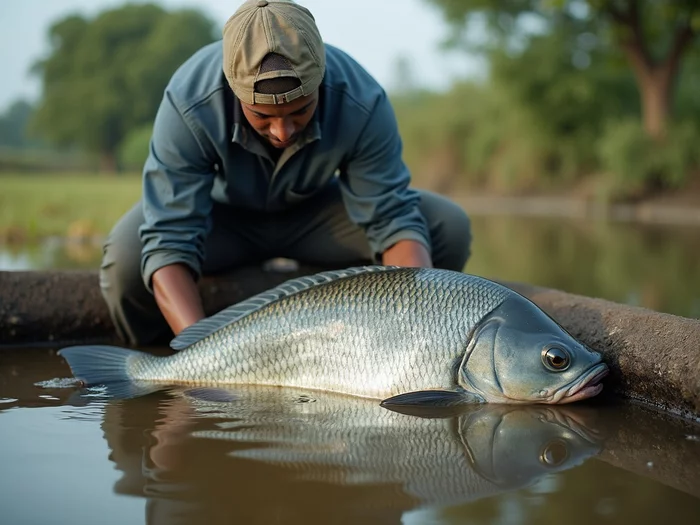
Before you begin mixing ingredients in your backyard, you must understand that tilapia nutrition works like a precise recipe – each nutrient plays a specific role in fish health, growth, and reproduction. Getting the balance wrong means wasted money, poor growth rates, and potentially losing your entire stock to nutritional diseases. The good news is that tilapia are omnivorous and remarkably adaptable, making them ideal candidates for locally-formulated feeds when you follow proven nutritional principles.
Nutritional Requirements of Tilapia
Your tilapia require six essential nutrient categories: proteins, lipids (fats), carbohydrates, vitamins, minerals, and water. Protein serves as the most critical and expensive component, comprising 25-35% of the total feed depending on fish size. Fingerlings under 50 grams need 32-35% protein for rapid tissue development, whilst adult fish over 200 grams thrive on 25-28% protein content.
A farmer in Mombasa discovered this difference the hard way – feeding adult tilapia a 35% protein diet designed for fingerlings increased his feed costs by 25% without improving growth rates. Lipids should constitute 6-10% of your feed formulation, providing essential fatty acids and concentrated energy. Tilapia cannot synthesise certain fatty acids internally, particularly linoleic acid, making dietary inclusion mandatory.
Carbohydrates can comprise 20-40% of the feed, serving as an economical energy source that spares protein for growth rather than metabolism. However, tilapia digest carbohydrates less efficiently than terrestrial animals, so avoid exceeding 40% to prevent digestive issues and water quality problems from undigested matter. Vitamins and minerals, though required in small quantities, prevent deficiency diseases that devastate fish populations.
| Growth Stage | Protein (%) | Lipids (%) | Carbohydrates (%) | Vitamins & Minerals |
|---|---|---|---|---|
| Fingerlings (<50g) | 32-35 | 6-10 | 20-40 | 0.8-1.2% Phosphorus, 1.5-2.5% Calcium |
| Juveniles (50-200g) | 28-32 | 6-10 | 20-40 | 0.8-1.2% Phosphorus, 1.5-2.5% Calcium |
| Adults (>200g) | 25-28 | 6-10 | 20-40 | 0.8-1.2% Phosphorus, 1.5-2.5% Calcium |
Importance of Amino Acids
Think of amino acids as the building blocks that construct fish muscle, organs, and enzymes. Tilapia require ten essential amino acids that their bodies cannot produce: arginine, histidine, isoleucine, leucine, lysine, methionine, phenylalanine, threonine, tryptophan, and valine. Lysine and methionine typically limit growth in plant-based feeds, making them your primary concerns when formulating with local ingredients like maize, cassava, and soybean meal.
Lysine should comprise 5.1% of total protein content, whilst methionine requires 2.7% of protein. When your primary protein source is fishmeal, these requirements are naturally met. However, plant-based formulations often fall short, particularly in methionine content.
A farmer in Kumasi solved this challenge by combining groundnut cake (high in lysine) with sesame seed meal (higher in methionine), achieving proper amino acid balance whilst using entirely local ingredients. You can evaluate amino acid adequacy by monitoring fish growth rates and feed conversion efficiency. Poor amino acid profiles manifest as slow growth, increased feed conversion ratios above 2.5:1, and higher susceptibility to diseases.
Local Ingredients and Their Nutritional Value
Your local market likely contains numerous suitable feed ingredients, each contributing specific nutritional benefits to your formulation. Fishmeal remains the gold standard protein source, containing 60-65% protein with excellent amino acid profiles. Local fishmeal costs vary significantly – 280-350 naira per kilogram in Lagos, 45-60 shillings in Nairobi, 180-220 shillings in Kampala – but provides unmatched nutritional value.
Even low-quality local fishmeal from small fish and processing waste contains 45-55% protein, suitable for adult tilapia feeds. Agricultural byproducts offer economical alternatives with decent nutritional profiles. Maize bran contains 12-14% protein and serves as an excellent carbohydrate source at 15-25 naira per kilogram across Nigeria.
Rice bran provides 13-15% protein plus valuable B vitamins, costing 20-35 kwacha per kilogram in Lusaka. Wheat bran delivers 15-17% protein and improves feed palatability, though availability varies by region. Oil seed meals provide concentrated protein at reasonable costs.
| Ingredient | Protein Content (%) | Cost (Local Currency/kg) | Nutritional Benefits |
|---|---|---|---|
| Fishmeal | 60-65 | 280-350 | Excellent amino acid profile |
| Maize Bran | 12-14 | 15-25 | Good carbohydrate source |
| Rice Bran | 13-15 | 20-35 | Contains B vitamins |
| Groundnut Cake | 45-50 | 120-180 | High in lysine |
| Sunflower Seed Meal | 35-40 | Similar to groundnut | Good protein source |
| Cotton Seed Meal | 40-45 | Varies by region | Potential gossypol toxicity |
| Duckweed | 20-35 | Varies | High in protein, sustainable |
| Sweet Potato Leaves | 18-22 | Varies | Rich in carotenoids |
| Moringa Leaves | 25-30 | Varies | High in vitamins |
Basic Feed Formulation Techniques
Feed formulation requires systematic calculation to meet nutritional targets whilst minimising costs. Start with the square method for simple two-ingredient combinations, then progress to algebraic methods for complex formulations. The square method works perfectly when combining high-protein and low-protein ingredients to achieve target protein levels.
For example, combining fishmeal (60% protein) with maize (9% protein) to achieve 30% protein: Draw a square with 30 in the centre, 60 and 9 in the left corners, then calculate differences diagonally. The result shows you need 21 parts fishmeal to 30 parts maize, or 41.2% fishmeal and 58.8% maize by weight. This method ensures mathematical precision whilst remaining simple enough for field calculations.
Complex formulations require the algebraic method, setting up equations for each nutritional constraint. For a 32% protein fingerling feed using four ingredients, establish protein equations: (Fishmeal % × 60) + (Groundnut cake % × 48) + (Maize % × 9) + (Rice bran % × 14) = 32. Add similar equations for cost minimisation and ingredient availability constraints, then solve simultaneously.
Sourcing Local Ingredients and Overcoming Challenges
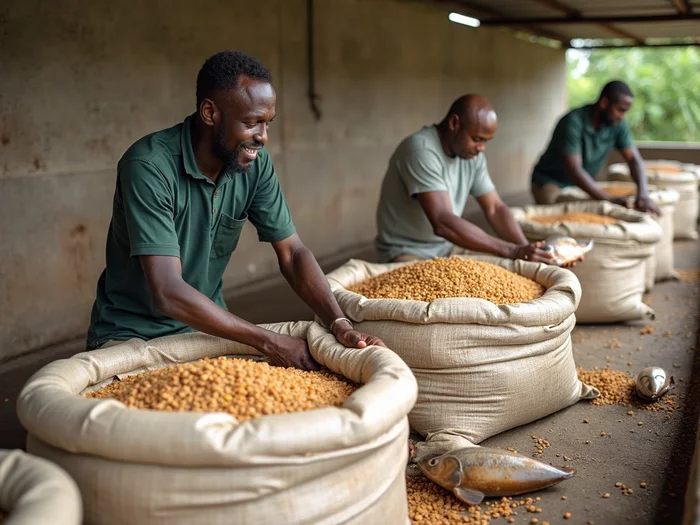
Successfully producing homemade tilapia feed depends entirely on establishing reliable, cost-effective ingredient supply chains within your local area. This process requires more than simply visiting the nearest market – you need strategic relationships with suppliers, understanding of seasonal availability patterns, and creative solutions to overcome inevitable sourcing challenges. Many farmers fail at feed production not because of poor formulation skills, but because they cannot consistently obtain quality ingredients at reasonable prices.
Identifying Local Suppliers
Your ingredient sourcing journey begins with mapping every potential supplier within a practical transport radius of your farm. Agricultural processing facilities generate the most valuable byproducts for fish feed – visit maize mills, rice mills, groundnut processing centres, and palm oil mills to enquire about bran, cake, and meal availability. A farmer in Kano built relationships with three maize mills, securing consistent maize bran supplies at 18 naira per kilogram compared to 28 naira at retail markets.
Fish processing centres and markets provide fishmeal opportunities, though quality varies dramatically. Establish connections with fish traders who can notify you about spoiled fish unsuitable for human consumption but perfect for fishmeal production. Small-scale fishmeal production requires basic equipment – a grinder, drying area, and storage containers – but reduces protein costs significantly.
Livestock feed dealers often stock ingredients suitable for fish feed, particularly during seasons when ingredient availability fluctuates. These dealers understand nutritional requirements and can suggest alternatives when your preferred ingredients become scarce or expensive. However, verify that livestock ingredients meet fish nutrition standards – some contain additives unsuitable for aquatic animals.
Seasonal Availability of Ingredients
Understanding seasonal ingredient availability prevents feed production disruptions and enables strategic purchasing when prices drop. Harvest seasons flood markets with agricultural byproducts, creating temporary price reductions that savvy farmers exploit through bulk purchasing and proper storage. Maize harvest occurs between September and December across most of East Africa, when maize bran becomes abundant and prices drop by 20-30%.
Rice harvest seasons vary by region – April to July in irrigated areas, November to February in rain-fed regions – affecting rice bran availability and pricing. Plan your annual feed production around these cycles, purchasing and storing maximum quantities during abundant periods. A farmer in Mwanza stores six months of rice bran during harvest season, saving 35% compared to purchasing throughout the year.
Fishing seasons impact fishmeal availability, with peak catches during specific months varying by water body and species. Lake Victoria experiences peak catches during March to May and October to December, when fish processing waste increases dramatically. Coastal areas have different patterns based on monsoon seasons and fish migration patterns.
Overcoming Sourcing Challenges
Transport costs can eliminate savings from cheap ingredients located far from your farm. Calculate total delivered costs including fuel, vehicle hire, and your time before committing to distant suppliers. Sometimes paying slightly higher prices for nearby ingredients proves more economical than travelling long distances for bargains. Coordinate with other farmers to share transport costs for bulk purchases from distant suppliers.
Quality inconsistency plagues many local ingredient sources, requiring careful inspection and testing procedures. Develop simple quality assessment skills – smell for rancidity, check for mould growth, verify moisture content, and examine colour consistency. Reject ingredients that smell off, show visible mould, feel excessively moist, or display unusual colours.
Seasonal scarcity forces ingredient substitutions that can disrupt your established formulations. Develop alternative formulations using different ingredient combinations that achieve similar nutritional profiles. When groundnut cake becomes scarce, substitute with sunflower meal plus additional lysine sources. Maintain flexibility in your formulations whilst preserving nutritional standards.
Feed Preparation Techniques
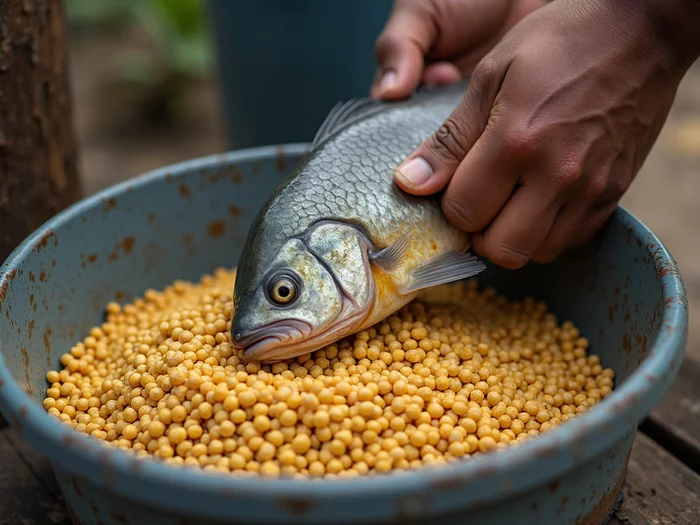
Transforming raw ingredients into nutritious, palatable tilapia feed requires systematic preparation techniques that ensure proper mixing, appropriate physical form, and adequate preservation. Poor preparation wastes quality ingredients, reduces feed efficiency, and can harm fish health through contamination or nutritional imbalances. The preparation process determines whether your carefully formulated feed achieves its theoretical nutritional potential or disappoints through practical failures.
Mixing Ingredients
Proper ingredient mixing creates homogeneous feed where every pellet contains identical nutritional content, preventing selective feeding and ensuring consistent fish growth. Begin with dry ingredient preparation – grind all components to similar particle sizes using a hammer mill, grain grinder, or mortar and pestle for small batches. Particle size should range between 0.5-2.0 millimetres for adult tilapia, 0.2-0.8 millimetres for fingerlings.
Mix ingredients in ascending order of inclusion rates, starting with the largest quantity component and gradually adding smaller amounts. For a typical formulation, begin with maize bran (largest component), add groundnut cake, then fishmeal, followed by oil, vitamins, and minerals. This sequence prevents small quantities from being overwhelmed by large additions and ensures even distribution throughout the mixture.
Hand mixing works effectively for batches under 50 kilograms using the cone and quarter method. Pour all ingredients into a cone-shaped pile, divide into four quarters, then recombine by taking material from opposite quarters alternately. Repeat this process five to six times until the mixture appears uniform in colour and texture.
Pelletising Feed
Pelletising transforms loose feed mixture into compact, durable pellets that improve feed efficiency, reduce waste, and enhance fish growth rates. Pellets sink at controlled rates, allowing fish to consume feed before it dissolves and pollutes water. Proper pellet density ensures feed remains available for 15-20 minutes after application, optimising consumption whilst minimising waste.
Manual pelletising using a simple meat grinder or hand-operated pellet mill produces adequate results for small-scale operations. Add water gradually to the dry mixture until it reaches 15-20% moisture content – the mixture should hold together when squeezed but not feel soggy. Too little water creates crumbly pellets that disintegrate quickly, whilst excessive water produces soft pellets that dissolve before fish can consume them.
Steam conditioning improves pellet quality by gelatinising starches and creating stronger binding between ingredients. Simple steam generation using a pressure cooker or improvised steamer adds moisture and heat simultaneously, reducing the water addition required and improving pellet durability. Steam conditioning at 70-80°C for 2-3 minutes produces pellets that maintain integrity for 30-45 minutes in water.
Drying and Storing Feed
Proper drying prevents mould growth, maintains nutritional quality, and extends storage life from weeks to months. Fresh pellets contain 15-20% moisture immediately after formation, but require reduction to 10-12% for safe storage. Excessive moisture encourages mould growth that produces aflatoxins – toxic compounds that cause liver damage and immune suppression in tilapia.
Solar drying provides the most economical drying method across tropical Africa, utilising abundant sunshine to remove moisture naturally. Spread pellets in thin layers on clean mats, trays, or concrete surfaces, turning every 2-3 hours to ensure even drying. Complete drying typically requires 6-8 hours of direct sunlight, depending on ambient humidity and pellet size.
Storage containers must protect dried feed from moisture, rodents, insects, and contamination whilst allowing air circulation to prevent condensation. Metal drums with tight-fitting lids provide excellent protection but can be expensive. Large plastic containers with secure lids offer more affordable alternatives, though they may allow some moisture penetration over extended periods.
Monitoring Fish Health and Growth
Feed effectiveness becomes apparent through systematic monitoring of fish health indicators, growth rates, and feeding behaviour patterns. Healthy fish exhibit bright colours, clear eyes, intact fins, and active swimming behaviour. Poor feed quality manifests through lethargy, loss of appetite, abnormal swimming patterns, and increased susceptibility to diseases.
Weekly weight sampling provides objective growth measurement that reveals feed conversion efficiency and growth rates. Select 10-15 representative fish from different pond areas, weigh individually, then calculate average weights and growth rates. Healthy tilapia gain 4-6 grams weekly when fed quality feed at appropriate rates.
Feed conversion ratio calculation reveals feed efficiency by comparing feed consumed to weight gained over specific periods. Record daily feed quantities and calculate total consumption over 2-4 week periods, then divide by total weight gain during the same period. Ratios between 1.8-2.2:1 indicate excellent feed efficiency, whilst ratios above 2.5:1 suggest problems requiring formulation adjustments or feeding modifications.
| Disease | Symptoms | Causes | Prevention |
|---|---|---|---|
| Nutritional Deficiency | Slow growth, lethargy, poor appetite | Inadequate protein or amino acids | Proper feed formulation |
| Bacterial Infection | Red spots, fin rot, cloudy eyes | Poor water quality, stress | Maintain water quality, avoid overfeeding |
| Fungal Disease | White cotton-like growth | Poor water quality, injuries | Good hygiene, quality feed |
Supplemental Feeding and Pond Management
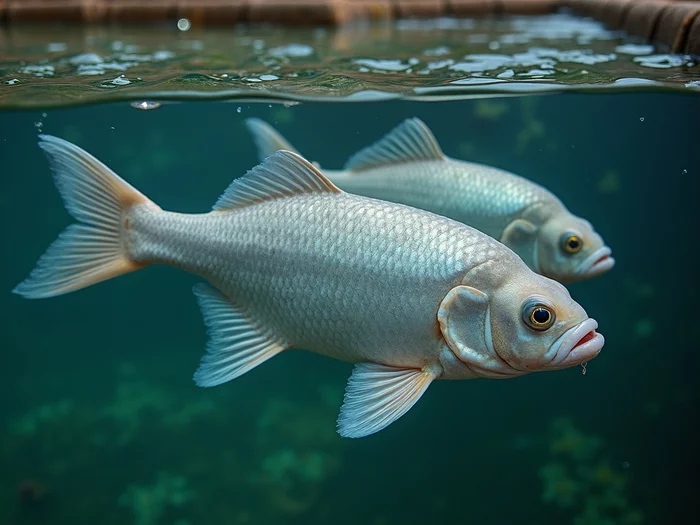
Integrating homemade feed with natural pond productivity creates a synergistic system that maximises fish growth whilst minimising feed costs and environmental impact. This approach recognises that healthy ponds produce substantial quantities of natural fish food – algae, zooplankton, insects, and organic matter – that supplements prepared feeds and reduces production expenses. Understanding how to stimulate natural food production and coordinate it with artificial feeding transforms your pond from a simple fish container into a productive ecosystem.
Understanding Supplemental Feeding
Natural pond productivity can provide 20-40% of your tilapia's nutritional requirements when properly managed, reducing your dependence on prepared feeds and lowering production costs significantly. Tilapia naturally consume algae, small invertebrates, organic detritus, and aquatic plants that grow within pond environments. A well-managed pond produces 200-400 kilograms of natural food per hectare annually, supporting 2,000-3,000 tilapia without any artificial feed input.
Organic fertilisation stimulates natural food production by providing nutrients that support algae and zooplankton growth. Chicken manure, cow dung, and pig waste contain nitrogen and phosphorus that fuel primary productivity, creating food chains that ultimately benefit your fish. Apply organic fertiliser at 100-200 kilograms per hectare monthly, adjusting quantities based on water colour and fish response.
Water should maintain light green colour indicating optimal algae density. Inorganic fertilisers provide more precise nutrient control but require careful application to prevent water quality problems. Apply diammonium phosphate (DAP) at 5-10 kilograms per hectare weekly during the growing season to maintain consistent nutrient availability for natural food production.
Producing your own tilapia feed using local ingredients represents one of the most impactful steps you can take to improve your farming profitability and sustainability. By mastering basic formulation principles—balancing protein, lipids, and carbohydrates whilst ensuring proper amino acid profiles—you can reduce feed costs by 30-50% compared to commercial alternatives. Start with simple two-ingredient formulations using the square method, then gradually develop more complex feeds as your confidence and understanding grow.
Remember that consistent ingredient sourcing and proper preparation techniques matter as much as perfect formulation. You now possess the technical knowledge to create nutritious feeds that support excellent growth rates and fish health. Yes, there's a learning curve involved—your first batches might not achieve perfect pellet consistency, and ingredient sourcing will require patience and relationship-building.
But every successful tilapia farmer started exactly where you are now, and with practice, feed production becomes as routine as daily pond maintenance. This feed production knowledge connects directly to pond management and fish health monitoring—areas you should explore next in your farming journey. Quality homemade feed means nothing without proper feeding schedules and water quality management to support optimal growth.
Frequently Asked Questions
How can I tell if my homemade feed has the right amino acid balance for my tilapia?
You can evaluate amino acid adequacy by closely monitoring your fish's growth rates and feed conversion efficiency. Poor amino acid profiles will typically manifest as slow growth, increased feed conversion ratios above 2.5:1, and a higher susceptibility to diseases. Properly balanced feeds should result in feed conversion ratios of 1.8-2.2:1.
What are the most cost-effective local ingredients I can use to achieve the necessary protein levels for my fingerlings?
For fingerlings needing 32-35% protein, fishmeal remains the gold standard, even lower-quality local fishmeal with 45-55% protein is suitable. You can also combine economical agricultural byproducts like groundnut cake (45-50% protein) with other ingredients, ensuring you balance lysine and methionine as these are often limiting in plant-based feeds.
Why is it so crucial to dry my homemade tilapia pellets thoroughly before storing them?
Proper drying is essential because it prevents mould growth, which can produce dangerous aflatoxins that cause liver damage and immune suppression in tilapia. It also helps maintain the nutritional quality of your feed and extends its storage life from weeks to several months. Aim to reduce moisture content from 15-20% down to 10-12% for safe storage.
Can I use fresh ingredients like duckweed or sweet potato leaves directly in my tilapia feed, or do they need preparation?
Yes, fresh ingredients like duckweed (20-35% protein) and sweet potato leaves (18-22% protein) can supplement your feed and reduce costs. While duckweed can comprise up to 30% of the diet when fresh, it's generally recommended to dry and grind ingredients like moringa leaves before inclusion to ensure proper mixing and nutrient distribution.
What's a simple method to ensure all my ingredients are evenly mixed, especially for smaller batches without expensive equipment?
For batches under 50 kilograms, the "cone and quarter" method works very effectively for hand mixing. You pour all ingredients into a cone-shaped pile, divide it into four quarters, then recombine by taking material from opposite quarters alternately. Repeating this process five to six times will ensure a uniform mixture in colour and texture.


Yomi Adisa Lead Researcher
Yomi Adisa is the lead researcher at Fish Farming Business, where he studies what makes aquaculture ventures profitable across Africa. His research focuses on market patterns, buyer preferences, and the business decisions that determine success or failure in fish farming.