10 Essential Tilapia Production Techniques for Maximum Yield
Posted on: 2025-11-19
By: Yomi Adisa
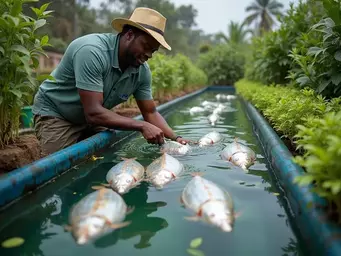
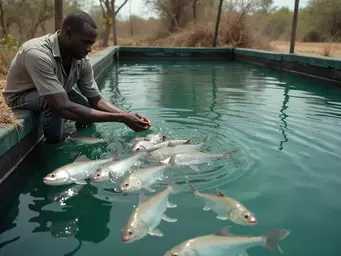
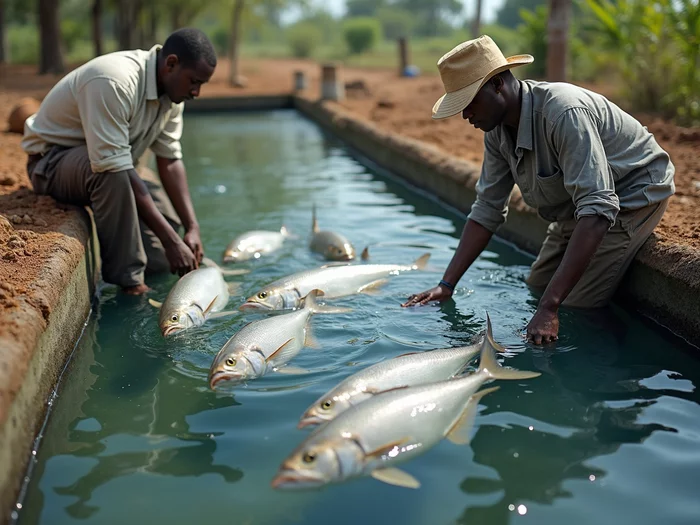
You've built your tilapia pond, stocked it with healthy fingerlings, and started feeding regularly—yet your fish keep dying unexpectedly. The water looks clear, the fish seemed fine yesterday, but this morning you're pulling out dozens of dead Nile tilapia. This heartbreaking scenario plays out on farms across Africa when disease strikes without warning.
Table of Contents
- Understanding Tilapia Production Systems
- Optimal Stocking Density and Management
- Feeding Strategies for Maximum Growth
- Water Quality Management Best Practices
- Disease Control and Biosecurity Measures
- Harvesting Techniques for Optimal Yield
- Market Access and Value Addition
- Conclusion
- Frequently Asked Questions
Disease prevention is the difference between profitable tilapia farming and devastating losses that can wipe out months of investment. Even hardy species like Nile and Blue tilapia are vulnerable to bacterial infections, parasites, and viral diseases when conditions favour disease development. Understanding how diseases spread and establishing prevention measures protects your entire stock.
This guide teaches you practical disease prevention strategies that successful tilapia farmers use to keep their fish healthy year-round. You'll learn to recognise early warning signs, implement biosecurity measures, and create conditions that prevent disease outbreaks before they destroy your harvest.
🎯 What You'll Learn
- How to choose the right tilapia production system for your resources.
- Effective feeding strategies to maximise growth and reduce costs.
- Best practices for water quality management and disease prevention.
Understanding Tilapia Production Systems
You need to choose the right production system before you stock your first fingerling, because this decision affects everything from your initial investment to your daily management routine. Each tilapia farming system has distinct advantages and challenges that directly impact your profitability and success rates. What works perfectly for a farmer in Lagos with limited space might fail completely for someone with abundant land in rural Uganda.
Your production system determines stocking densities, feeding strategies, water management requirements, and harvest methods. Nile tilapia (Oreochromis niloticus) adapts well to most systems, whilst Blue tilapia (Oreochromis aureus) performs better in specific conditions. Understanding these differences helps you match your resources, location, and market demands to the most suitable production method.
Most successful tilapia farmers start with one system and expand or modify based on experience and market feedback. Here's how to evaluate and implement the four main production systems used across Africa.
Pond Culture Techniques
You'll find pond culture remains the most popular tilapia farming method across Africa because it requires lower initial investment and uses readily available materials. Traditional earthen ponds work exceptionally well in areas with good clay soil, like the fertile regions around Lake Victoria in Kenya and Uganda. You need ponds between 1-2 metres deep to maintain stable temperatures and provide adequate space for fish movement.
Your site selection determines 80% of your pond's success before you even start digging. You want locations with reliable water sources, gentle slopes for drainage, and clay-rich soil that holds water without excessive seepage. In Nigeria's aquaculture zones around Ogun and Lagos states, successful farmers choose sites within 2 kilometres of year-round water sources and avoid areas prone to flooding during rainy seasons.
You should stock 3-5 Nile tilapia fingerlings per square metre in earthen ponds, calculating your total capacity based on surface area rather than volume. For a 20m x 10m pond (200 square metres), you can comfortably stock 600-1,000 fingerlings. Nile tilapia thrives in pond systems because it tolerates the natural fluctuations in water quality that occur in larger water bodies.
Tank and Recirculating Systems
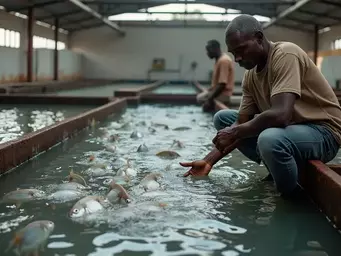
You need tank systems when land is expensive or scarce, particularly in urban areas where you're targeting local markets with fresh fish. These systems give you complete control over water quality, feeding schedules, and environmental conditions, but require higher technical knowledge and initial investment. A basic recirculating system in Kenya costs around KES 50,000-80,000 for a 1,000-litre setup including tanks, pumps, filters, and aeration equipment.
Your tank system needs reliable electricity for pumps and aerators, making it suitable for areas with stable power supply or where you can afford backup generators. Blue tilapia often performs better in tank systems because the controlled conditions allow you to optimise temperature and feeding for maximum growth rates. You can achieve harvest weights of 300-400 grams in 4-5 months with proper management.
You should stock 20-30 fingerlings per cubic metre in tank systems, significantly higher than pond densities because of superior water quality control. For a 2,000-litre tank, stock 40-60 fingerlings initially and monitor growth rates closely. The main disadvantage is higher operating costs for electricity and replacement parts, but urban farmers often offset this with premium prices for fresh, locally-grown tilapia.
In-Pond Raceway Systems
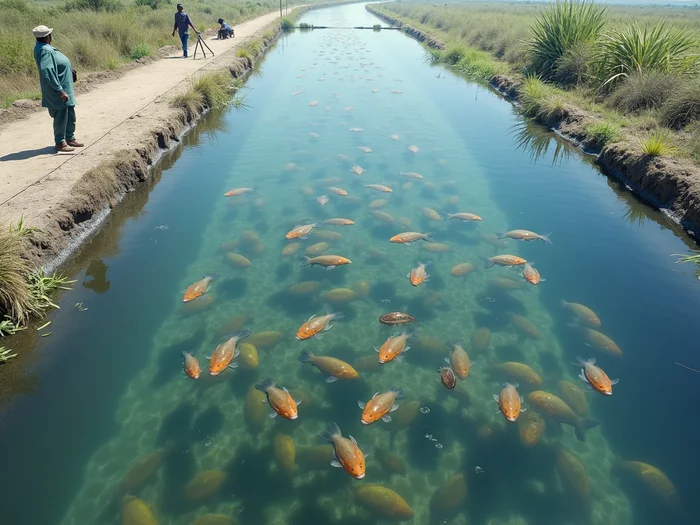
You can dramatically increase your production without expanding pond size by installing raceway systems that concentrate fish in high-flow areas whilst using the larger pond for waste processing. These systems work particularly well in Uganda where farmers have successfully adapted the technology to local conditions using locally-available materials. You need continuous water flow of 1-2 litres per minute per fish to maintain adequate oxygen levels and waste removal.
Your raceway should measure 2-3 metres wide, 12-20 metres long, and 1.5 metres deep to create proper flow patterns and allow easy netting during harvest. You can stock 30-50 fish per cubic metre in the raceway section—ten times higher than traditional pond densities. This intensive system requires careful monitoring because problems develop quickly when fish are concentrated in small areas.
You want to use both Nile and Blue tilapia in raceway systems, but Nile tilapia handles the higher densities better and shows more consistent growth rates. The flowing water mimics natural river conditions that tilapia prefer, often resulting in better feed conversion ratios and faster growth compared to static pond systems.
Aquaponics Integration
You can produce both fish and vegetables from the same water by integrating tilapia farming with hydroponic plant production, creating two income streams from one system. South African farmers have developed successful small-scale aquaponics operations costing around ZAR 10,000-15,000 that produce both tilapia and high-value crops like lettuce, herbs, and tomatoes. The fish waste provides nutrients for plant growth whilst the plants filter water for the fish.
Your aquaponics system needs three main components: fish tanks, grow beds filled with gravel or expanded clay, and a pump to circulate water between them. You stock Nile tilapia at 10-15 fish per 100 litres of tank volume, feeding them normally whilst their waste feeds the plants. The system requires daily monitoring of both fish health and plant growth, making it suitable for farmers who enjoy hands-on management.
You should start with hardy plants like lettuce, spinach, and herbs before attempting fruiting crops like tomatoes that require more nutrients and expertise. A 1,000-litre fish tank can support 2-3 square metres of vegetable production, with harvest cycles of 4-6 weeks for leafy greens. This system works best near urban markets where you can sell both fresh fish and premium vegetables to restaurants and health-conscious consumers.
Optimal Stocking Density and Management
You can double your tilapia harvest simply by getting stocking density right from day one, yet most African farmers either overcrowd their ponds or waste space with too few fish. The difference between 200kg and 400kg per pond often comes down to understanding how many fingerlings your system can support without compromising growth rates or water quality. Getting this balance wrong costs you money in wasted feed, stunted fish, or complete stock losses from overcrowding stress.
Your stocking density affects everything from feeding schedules to harvest timing, because fish compete for oxygen, space, and food as they grow larger. What works perfectly for 50-gram fingerlings becomes dangerously overcrowded when those same fish reach 300 grams six months later. Successful farmers in Kenya's Kiambu County plan their stocking rates based on final harvest weights, not initial fingerling size.
This section teaches you how to calculate optimal stocking densities for different systems, monitor fish growth effectively, and adjust management practices as your tilapia mature. You'll learn the specific numbers that profitable farmers use and how to modify these based on your local conditions and market requirements.
Determining Stocking Rates
You need to calculate stocking density based on your pond's surface area, not total volume, because tilapia spend most of their time in the upper water layers where oxygen levels are highest. For earthen ponds, stock 2-3 Nile tilapia fingerlings per square metre if you're feeding commercial pellets, or 1-2 per square metre if relying mainly on natural pond productivity. A 400-square-metre pond should hold 600-800 fingerlings maximum when targeting 400-gram harvest weights.
Your water exchange rate determines how many fish you can stock safely in any system. Ponds with continuous water flow can support 4-5 fish per square metre, whilst static ponds without inflow should never exceed 2 fish per square metre. Farmers in Ghana's Ashanti Region achieve excellent results stocking 3 fingerlings per square metre in ponds with weekly water exchanges of 10-20%.
You must account for natural mortality when calculating initial stocking numbers, typically 10-15% losses during the first month even with good management. Stock 10% more fingerlings than your target harvest number to compensate for these expected losses. Blue tilapia requires 20% more space than Nile tilapia because it grows larger and shows more aggressive territorial behaviour as it matures.
Managing Fish Growth and Health
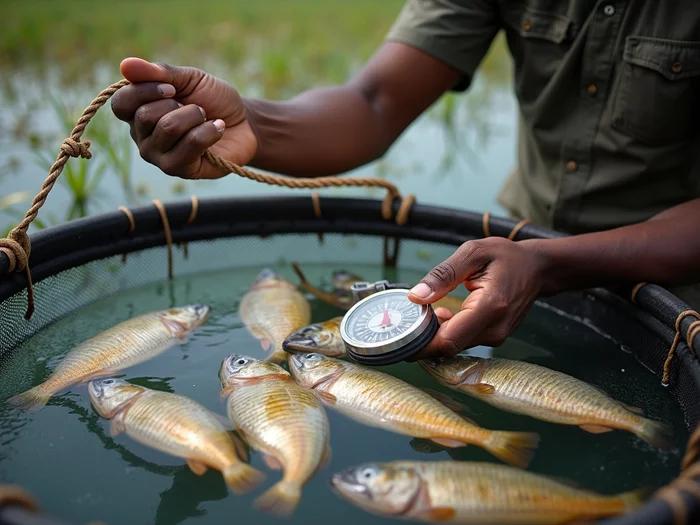
You should sample 10-15 fish monthly to track growth rates and adjust feeding programmes accordingly, using a simple spring scale to weigh individual fish and measuring total length with a ruler. Healthy Nile tilapia fingerlings gain 15-20 grams per month under good management, reaching 200-250 grams in 5-6 months. If your fish are gaining less than 10 grams monthly, you're either overfeeding, understocking, or dealing with water quality problems.
Your fish behaviour tells you more about their health than any single measurement can provide. Healthy tilapia swim actively throughout the pond, respond quickly to feeding, and show bright colours with clear eyes and intact fins. Watch for fish gasping at the surface early morning, which indicates oxygen depletion, or fish gathering in corners, which suggests water quality problems or disease onset.
💡 Pro Tip: Growth Tracking Made Simple
Use a permanent marker to mark your sampling net at 15cm, 20cm, and 25cm intervals. This lets you quickly sort fish by size during monthly sampling without needing a ruler each time, making growth monitoring faster and more consistent.
You need to maintain detailed records of feeding amounts, water temperature, and fish weights to identify patterns that affect growth performance. Successful farmers in Tanzania's Mwanza Region keep simple notebooks tracking daily feed amounts, weekly water changes, and monthly fish weights, allowing them to optimise their management based on actual results rather than guesswork.
Adjusting Density for System Type
You can stock tank systems at much higher densities than ponds because of superior water quality control and continuous filtration. Stock 15-20 Nile tilapia fingerlings per cubic metre in recirculating systems with adequate aeration and filtration, compared to just 2-3 per square metre in earthen ponds. A 2,000-litre tank can support 30-40 fingerlings initially, but you'll need to harvest or transfer some fish as they grow to maintain optimal conditions.
Your seasonal management must account for temperature changes that affect fish metabolism and oxygen consumption. During hot seasons when water temperatures exceed 28°C, reduce stocking densities by 20-30% because fish consume more oxygen and produce more waste. Farmers in northern Nigeria reduce their pond stocking from 3 to 2 fish per square metre during March-May when temperatures peak.
You should plan partial harvests when using intensive systems, removing the largest 30-40% of fish at 4-5 months to give remaining fish more space for continued growth. This strategy works particularly well with Nile tilapia because size variation allows you to harvest selectively whilst maintaining production in the same system. Blue tilapia shows less size variation, making partial harvesting more difficult but allowing more predictable harvest timing.
Feeding Strategies for Maximum Growth
You can increase your tilapia growth rates by 40-60% simply by optimising your feeding strategy, yet most African farmers either overfeed and waste money or underfeed and limit their harvest potential. Feed represents 60-70% of your total production costs, making it the single most important factor determining profitability. Getting your feeding programme right means faster growth, better feed conversion, and higher profits per pond.
Your feeding strategy must match your fish's changing nutritional needs as they grow from 5-gram fingerlings to 400-gram market fish. What works perfectly for young, rapidly-growing tilapia becomes wasteful and inefficient for mature fish preparing for harvest. Successful farmers in Ghana's Central Region adjust protein levels, feeding frequencies, and portion sizes based on fish size and water temperature.
This section teaches you how to calculate feed requirements, choose appropriate feed types, and develop feeding schedules that maximise growth whilst minimising costs. You'll learn practical techniques that profitable tilapia farmers use to achieve feed conversion ratios below 1.5 and harvest market-sized fish in 5-6 months.
Types of Feed and Nutritional Needs
You need feeds containing 32-35% protein for fingerlings under 50 grams, reducing to 28-30% protein for growing fish, and 25-28% for fish approaching harvest weight. Commercial pellets provide consistent nutrition but cost 40-60% more than locally-made feeds, making them suitable for intensive systems where fast growth justifies higher costs. In Kenya, a 25kg bag of commercial tilapia feed costs KES 1,800-2,200, whilst locally-made feeds cost KES 800-1,200 for equivalent protein content.
Your homemade feeds should combine fishmeal (20-30%), maize meal (30-40%), wheat bran (15-20%), and soybean meal (10-15%) to achieve proper protein levels for growing tilapia. Add 2-3% vegetable oil and 1% vitamin premix to improve palatability and nutritional balance. Nile tilapia efficiently converts plant-based proteins, making locally-available ingredients like groundnut cake and cotton seed meal excellent protein sources when properly processed.
You must store feeds in dry, rodent-proof containers and use them within 3 months of production to maintain nutritional value and prevent mould growth. Farmers in Uganda's Mukono District successfully use metal drums with tight-fitting lids to store homemade feeds, checking moisture levels weekly with simple visual inspections. Never feed mouldy or rancid feeds to tilapia, as these cause liver damage and poor growth performance.
Feed Conversion Ratios Explained
You calculate Feed Conversion Ratio (FCR) by dividing total feed given by total weight gained—an FCR of 1.5 means you need 1.5kg of feed to produce 1kg of fish growth. Excellent tilapia farmers achieve FCRs of 1.2-1.4, good farmers reach 1.5-1.8, whilst poor feeding practices result in FCRs above 2.0. Your target should be FCR below 1.6 for profitable production, calculating this monthly to track feeding efficiency.
Your FCR improves dramatically with proper feeding frequency and timing, feeding small amounts 3-4 times daily rather than one large feeding. Nile tilapia digest food more efficiently when fed at water temperatures between 26-30°C, typically achieving best FCRs during morning and late afternoon feedings. Blue tilapia shows similar patterns but requires slightly more protein to achieve equivalent growth rates.
💡 Pro Tip: FCR Calculation Made Simple
Weigh 20 fish monthly and multiply by total fish number to estimate pond biomass. Track feed given daily in a notebook. FCR = Total feed ÷ (Final weight - Initial weight). Target FCR below 1.6 for profitable production.
You can improve FCR by adjusting feeding rates based on water temperature, reducing feed amounts by 50% when temperatures drop below 20°C or exceed 32°C. Farmers in Tanzania's Mwanza Region achieve FCRs of 1.3-1.5 by feeding 3% of fish body weight daily during optimal temperatures, reducing to 1-2% during temperature extremes.
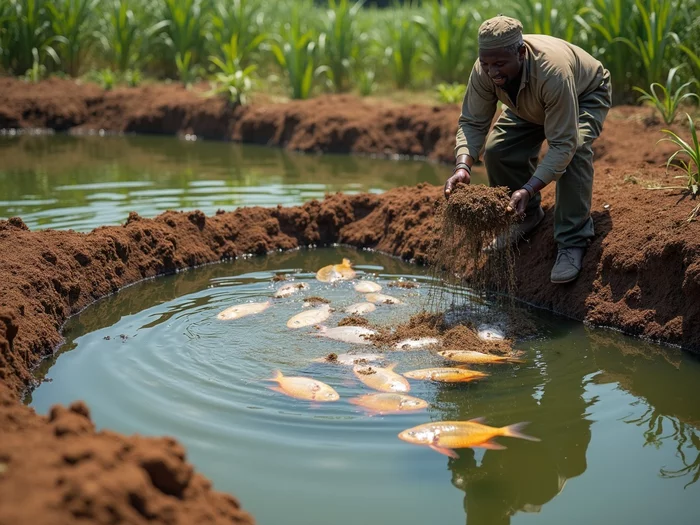
Incorporating Local Resources (e.g., Manure)
You can reduce feed costs by 30-50% by incorporating chicken manure, cow dung, and agricultural by-products that stimulate natural food production in your ponds. Apply 100-200kg of well-composted chicken manure per hectare monthly to boost plankton growth that tilapia consume naturally. This organic matter provides indirect nutrition whilst reducing your commercial feed requirements significantly.
Your manure application must be properly composted for 2-3 weeks before pond application to eliminate harmful bacteria and parasites that could affect fish health. Mix fresh manure with rice husks or maize stalks in 3:1 ratios, turning the pile weekly until it reaches 60°C internal temperature. Farmers in Nigeria's Ogun State successfully use this composting method to produce safe organic fertiliser for their tilapia ponds.
You should combine organic fertilisation with reduced commercial feeding, typically cutting pellet feeds by 25-40% when using regular manure applications. Monitor fish growth carefully during the first month of organic supplementation, adjusting commercial feed amounts based on growth performance. Making your own tilapia feed using local ingredients responds particularly well to this mixed feeding approach, often maintaining good growth rates whilst significantly reducing feed costs.
Water Quality Management Best Practices
You lose more tilapia to poor water quality than to disease, predators, and theft combined, yet water management remains the most overlooked aspect of fish farming across Africa. Crystal-clear water doesn't guarantee good quality—some of the worst fish kills occur in ponds that look perfectly clean to the naked eye. Understanding and managing dissolved oxygen, pH, ammonia, and temperature determines whether your fish thrive or merely survive until harvest.
Your water quality affects everything from feed conversion efficiency to disease resistance, because stressed fish in poor water conditions grow slowly and fall sick easily. What looks like a feeding problem or disease outbreak often traces back to water quality issues that developed gradually over weeks or months. Successful farmers in Egypt's Nile Delta region test their water weekly and adjust management practices based on actual measurements, not visual appearance.
This section teaches you practical water quality monitoring techniques, cost-effective treatment methods, and seasonal management strategies that keep your tilapia healthy year-round. You'll learn to recognise early warning signs and implement corrective measures before water problems become fish losses.
Monitoring Key Water Parameters
You must monitor dissolved oxygen levels daily, especially during hot weather and after heavy feeding, because tilapia need minimum 4 mg/L oxygen to survive and 6 mg/L for optimal growth. Use a simple dissolved oxygen test kit costing around $30-50, testing water at dawn when oxygen levels are lowest. If readings drop below 4 mg/L, increase aeration immediately or reduce feeding until levels improve.
Your pH should remain between 6.5-8.5 for healthy tilapia production, testing weekly with pH strips or a digital metre. Nile tilapia tolerates pH fluctuations better than Blue tilapia, but both species show reduced feeding and growth when pH drops below 6.0 or rises above 9.0. Add agricultural lime at 100-200kg per hectare to raise pH, or use organic matter like compost to lower excessively high pH levels.
You need to test ammonia and nitrite levels monthly, particularly in intensive systems or during hot weather when bacterial activity increases. Managing ammonia and nitrite levels above 0.5 mg/L causes stress and poor growth, whilst levels above 2 mg/L can kill fish within hours. Farmers in Kenya's Kiambu County use simple test strips to monitor these parameters, taking corrective action when readings exceed safe levels.
Techniques for Maintaining Water Quality
You can maintain adequate oxygen levels using paddle wheel aerators, air stones, or simple bamboo fountains that splash water back into the pond. Run aeration equipment during early morning hours (4-8 AM) when oxygen levels are naturally lowest, and during hot afternoons when fish metabolism peaks. A basic electric aerator costs KES 8,000-12,000 in Kenya but can prevent total stock losses worth ten times that investment.
Your pond needs partial water exchanges of 10-20% weekly to remove accumulated waste products and maintain water quality. Drain water from the bottom where waste settles, replacing it with fresh water added gently to avoid temperature shock. Farmers in Uganda successfully use gravity-fed systems to provide continuous slow water exchange, maintaining excellent water quality with minimal labour input.
You should establish beneficial bacteria populations using commercial probiotics or by adding water from healthy, established ponds. These bacteria convert harmful ammonia to less toxic nitrates, improving water quality naturally. Apply probiotic treatments monthly at 1-2 grams per cubic metre of water, mixing with pond water before broadcasting evenly across the surface.
Seasonal Adjustments and Challenges
You must reduce feeding rates by 50% during cold seasons when water temperatures drop below 20°C, because tilapia metabolism slows dramatically and uneaten feed pollutes water quickly. Monitor fish behaviour closely during temperature changes—healthy fish remain active even in cooler water, whilst stressed fish gather at the surface or in corners. Nile tilapia handles temperature fluctuations better than Blue tilapia, maintaining feeding activity at lower temperatures.
Your rainy season management requires increased vigilance because heavy rains dilute pond water, change pH rapidly, and can introduce pollutants from surrounding areas. Install overflow pipes to prevent pond flooding whilst maintaining water levels, and test pH immediately after heavy rains. Farmers in Zambia's Copperbelt Province add lime proactively during rainy seasons to buffer against pH drops caused by acidic rainwater.
⚠️ Warning: Hot Season Oxygen Depletion
Water holds less oxygen as temperature rises. During hot seasons above 30°C, check for fish gasping at surface early morning. This indicates dangerous oxygen depletion requiring immediate aeration or emergency water exchange to prevent fish kills.
You need backup plans for power outages that affect aeration systems, particularly during hot weather when oxygen demand peaks. Install battery-powered backup aerators or manual paddle systems that can maintain minimum oxygen levels during emergencies. Successful farmers in Nigeria keep car batteries and small DC aerators as emergency equipment, preventing catastrophic losses during unexpected power failures.
Disease Control and Biosecurity Measures
You can prevent 90% of tilapia diseases through proper biosecurity measures, yet most African farmers only think about disease control after fish start dying. A single disease outbreak can destroy months of investment and years of reputation-building with local buyers. The most successful tilapia farmers treat disease prevention as seriously as feeding and water management, because healthy fish grow faster, convert feed more efficiently, and reach market size predictably.
Your biosecurity programme must address how diseases enter your farm, spread between ponds, and persist in your environment long after affected fish are removed. Pathogens travel on equipment, in water, through wild birds, and even on your boots and hands as you move between ponds. Farmers in Kenya's aquaculture zones have learned that spending money on prevention costs far less than treating disease outbreaks or replacing dead stock.
This section teaches you practical biosecurity protocols, disease recognition techniques, and treatment strategies that protect your investment whilst maintaining profitable production. You'll learn to identify problems early and implement effective responses that minimise losses and prevent future outbreaks.
Common Diseases in Tilapia
You need to recognise bacterial infections like Streptococcus and Aeromonas that cause the majority of tilapia deaths across Africa, typically appearing as lethargic fish with cloudy eyes, damaged fins, and red patches on the skin. These infections spread rapidly in overcrowded ponds or during stress periods like handling and transport. Nile tilapia shows greater resistance to bacterial diseases than Blue tilapia, but both species succumb quickly when water quality deteriorates or stocking densities exceed safe levels.
Your fish may contract parasitic infections from Ichthyophthirius (white spot disease) that appears as small white dots covering the fish's body and gills, causing rapid breathing and erratic swimming behaviour. This parasite thrives in water temperatures between 20-25°C and spreads through direct contact between fish. Farmers in Uganda's Lake Victoria region report white spot outbreaks during cooler months, requiring immediate treatment to prevent total stock losses.
You should watch for viral diseases like Tilapia Lake Virus (TLV) that has spread across several African countries, causing sudden deaths in apparently healthy fish with few external symptoms. TLV affects both wild and farmed tilapia, spreading through water, equipment, and infected fish movements. This disease has no treatment, making prevention through biosecurity measures absolutely critical for protecting your stock.
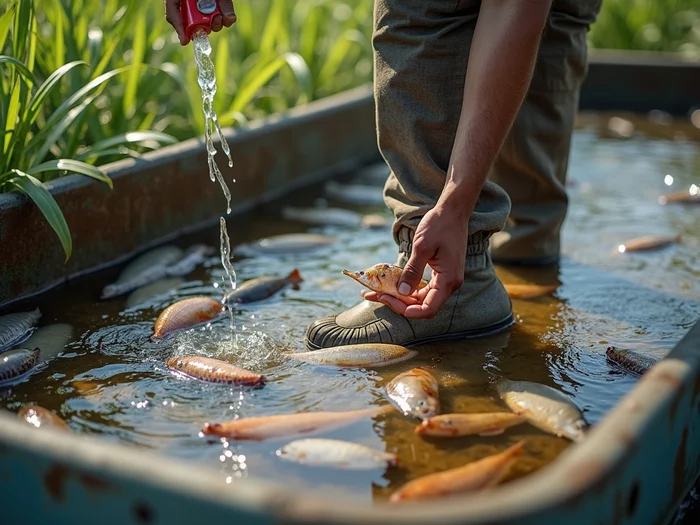
Preventative Biosecurity Practices
You must disinfect all equipment moving between ponds using 2% salt solution or potassium permanganate, soaking nets, buckets, and tools for 10 minutes before use in different ponds. Establish separate equipment sets for each pond when possible, or maintain a central disinfection station where all tools are cleaned between uses. Successful farmers in Ghana's Ashanti Region use plastic tubs filled with disinfectant solution, replacing the solution weekly to maintain effectiveness.
Your new fish must undergo 2-3 week quarantine in separate tanks or ponds before introduction to your main production system, monitoring for disease symptoms and treating any problems before mixing with healthy stock. Source fingerlings only from reputable suppliers who provide health certificates and maintain proper biosecurity at their facilities. Never introduce fish from unknown sources or wild-caught fish that may carry diseases your farm fish have no resistance against.
You should restrict visitor access to your ponds and require anyone entering production areas to disinfect footwear in foot baths containing 2% formalin or bleach solution. Wild birds represent a major disease transmission risk, so install bird netting over smaller ponds or use scare devices to discourage waterfowl from landing on your water. Implementing proper biosecurity measures report significant disease reduction after implementing strict visitor protocols and bird control measures.
Treatment Options and Management
You can treat bacterial infections using antibiotics like oxytetracycline mixed into feed at 50-75mg per kg of fish body weight daily for 7-10 days, but only after confirming bacterial infection through proper diagnosis. Calculate treatment doses carefully based on estimated fish biomass, and complete the full treatment course even if fish appear to recover quickly. Discontinue feeding medicated feed 14 days before harvest to ensure no antibiotic residues remain in fish tissues.
Your parasitic infections respond well to salt treatments using common table salt at 3-5 grams per litre of pond water, maintaining this concentration for 3-5 days before gradually reducing through water exchanges. This treatment works particularly well for external parasites like white spot disease, but monitor fish behaviour closely during treatment as salt stress can affect weakened fish. Blue tilapia tolerates salt treatments better than Nile tilapia, requiring careful monitoring during therapeutic applications.
You need to establish relationships with local aquaculture extension officers or veterinarians who can provide accurate disease diagnosis and treatment recommendations specific to your area. Many disease symptoms appear similar, making professional diagnosis essential for effective treatment. Farmers in Nigeria's aquaculture development zones benefit from government extension services that provide disease identification and treatment guidance at subsidised costs.
Harvesting Techniques for Optimal Yield
You can lose 20-30% of your potential profit through poor harvesting techniques that damage fish, create unnecessary stress, or result in lower market grades. Proper harvesting requires timing, technique, and post-harvest handling that maintains fish quality from pond to market. Many African farmers focus intensively on growing fish but give little thought to harvesting methods, missing opportunities to maximise returns from months of careful management.
Your harvesting strategy affects not only current profits but also future production cycles, because stressed fish during harvest produce lower-quality meat and shorter shelf life. Market buyers can immediately identify poorly-handled fish through appearance, texture, and freshness indicators that directly impact the prices you receive. Successful farmers in Ghana's coastal regions plan their harvesting operations as carefully as their feeding programmes.
This section teaches you how to determine optimal harvest timing, implement efficient harvesting methods, and handle fish properly to maximise market value. You'll learn practical techniques that ensure your months of investment translate into maximum financial returns whilst maintaining fish quality that builds customer loyalty.
Timing and Signs of Readiness
You should harvest Nile tilapia when they reach 300-400 grams for local markets or 500-600 grams for premium buyers, typically achieved in 5-7 months under good management conditions. Monitor fish growth monthly by sampling 15-20 fish to track average weights and size distribution within your pond. Market research in your area determines optimal harvest weights—urban consumers often prefer smaller fish (250-350g) whilst rural buyers favour larger fish (400-500g) for family meals.
Your fish show harvest readiness through uniform size distribution, active feeding behaviour, and bright colouration that indicates good health and condition. Avoid harvesting during stress periods like disease outbreaks, extreme weather, or immediately after handling, as stressed fish produce poor-quality meat with shorter shelf life. Blue tilapia typically requires 1-2 months longer than Nile tilapia to reach equivalent market weights but commands premium prices in some markets due to superior taste.
You need to coordinate harvest timing with market demand patterns, particularly during religious festivals, holidays, and seasonal celebrations when fish prices peak. Farmers in Kenya's Central Province time their harvests for Christmas and Easter periods when demand increases by 40-60% and prices rise accordingly. Plan your stocking schedule to ensure fish reach market size during these high-demand periods.
Harvesting Methods
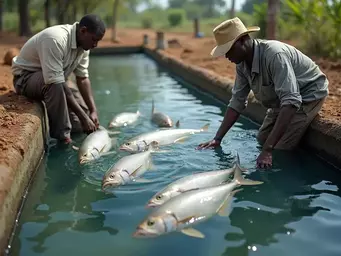
You can use seine nets for complete pond harvests, starting from one end and gradually reducing water area to concentrate fish for easy capture. Seine nets should have 2-3cm mesh size to retain market-sized fish whilst allowing small fish to escape if you're practising selective harvesting. Work during cool morning hours to reduce fish stress, and have adequate containers ready to hold harvested fish in clean, well-aerated water.
Your partial harvesting uses gill nets or traps to selectively remove larger fish whilst leaving smaller ones to continue growing, extending your harvest period and providing continuous income. Set gill nets with 7-8cm mesh size overnight, checking early morning to remove trapped fish quickly. This method works particularly well with Nile tilapia because of natural size variation that allows selective harvesting of the largest fish.
You should drain ponds partially for easier netting when conducting complete harvests, reducing water depth to 30-50cm to concentrate fish in smaller areas. Install harvest basins or deeper areas where fish naturally congregate as water levels drop, making capture more efficient. Proper pond drainage and harvesting systems construct harvest pits during pond preparation, facilitating easy fish collection during draining operations.
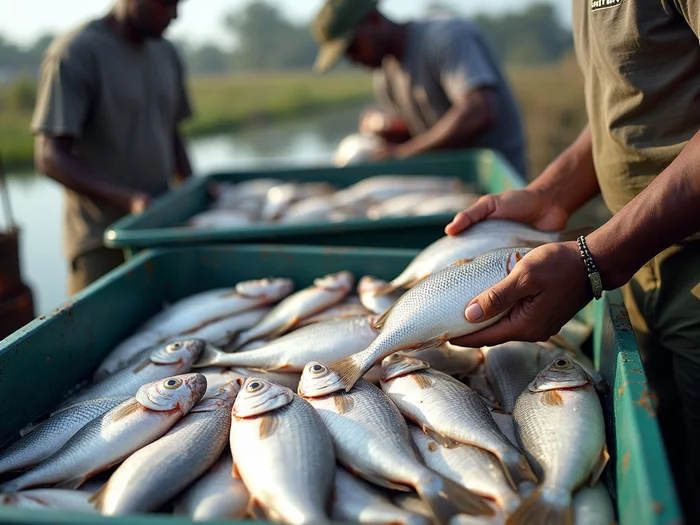
Post-Harvest Handling and Storage
You must kill fish humanely immediately after capture using sharp blows to the head or by placing them in ice water, preventing stress chemicals from affecting meat quality. Handle fish gently during capture and transport to avoid bruising that reduces market value and creates entry points for bacteria. Sort fish by size immediately after harvest, separating premium grades that command higher prices from smaller fish suitable for local markets.
Your fish storage requires ice at 1:1 ratio (1kg ice per 1kg fish) to maintain freshness during transport and marketing, packing fish in insulated containers with drainage to remove melted ice water. Never store fish in plastic bags without ice, as this creates anaerobic conditions that rapidly spoil fish and create food safety risks. Fresh tilapia maintains market quality for 3-5 days when properly iced and stored at 2-4°C.
You can add value through simple processing like gutting, scaling, and filleting that increases prices by 30-50% compared to whole fish sales. Learn basic processing techniques that local markets prefer—many urban buyers pay premium prices for cleaned, ready-to-cook fish portions. Farmers in Tanzania's Dar es Salaam region successfully operate small processing operations that transform their harvest into higher-value products for urban restaurants and supermarkets.
Market Access and Value Addition
You can double your tilapia farming profits by understanding your local market and adding value to your harvest, yet most African farmers sell whole fish at farmgate prices without exploring better marketing opportunities. The difference between barely breaking even and earning substantial profits often lies not in production techniques but in market knowledge and value-addition strategies. Successful farmers treat marketing as seriously as pond management, developing customer relationships and product offerings that command premium prices.
Your market success depends on understanding who buys tilapia in your area, what sizes and presentations they prefer, and when demand peaks throughout the year. Urban consumers, rural families, restaurants, and institutions all have different requirements that create opportunities for targeted marketing approaches. Farmers in Nigeria's Lagos State earn 40-60% more by selling directly to restaurants rather than through traditional fish markets.
This section teaches you how to identify profitable market opportunities, develop value-added products, and build customer networks that provide stable income from your tilapia production. You'll learn practical marketing strategies that transform your farm from a production operation into a profitable business that serves specific market needs.
Understanding Local Markets
You need to research your local market by visiting fish sellers, restaurants, and supermarkets to understand current prices, preferred fish sizes, and seasonal demand patterns. Document prices for different fish sizes and presentations—whole fish, gutted fish, and fillets typically command different prices per kilogram. In Kenya's Nairobi markets, 400-gram whole tilapia sells for KES 200-250, whilst the same fish gutted and scaled brings KES 280-320.
Your target customers determine optimal harvest sizes and timing, because different buyers have specific requirements that affect your production planning. Hotels and restaurants often prefer uniform 300-350 gram fish for portion control, whilst families buying for home consumption favour larger 450-500 gram fish. Nile tilapia's consistent growth patterns make it easier to produce uniform sizes that meet specific market requirements.
You should establish relationships with multiple buyers to reduce market risk and ensure consistent sales outlets for your harvest. Develop contracts with restaurants or institutions that guarantee purchase quantities and prices, providing income security that justifies investment in improved production methods. Farmers in Ghana's Kumasi region successfully supply university cafeterias and hospital kitchens through formal supply agreements that provide stable monthly income.
Value Addition Techniques
You can increase your fish value by 30-50% through simple processing like gutting, scaling, and cutting into steaks or fillets that save customers preparation time. Learn basic knife skills and food safety practices that ensure your processed products meet local health standards and customer expectations. A 400-gram whole fish selling for $2.00 can yield $2.80-3.20 when sold as cleaned fillets, significantly improving your profit margins.
Your smoking and drying operations can extend shelf life whilst creating products that command premium prices in areas where fresh fish is difficult to transport or store. Traditional smoking methods using local wood produce distinctive flavours that many consumers prefer over imported processed fish. Farmers in Zambia's rural areas successfully smoke tilapia using simple clay ovens, creating products that sell for 40-60% more than fresh fish whilst lasting 2-3 weeks without refrigeration.
You should explore niche markets like organic certification or specialty products that serve health-conscious consumers willing to pay premium prices. Document your production methods, feed sources, and water quality management to support marketing claims about product quality and sustainability. Blue tilapia's superior taste characteristics make it particularly suitable for premium market segments that value flavour over price considerations.
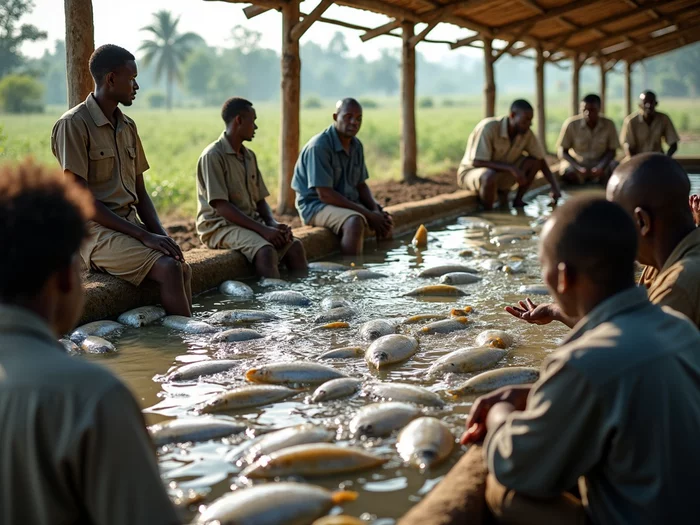
Building a Community Network
You benefit significantly from joining or forming farmer cooperatives that provide group purchasing power for inputs, shared marketing channels, and technical knowledge exchange between members. Cooperatives can negotiate better prices for feed and fingerlings whilst developing collective marketing strategies that reach larger buyers requiring consistent supply volumes. Uganda's successful tilapia cooperatives achieve 20-30% cost reductions on inputs through group purchasing arrangements.
Your local network should include extension officers, veterinarians, feed suppliers, and equipment dealers who provide technical support and market information that improves your production and marketing success. Attend farmer meetings, agricultural shows, and training programmes that connect you with other producers and potential buyers. These relationships often lead to business opportunities and problem-solving support that individual farmers cannot access alone.
You can share resources like harvesting equipment, transport vehicles, and processing facilities with neighbouring farmers to reduce individual costs whilst improving service quality for all members. Establish informal agreements for equipment sharing, emergency assistance during disease outbreaks, and collective marketing efforts that benefit all participants. Understanding how to improve feed conversion ratios becomes even more valuable when shared knowledge helps the entire farming community reduce costs and increase profitability through better feeding practices.
| Parameter | Optimal Range | Frequency | Action if Outside Range |
|---|---|---|---|
| Dissolved Oxygen | 4-6 mg/L | Daily | Increase aeration or reduce feeding |
| pH Level | 6.5-8.5 | Weekly | Add agricultural lime or compost |
| Stocking Density (Earthen Ponds) | 2-3 fingerlings/m² | Initial stocking | Adjust based on growth and water quality |
| Feed Conversion Ratio (FCR) | Below 1.6 | Monthly | Adjust feeding rates and frequency |
| Water Exchange Rate | 10-20% weekly | Weekly | Replace with fresh water to maintain quality |
| Feeding Frequency | 3-4 times per day | Daily | Avoid overfeeding to prevent waste |
| Harvest Weight (Nile Tilapia) | 300-400 grams | 5-7 months | Monitor growth and adjust harvest timing |
Conclusion
You now have the essential knowledge to build a profitable tilapia farming operation using proven techniques that work across Africa. From selecting the right production system to implementing proper biosecurity measures, each technique builds upon the others to create a comprehensive management approach. Focus on getting your stocking densities, feeding programme, and water quality management right first—these three factors determine 80% of your success.
Start with one or two techniques that match your current resources and experience level. Your skills will develop through practice, and you can gradually implement more advanced methods as your confidence grows. Remember that successful farmers in Kenya, Uganda, and Ghana started exactly where you are now, learning through experience and adapting techniques to their local conditions.
As you master these production techniques, begin exploring your local markets and value-addition opportunities. The combination of efficient production methods and smart marketing creates the foundation for a sustainable tilapia farming business that provides reliable income for your family whilst contributing to food security in your community.
Frequently Asked Questions
What if I can't find commercial feed with the exact protein percentages mentioned?
If exact protein percentages aren't available, aim for slightly higher protein (e.g., 35% for fingerlings, 30% for growing fish) rather than lower. Tilapia can utilise a bit more protein, but too little will stunt their growth. Always prioritise fresh, properly stored feed over perfectly matched percentages.
How often should I partially harvest my pond or tank system?
For intensive systems, consider partial harvests every 1-2 months once fish reach a marketable size (e.g., 4-5 months into the cycle). Remove the largest 30-40% of fish to reduce density and allow the remaining fish more space to grow. This works especially well with Nile tilapia due to their varied growth rates.
Can I use fresh, uncomposted manure in my tilapia pond to save on feed costs?
No, it's crucial to compost manure for 2-3 weeks before applying it to your pond. Fresh manure can introduce harmful bacteria and parasites, deplete oxygen levels as it decomposes, and negatively impact water quality, potentially causing disease outbreaks and fish kills.
Why is it important to monitor fish behaviour, not just water parameters and growth rates?
Fish behaviour often provides the earliest warning signs of problems, sometimes even before water parameters show significant changes. Lethargy, gasping, loss of appetite, or darting movements can indicate stress, oxygen depletion, or disease onset, allowing you to intervene quickly before losses occur.
What's the best way to choose between Nile tilapia and Blue tilapia for my farm?
Nile tilapia (Oreochromis niloticus) is generally more hardy, tolerates wider water quality fluctuations, and grows consistently in most systems, making it ideal for pond culture and beginners. Blue tilapia (Oreochromis aureus) often performs better in controlled tank systems due to specific temperature needs, and may command premium prices for its taste, but requires more precise management.


Yomi Adisa Lead Researcher
Yomi Adisa is the lead researcher at Fish Farming Business, where he studies what makes aquaculture ventures profitable across Africa. His research focuses on market patterns, buyer preferences, and the business decisions that determine success or failure in fish farming.