Wami Tilapia: Aquaculture Potential and Farming Insights
Posted on: 2025-11-22
By: Yomi Adisa
The Wami tilapia represents one of Africa's most underutilised aquaculture opportunities, particularly for farmers operating in coastal regions where salinity challenges limit freshwater species production. This hardy cichlid combines the robust growth characteristics of its more famous relatives with exceptional brackish water tolerance, opening farming possibilities in environments where Nile and Mozambique tilapia simply cannot thrive. For East African farmers especially, understanding this species could unlock profitable production in previously unusable water sources.
In This Guide
- → The Importance of Wami Tilapia in African Fish Farming
- → Introduction to Wami Tilapia
- → Benefits to Farmers
- → Species Identification: Recognising Wami Tilapia
- → Scientific Classification
- → Distinguishing Features
- → Size Range and Growth Potential
- → Biology & Natural Behaviour: Understanding Wami Tilapia
- → Natural Habitat and Geographic Distribution
- → Environmental Tolerances
- → Feeding Behaviour
- → Reproduction & Life Cycle: Breeding Insights for Farmers
- → Sexual Maturity and Breeding Timeline
- → Spawning Behaviour and Parental Care
- → Growth Stages and Lifespan
- → Why Farmers Choose Wami Tilapia: Production Advantages and Market Demand
- → Growth Rates and Market Size
- → Economic Viability Factors
- → Adaptability to Brackish Water
- → Farming Considerations: Best Practices for Raising Wami Tilapia
- → Optimal Farming Conditions
- → Feeding Strategies
- → Health Management
- → How Wami Tilapia Compares: A Look at Related Species
- → Comparison with Mozambique and Nile Tilapia
- → Regional Suitability and Preferences
- → Key Takeaways for Fish Farmers
The Importance of Wami Tilapia in African Fish Farming
Wami tilapia occupies a unique position in African aquaculture, bridging the gap between purely freshwater species and those requiring full marine conditions. While Nile tilapia dominates global production statistics, Wami tilapia offers distinct advantages for specific farming contexts that make it invaluable for certain operations.
The species' significance extends beyond its biological characteristics to address real farming challenges across East Africa. In Tanzania, Kenya, and coastal regions where groundwater salinity affects pond systems, Wami tilapia provides a viable alternative when other species fail to perform. This adaptability translates directly into expanded farming opportunities and reduced production risks.
Introduction to Wami Tilapia
Oreochromis urolepis hornorum, commonly known as Wami tilapia after Tanzania's Wami River, represents a subspecies of O. urolepis that has gained recognition for its aquaculture potential. Originally classified as a separate species Tilapia hornorum in older literature, current taxonomy places it within the broader Oreochromis genus alongside its more commercially prominent relatives.
The species belongs to the Cichlidae family, specifically the Tilapiinae subfamily, sharing genetic lineage with Blue tilapia (O. aureus) and Mozambique tilapia (O. mossambicus). Interestingly, mitochondrial DNA studies suggest closer relationships to the Sarotherodon genus, though taxonomic classification remains unchanged for practical purposes.
Benefits to Farmers
Your decision to consider Wami tilapia should centre on its salinity tolerance up to 15 parts per thousand, a characteristic that sets it apart from most freshwater tilapia species. This tolerance means you can successfully farm in brackish groundwater conditions that would stress or kill Nile tilapia, expanding your site selection options considerably.
The species demonstrates moderate to fast growth rates, reaching market size of 250-400 grammes within 6-8 months under proper management. This performance, combined with its hardiness and disease resistance, creates reliable production outcomes that reduce the financial risks associated with crop failures.
Market acceptance remains strong throughout East Africa, where consumers recognise the species' excellent taste and texture. The reduced competition in brackish water environments also means you face fewer farming neighbours, potentially improving your local market position and pricing power.
Species Identification: Recognising Wami Tilapia
Accurate species identification becomes crucial when sourcing fingerlings or managing breeding programmes, as misidentification can lead to performance expectations that don't match reality. Wami tilapia possesses distinctive characteristics that separate it from related species, though some features require careful observation to distinguish.
Understanding these identifying features helps you verify stock quality from suppliers and monitor your fish populations for health and growth patterns. The physical characteristics also influence handling requirements and market presentation, affecting your operational procedures and customer acceptance.
Scientific Classification
The current scientific classification places Wami tilapia as Oreochromis urolepis hornorum, a subspecies designation that reflects its close relationship to the Rufiji tilapia (O. urolepis urolepis). This classification system helps distinguish it from the broader O. urolepis complex while acknowledging genetic similarities.
Regional naming varies across East Africa, with "Wami tilapia" being standard in Tanzania and "Rufiji tilapia" sometimes used for related subspecies. You may encounter older literature referring to Tilapia hornorum, but this nomenclature is outdated and can cause confusion when sourcing breeding stock or technical information.
Distinguishing Features
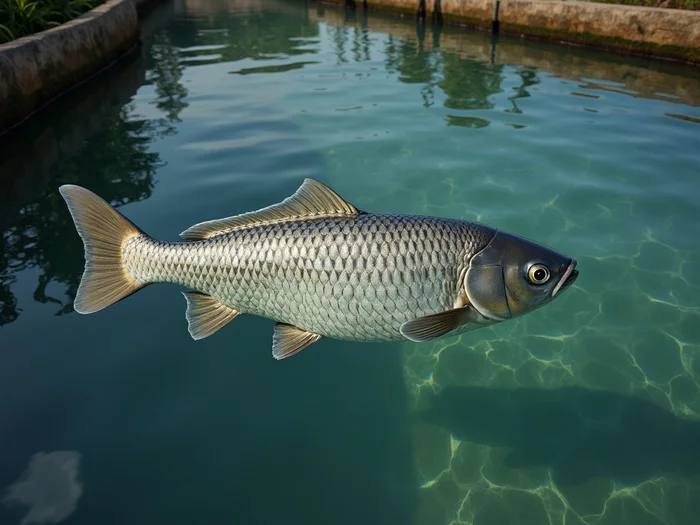
Wami tilapia displays an elongate oblong body shape with a distinctly rounded snout and straight upper profile that differs from the more compressed bodies of some tilapia species. The head features one pair of nostrils and a highly protrusible upper jaw equipped with fine, close-set teeth arranged in approximately five series.
The anal fin contains 3 spines and 10 rays, while the body carries large scales with 4 scales from the dorsal fin origin to the lateral line. This lateral line configuration appears in two straight, overlapping sections containing 30-32 scales, a characteristic that experienced farmers use for field identification.
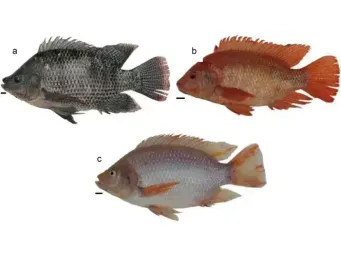
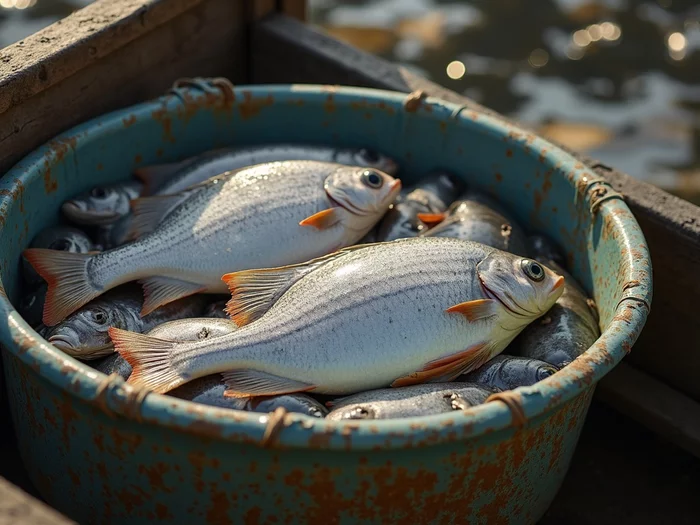
Colouration typically presents as silvery to greyish with faint vertical bars, though environmental conditions and stress levels can alter appearance. The tail fin shows dense scaling, and unlike some tilapia species, Wami tilapia lacks highly distinctive bright markings or dramatic colour changes during breeding.
Size Range and Growth Potential
Under farming conditions, you can expect Wami tilapia to reach 29 centimetres in length routinely, with exceptional specimens achieving 44 centimetres standard length depending on environmental conditions and genetic stock quality. This size range positions it between smaller tilapia species and the larger Nile tilapia in terms of market presentation.
Growth potential varies significantly with water temperature, stocking density, and feed quality. In optimal conditions with temperatures between 25-30°C and proper nutrition, individual fish can reach 250-400 grammes within 6-8 months, making them suitable for most African market preferences.
Biology & Natural Behaviour: Understanding Wami Tilapia
Comprehending the natural biology and behavioural patterns of Wami tilapia provides the foundation for successful farming operations. These characteristics evolved over thousands of years in specific African environments, and understanding them helps you create farming conditions that work with, rather than against, the species' natural tendencies.
The species' environmental tolerances, feeding behaviours, and social structures directly influence your pond design, feeding strategies, and management protocols. By aligning your farming practices with these biological realities, you achieve better growth rates, reduced mortality, and more predictable production outcomes.
Natural Habitat and Geographic Distribution
Wami tilapia originates from southeastern Africa, with native populations concentrated in Tanzania's Morogoro region and extending into Uganda. The species also occurs in Zanzibar, though whether these populations represent native stock or historical introductions remains unclear to researchers.
Natural habitats include rivers, lakes, reservoirs, and crucially, brackish estuaries where freshwater systems meet coastal environments. This habitat diversity explains the species' salinity tolerance and suggests farming opportunities in similar transitional environments across Africa.
Global introductions for aquaculture have established populations in the United States, Brazil, Japan, and Fiji, demonstrating the species' adaptability to diverse climatic conditions. However, the strongest farming traditions and market acceptance remain concentrated in East African regions where the species evolved.
Environmental Tolerances
Temperature requirements centre on the 25-30°C range for optimal growth, though the species tolerates broader temperature fluctuations better than many freshwater tilapia. Like other tilapia species, prolonged exposure to temperatures below 10-15°C proves lethal, making it unsuitable for highland farming without heated systems.
The species' standout characteristic remains its salinity tolerance up to 15 parts per thousand, enabling farming in brackish water conditions that would stress purely freshwater species. This tolerance opens farming opportunities in coastal areas where groundwater salinity limits other species options.
Water quality parameters should maintain pH levels between 6.5-8.5 and dissolved oxygen above 3 milligrammes per litre for healthy growth. The species shows good tolerance for moderate water quality fluctuations, making it suitable for extensive farming systems with limited water quality control.
Feeding Behaviour
Wami tilapia exhibits omnivorous feeding behaviour, consuming algae, aquatic plants, small invertebrates, and detritus in natural environments. The protrusible jaw mechanism allows efficient scraping of algae from surfaces and capture of small prey items, demonstrating feeding versatility that translates well to farming conditions.
This opportunistic feeding strategy means the species adapts readily to formulated feeds while supplementing with natural pond productivity. The fine, close-set teeth arrangement suits both plant material processing and small invertebrate consumption, maximising nutrient extraction from diverse food sources.
For farming applications, 30% crude protein diets typically support optimal growth, though the species can utilise lower protein feeds when natural productivity supplements nutritional requirements. Feed conversion ratios generally range from 1.2 to 1.8 under good management conditions, comparable to other tilapia species.
Reproduction & Life Cycle: Breeding Insights for Farmers
Understanding Wami tilapia's reproductive biology becomes essential whether you're producing your own fingerlings or managing grow-out populations to prevent unwanted breeding. The species follows typical tilapia reproductive patterns but with specific characteristics that influence management decisions and production planning.
Reproductive behaviour affects stocking strategies, pond management, and harvest timing. Unlike some aquaculture species that require complex breeding protocols, Wami tilapia breeds readily under farming conditions, which can be advantageous for fingerling production but problematic for grow-out operations seeking uniform sizing.
Sexual Maturity and Breeding Timeline
Wami tilapia reaches sexual maturity within 5-7 months under favourable culture conditions, though this timeline varies with temperature, nutrition, and stocking density. Fish maintained at optimal temperatures of 25-30°C with adequate nutrition mature faster than those in suboptimal conditions.
Spawning activity increases when water temperatures exceed 25°C and food availability remains adequate. Unlike some species requiring specific photoperiod triggers, Wami tilapia can spawn throughout the year in tropical conditions, making breeding management a continuous consideration rather than a seasonal issue.
Spawning Behaviour and Parental Care
Like other Oreochromis species, Wami tilapia practices maternal mouthbrooding, with females incubating eggs in their mouths for approximately 12-14 days. This extended parental care period means breeding females contribute minimally to pond biomass during incubation, affecting production calculations.
Females typically produce several hundred eggs per spawning event, though exact fecundity data remains limited compared to more extensively studied tilapia species. The mouthbrooding behaviour provides excellent fry survival rates under natural conditions but complicates controlled breeding programmes.
After hatching, females continue protecting fry until they develop sufficient size and swimming ability to survive independently. This extended care period can last several weeks, during which the female's growth and condition decline due to reduced feeding activity.
Growth Stages and Lifespan
Newly independent fry measure approximately 10-12 millimetres and begin feeding on microscopic organisms and organic particles. Growth rates accelerate rapidly under optimal conditions, with juveniles reaching 50-100 grammes within 3-4 months given adequate nutrition and appropriate stocking densities.
Under culture conditions, Wami tilapia typically lives 3-5 years, though maximum lifespan can extend longer in extensive systems with lower stocking densities. Commercial production cycles usually harvest fish well before natural lifespan limits, focusing on optimal market size rather than maximum growth potential.
Why Farmers Choose Wami Tilapia: Production Advantages and Market Demand
The decision to farm Wami tilapia should be based on clear production advantages and market realities rather than novelty or availability. This species offers specific benefits that make it superior to alternatives in certain farming contexts, particularly where environmental conditions favour its unique characteristics.
Economic viability depends on matching the species' strengths to your specific farming situation and local market requirements. Understanding these advantages helps you make informed decisions about species selection and production planning that align with both biological capabilities and market opportunities.
Growth Rates and Market Size
Under optimal farming conditions, Wami tilapia achieves 250-400 grammes within 6-8 months, positioning it competitively with other tilapia species for market timing. This growth rate allows for two production cycles annually in favourable climates, maximising pond utilisation and cash flow.
The species responds well to intensive feeding regimes, with feed conversion ratios of 1.2-1.8 achievable under good management. Higher stocking densities of 2-4 fish per square metre remain feasible with adequate aeration and water quality management, though growth rates may slow at maximum densities.
Market size flexibility allows targeting different consumer segments, from smaller whole fish at 250-300 grammes for household consumption to larger specimens exceeding 400 grammes for restaurant trade. This size range flexibility provides marketing options that can respond to price fluctuations and demand changes.
Economic Viability Factors
The primary economic advantage lies in reduced competition for farming sites suitable for brackish water species. While freshwater sites face increasing competition from Nile tilapia farmers, brackish water locations often remain underutilised, potentially offering lower lease costs and better site availability.
Production costs remain comparable to other tilapia species, with feed representing the largest expense category. The species' ability to utilise natural pond productivity supplements formulated feeds, potentially reducing feed costs in extensive or semi-intensive systems.
Market prices typically match or exceed those for Mozambique tilapia in East African markets, with consumers recognising the species' quality and taste. The limited supply relative to Nile tilapia can create price premiums in markets where the species is recognised and appreciated.
Adaptability to Brackish Water
The species' tolerance for salinity up to 15 parts per thousand represents its most significant farming advantage, enabling production in coastal areas where freshwater species fail. This tolerance opens farming opportunities in regions with naturally brackish groundwater or where saltwater intrusion affects freshwater sources.
Brackish water farming reduces freshwater requirements, an important consideration in water-scarce regions or where freshwater carries high opportunity costs. The reduced competition for brackish water sites can translate into lower land costs and better site security for long-term operations.
Climate change impacts, including sea level rise and saltwater intrusion, may increase the value of salt-tolerant species like Wami tilapia. Farmers establishing brackish water operations now may gain competitive advantages as freshwater becomes scarcer or more expensive.
Farming Considerations: Best Practices for Raising Wami Tilapia
Successful Wami tilapia farming requires understanding the species' specific requirements and adapting general tilapia farming practices to optimise performance. While many principles remain similar to other tilapia species, certain management aspects require modification to achieve optimal results.
These farming considerations directly impact your production costs, growth rates, and harvest quality. Implementing appropriate practices from the beginning prevents costly mistakes and establishes production systems that consistently deliver profitable outcomes.
Optimal Farming Conditions
Stocking densities of 2-4 fish per square metre provide the best balance between growth rates and pond utilisation for most farming systems. Higher densities require enhanced aeration and more intensive management but can increase total production per unit area if properly managed.
Water temperature management focuses on maintaining 25-30°C for optimal growth, though the species tolerates broader ranges better than some alternatives. In cooler climates or seasons, consider pond depth and thermal management strategies to maintain productive temperatures.
Salinity levels can range from freshwater to 15 parts per thousand depending on your water source and management objectives. Gradual salinity changes work better than sudden adjustments, allowing fish to adapt their osmoregulatory systems without stress.
Feeding Strategies
Formulated feeds containing 30% crude protein support optimal growth rates, though the species can utilise lower protein feeds when natural pond productivity supplements nutrition. Feed multiple times daily rather than single large meals to improve feed conversion efficiency and reduce waste.
Monitor feeding response carefully, adjusting quantities based on consumption rates and water temperature. In cooler periods, reduce feeding frequency and quantities as metabolic rates decrease and digestion slows.
Consider supplemental feeding with agricultural by-products or locally available protein sources to reduce feed costs while maintaining growth performance. The species' omnivorous nature allows incorporation of various feed ingredients not suitable for more specialised species.
Health Management
Wami tilapia demonstrates good general hardiness and disease resistance, though specific disease susceptibility data remains limited compared to more extensively studied species. Maintain good water quality and avoid overcrowding to prevent stress-related health problems.
Regular health monitoring should focus on feeding behaviour, swimming patterns, and external appearance changes that might indicate health issues. Early intervention prevents minor problems from developing into major mortality events.
Quarantine new stock before introducing to established ponds, and maintain biosecurity measures to prevent disease introduction from external sources. The species' hardiness provides some protection against common tilapia diseases, but prevention remains preferable to treatment.
How Wami Tilapia Compares: A Look at Related Species
Comparing Wami tilapia to its more commonly farmed relatives helps clarify when this species offers advantages over alternatives and when other options might serve your farming objectives better. These comparisons should guide species selection decisions based on your specific environmental conditions, market requirements, and production goals.
Understanding relative performance characteristics prevents unrealistic expectations and helps optimise management practices for the species you choose. Each tilapia species evolved for specific environmental niches, and matching species characteristics to your farming conditions improves success probability significantly.
Comparison with Mozambique and Nile Tilapia
Salinity tolerance represents Wami tilapia's primary advantage over both Mozambique and Nile tilapia. While Mozambique tilapia shows moderate brackish water tolerance and Nile tilapia remains primarily freshwater, Wami tilapia thrives in salinities up to 15 parts per thousand, significantly expanding farming site options.
Growth rates show Wami tilapia performing comparably to Mozambique tilapia but slower than Nile tilapia under optimal freshwater conditions. However, in brackish water where Nile tilapia fails, Wami tilapia maintains good growth while Mozambique tilapia shows reduced performance.
Maximum size varies among species, with Nile tilapia reaching 60 centimetres, Mozambique tilapia achieving 40 centimetres, and Wami tilapia attaining 29-44 centimetres depending on conditions. For most market applications, these size differences matter less than growth rate to market size.
Reproductive characteristics remain similar across species, with all three practicing maternal mouthbrooding. However, Nile tilapia shows higher fecundity, potentially creating more management challenges in grow-out ponds but advantages for fingerling production.
Regional Suitability and Preferences
Coastal East Africa represents Wami tilapia's strongest regional advantage, where brackish water conditions favour its unique salinity tolerance. Tanzania and Zanzibar show particular preference for the species due to local familiarity and environmental suitability.
In purely freshwater environments, Nile tilapia generally outperforms Wami tilapia in growth rate and market acceptance, explaining its global dominance in freshwater aquaculture. Mozambique tilapia occupies middle ground, performing adequately in both fresh and slightly brackish conditions.
Market preferences vary regionally, with consumers in areas where Wami tilapia occurs naturally showing strong acceptance. In regions where the species is unfamiliar, market development may require more effort compared to well-established species like Nile tilapia.
Climate considerations favour Wami tilapia in tropical coastal regions where salinity tolerance provides advantages. Inland areas with reliable freshwater sources typically favour Nile tilapia, while intermediate conditions may suit Mozambique tilapia best.
Key Takeaways for Fish Farmers
Wami tilapia offers specific advantages that make it valuable for certain farming contexts while remaining less suitable than alternatives in others. Your species selection decision should prioritise matching biological characteristics to your environmental conditions and market requirements rather than following general recommendations.
The species' salinity tolerance up to 15 parts per thousand represents its primary competitive advantage, enabling profitable farming in brackish water environments where other tilapia species struggle. This characteristic becomes increasingly valuable as freshwater resources face greater competition and climate change impacts increase salinity in coastal areas.
Growth performance of 250-400 grammes within 6-8 months provides adequate production timelines for most market requirements, though not matching the fastest-growing alternatives. The species' hardiness and disease resistance help ensure reliable production outcomes that reduce financial risks associated with crop failures.
Consider Wami tilapia when your farming site has naturally brackish water, when freshwater sites are unavailable or expensive, or when local markets show preference for the species. Avoid this species if you have access to high-quality freshwater and markets strongly favour Nile tilapia, as alternatives will likely provide better economic returns.
The species represents an excellent option for diversifying production systems or entering aquaculture in challenging environmental conditions. Its unique characteristics fill a specific niche in African aquaculture that becomes more valuable as farming intensity increases and environmental conditions become more challenging.


Yomi Adisa Lead Researcher
Yomi Adisa is the lead researcher at Fish Farming Business, where he studies what makes aquaculture ventures profitable across Africa. His research focuses on market patterns, buyer preferences, and the business decisions that determine success or failure in fish farming.