Red Tilapia: Species Profile, Farming Practices, and Benefits
Posted on: 2025-11-17
By: Yomi Adisa
When you walk through fish markets across Africa, you'll notice something striking: red tilapia consistently commands higher prices than its silver cousins. This isn't mere aesthetics—it's economics in action.
Red tilapia represents one of aquaculture's most successful hybrid creations, combining the hardiness of traditional tilapia with market appeal that translates directly to your bottom line.
Whether you're managing a small pond in Nigeria or planning a commercial operation in Kenya, understanding this species' unique characteristics will help you make informed decisions about your farming future.
In This Guide
Why Red Tilapia is Important for African Fish Farming
Red tilapia has quietly revolutionised aquaculture economics across Africa. In Lagos markets, red tilapia sells for 15-25% more than Nile tilapia of identical size.
This price premium isn't limited to Nigeria—similar patterns emerge from Accra to Nairobi, where consumers associate the distinctive red colouration with superior quality and freshness.
The species addresses three critical challenges facing African fish farmers: food security, economic opportunity, and market differentiation. With Africa's population projected to double by 2050, protein demand will skyrocket.
Red tilapia's rapid growth rate of 1.5-2.5 grams daily means you can produce more protein per pond than slower-growing alternatives.
For small-scale farmers, red tilapia offers a pathway to premium markets. Unlike commodity fish that compete purely on price, red tilapia's visual appeal creates market positioning opportunities. Restaurants in urban centres specifically request red tilapia for presentation purposes, creating consistent demand channels that bypass traditional wholesale bottlenecks.
The species also demonstrates remarkable adaptability to African conditions. From the brackish lagoons of Ghana to the highland ponds of Ethiopia, red tilapia thrives in environments where other species struggle. This adaptability reduces risk—a crucial factor when your livelihood depends on fish survival.
Species Identification
![]()
Scientific Classification of Red Tilapia
Red tilapia presents a fascinating case in aquaculture taxonomy. Unlike pure species, it's a hybrid creation, typically resulting from crosses between Oreochromis mossambicus (Mozambique tilapia) and O. niloticus (Nile tilapia), or O. mossambicus and O. hornorum (Zanzibar tilapia).
The scientific designation varies by strain, but you'll commonly see it referenced as Oreochromis sp. 'red tilapia' in research literature. This hybrid nature means you're not dealing with a naturally occurring species, but rather a carefully developed aquaculture variety optimised for farming conditions.
Within the taxonomic hierarchy, red tilapia belongs to the Family Cichlidae, placing it alongside other African cichlids. The genus Oreochromis specifically contains the mouthbrooding tilapias—a crucial biological characteristic that influences your breeding management decisions.
Regional naming varies significantly across Africa. In Nigeria, you'll hear "red tilapia" or simply "red fish." Ghanaian farmers often call it "red Nile," whilst in East Africa, "red hybrid" is common. These naming variations reflect different introduction pathways and local breeding programmes.
Distinguishing Features of Red Tilapia
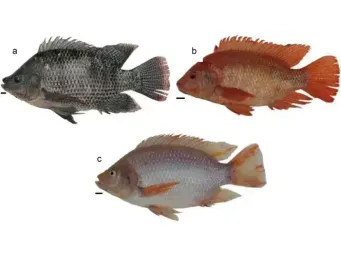
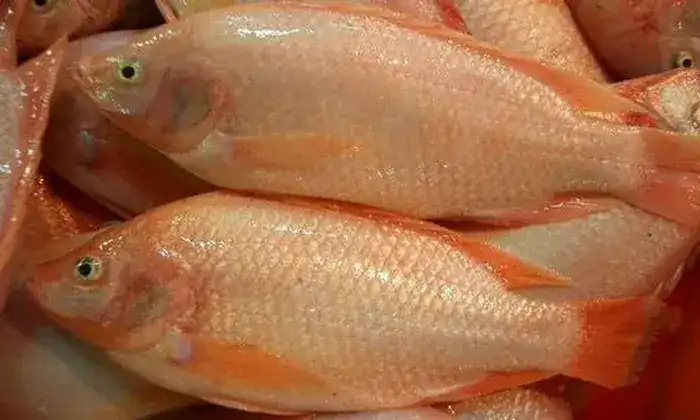
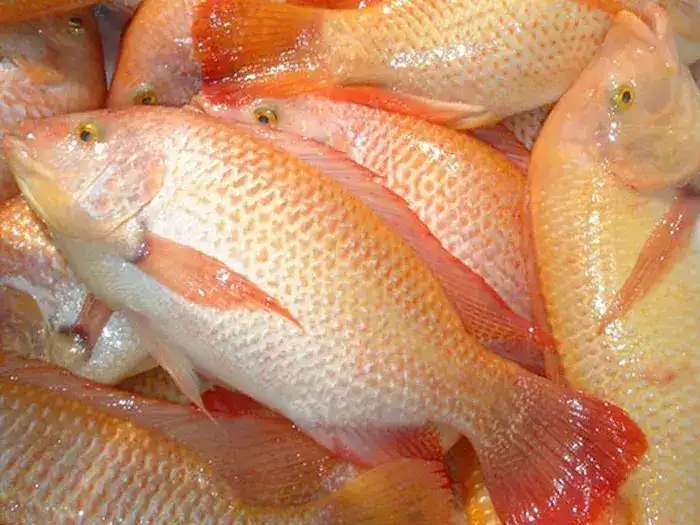
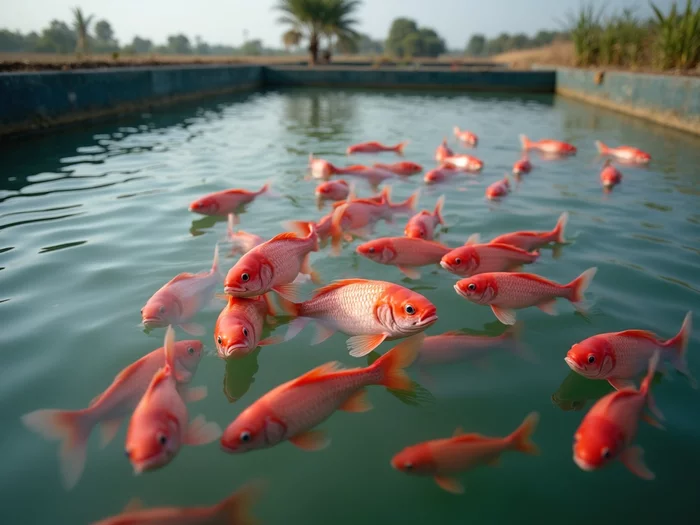
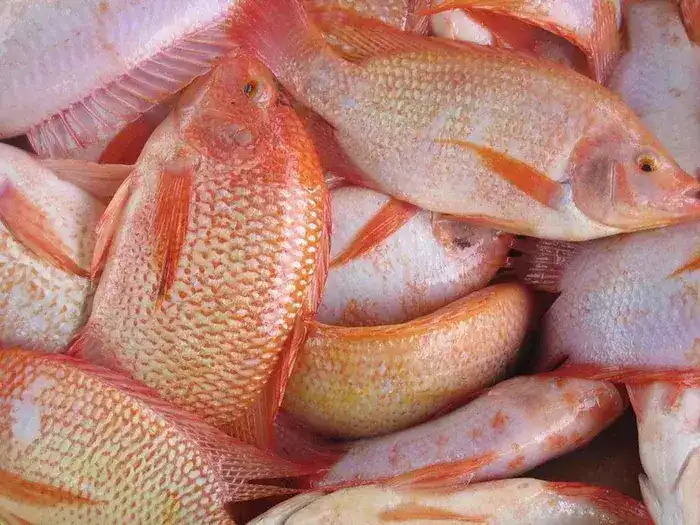
Identifying red tilapia requires attention to several key characteristics beyond simple colouration. The most obvious feature is the distinctive red to pink body colour, ranging from bright orange-red in juveniles to deeper red-pink in adults. This colouration results from selective breeding and genetic factors inherited from parent species.
Body structure follows typical tilapia morphology: deep-bodied and laterally compressed with a rounded profile. The head comprises approximately 30% of total body length, with a terminal mouth that's slightly protrusible—perfect for their omnivorous feeding strategy.
Size progression follows predictable patterns crucial for your management planning:
- Fingerlings: 2-5 cm length, 0.5-2 grams weight
- Juveniles: 5-15 cm length, 5-50 grams weight
- Market size: 20-25 cm length, 200-300 grams weight
- Breeding adults: 25-35 cm length, 400-800 grams weight
The fins typically show red pigmentation, particularly pronounced in younger fish. Unlike Nile tilapia, red tilapia lacks the distinctive vertical bars on the body, presenting instead a more uniform colouration that may show slight mottling in some strains.
Identifying Red Tilapia in the Aquaculture Setting
Distinguishing red tilapia from similar species becomes critical when purchasing stock or managing mixed populations. The absence of black markings on the caudal fin immediately separates it from Nile tilapia, which typically displays a distinct black edge on the tail.
Behavioural differences also aid identification. Red tilapia tends to be more aggressive during feeding than Mozambique tilapia but less territorial than blue tilapia. This intermediate aggression level affects your stocking density decisions and feeding management strategies.
Regional strain variations add complexity to identification. Thai red tilapia strains often show more intense red colouration than African-developed varieties. Malaysian strains may display orange tints, whilst some Caribbean strains show pink hues. Understanding your source genetics helps predict adult appearance and performance characteristics.
Cross-breeding with other tilapia species can produce offspring with intermediate characteristics. If you're breeding your own stock, maintaining genetic purity requires careful broodstock management and regular culling of off-colour individuals.
Biology & Natural Behaviour
![]()
Habitat Preferences of Red Tilapia
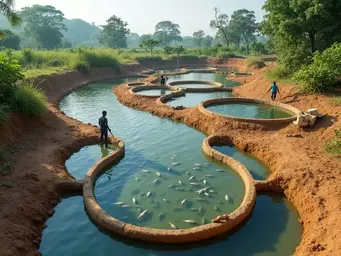
Understanding red tilapia's habitat preferences guides your pond design and management decisions. As a hybrid derived from East African species, red tilapia thrives in shallow, warm water environments with minimal current. This preference makes it ideal for pond aquaculture systems common across Africa.
The species shows remarkable adaptability to various water bodies. Natural habitat preferences include water depths of 0.5-2 metres, though they'll utilise deeper areas when available. This shallow-water preference means you can maximise production in relatively shallow ponds, reducing excavation costs and pumping requirements.
Red tilapia demonstrates strong site fidelity during breeding seasons, with individuals establishing territories around suitable spawning sites. This behaviour influences your breeding pond design—providing adequate spawning substrates improves reproductive success rates.
The species tolerates turbid water conditions better than many alternatives. This tolerance proves valuable in African aquaculture, where maintaining crystal-clear water isn't always practical or economical. Your fish will continue feeding and growing in conditions that might stress other species.
Environmental Tolerances
Red tilapia's environmental tolerance ranges directly impact your farm's operational flexibility and risk management. Temperature tolerance spans 15-38°C, with optimal growth occurring between 28-32°C. This broad range means production continues even during seasonal temperature fluctuations common in many African regions.
Below 20°C, growth rates decline significantly, whilst temperatures above 35°C cause stress and reduced feeding. In highland areas of Kenya or Ethiopia, you might need to consider pond depth and thermal management strategies during cool seasons.
Water quality tolerances exceed most freshwater species:
- pH range: 6.5-8.5 (optimal 7.0-8.0)
- Dissolved oxygen: Minimum 3 mg/L, optimal above 5 mg/L
- Salinity tolerance: 0-15 parts per thousand
- Ammonia tolerance: Up to 0.5 mg/L unionised ammonia
The salinity tolerance proves particularly valuable for coastal African farmers. In Ghana's brackish lagoons or Nigeria's coastal areas, red tilapia can utilise water sources unsuitable for purely freshwater species. This flexibility expands your site selection options and reduces freshwater requirements.
Oxygen tolerance allows higher stocking densities than sensitive species. Red tilapia continues feeding at oxygen levels that would stress trout or catfish, though optimal growth requires well-oxygenated water.
Feeding Habits and Nutrition
Red tilapia's omnivorous feeding strategy provides significant advantages for African farmers seeking to minimise feed costs. In natural conditions, they consume algae, phytoplankton, zooplankton, detritus, and small invertebrates—a diverse diet that translates to flexible feeding options in aquaculture.
The species possesses efficient gill rakers that filter plankton from water, allowing them to utilise natural pond productivity. This biological characteristic means your fish continue gaining weight even when commercial feed inputs are reduced—crucial for managing feed costs during economic pressures.
Feeding behaviour shows distinct patterns throughout the day. Peak feeding activity occurs during early morning and late afternoon, with reduced activity during midday heat. This pattern influences your feeding schedule and helps optimise feed conversion ratios.
Nutritional requirements vary by life stage:
- Juveniles: 30-35% crude protein for rapid growth
- Grow-out phase: 25-30% crude protein for efficient production
- Broodstock: 30-35% crude protein plus enhanced vitamin content
The species readily accepts plant-based protein sources, making it suitable for regions where fishmeal is expensive or unavailable. Soybean meal, groundnut cake, and other locally available protein sources can comprise significant portions of the diet without compromising growth rates.
Reproduction & Life Cycle
Breeding Behaviour of Red Tilapia
Understanding red tilapia's breeding behaviour helps you manage reproduction for either breeding programmes or production control. Sexual maturity occurs at 4-6 months for females and 5-7 months for males, typically when fish reach 100-200 grams. This rapid maturation can be advantageous for breeding programmes but problematic in grow-out ponds where unwanted reproduction reduces growth rates.
Spawning behaviour follows classic tilapia patterns. Males establish territories and construct circular nests 20-30 cm in diameter by clearing substrate with their mouths and fins. The nest-building behaviour intensifies when water temperatures reach 28-32°C—your optimal breeding range.
Courtship involves elaborate displays where males show intensified colouration and perform swimming patterns to attract females. Successful courtship results in 100-1,000 eggs per spawn, depending on female size and condition. Larger females produce significantly more eggs, making broodstock nutrition and management critical for breeding success.
The species can spawn every 4-6 weeks under optimal conditions, meaning prolific reproduction in breeding ponds. This frequency allows rapid stock multiplication but requires management strategies to prevent overcrowding in production systems.
Growth Stages of Red Tilapia
Red tilapia's life cycle progression directly influences your production planning and management strategies. Eggs incubate for 3-5 days at optimal temperatures, with incubation periods extending in cooler water. This temperature sensitivity affects breeding season planning in regions with pronounced seasonal variations.
Newly hatched fry measure 3-4 mm and possess yolk sacs that sustain them for the first 2-3 days. During this critical period, maternal mouthbrooding provides protection and optimal conditions for early development.
The fry stage lasts 2-3 weeks, during which growth depends heavily on natural food availability and water quality. Fry begin accepting external feeds when they reach 8-10 mm length, marking the transition to active feeding and rapid growth phases.
Fingerling development spans 6-8 weeks, with fish reaching 2-5 cm length. This stage shows the fastest relative growth rates, with proper management yielding daily weight gains of 5-10% of body weight.
Juvenile growth continues for 3-4 months, reaching market size of 200-300 grams. Growth rates during this phase average 1.5-2.5 grams daily under optimal conditions, making red tilapia one of the fastest-growing warmwater species available to African farmers.
Lifespan and Maximum Size
Red tilapia's lifespan in aquaculture typically reaches 3-5 years, though most production systems harvest fish well before maximum age. Understanding lifespan helps you plan breeding stock replacement and long-term production strategies.
Maximum size potential reaches 35-40 cm length and 1.5-2.5 kg weight under optimal conditions. However, achieving these sizes requires extended growing periods that may not be economically viable for most operations. The species shows excellent growth rates to 500-800 grams, beyond which growth efficiency typically declines.
Growth patterns show rapid initial growth slowing after sexual maturity. This biological characteristic influences your harvest timing decisions—maintaining fish beyond optimal size often reduces overall production efficiency and profitability.
Breeding stock can be maintained for 2-3 years with good reproductive performance, though egg quality and quantity may decline with age. Planning broodstock replacement ensures consistent breeding programme success.
Why Farmers Choose This Species
Production Advantages of Red Tilapia
Red tilapia's production advantages translate directly to improved farm economics and reduced operational stress. Feed conversion ratios of 1.2-1.8 mean you'll produce 1 kg of fish with 1.2-1.8 kg of feed—excellent efficiency that keeps feed costs manageable even when ingredient prices fluctuate.
Growth rates consistently exceed 1.5 grams daily under proper management, allowing you to reach market size in 4-6 months from fingerling stage. This rapid growth means faster capital turnover and more production cycles per year compared to slower-growing alternatives.
The species demonstrates exceptional hardiness that reduces mortality risks and management stress. Red tilapia survives handling, transport, and water quality fluctuations that might kill more sensitive species. This resilience proves invaluable when equipment fails or weather conditions challenge your management systems.
Disease resistance exceeds most freshwater species, with red tilapia showing natural resistance to bacterial infections like columnaris and aeromonas. This resistance reduces medication costs and mortality losses that can devastate other species.
Stocking density tolerance allows intensive production systems. You can stock 2-5 fish per square metre in ponds or 50-100 fish per cubic metre in cage systems without compromising growth rates, maximising production from limited space.
Market Demand for Red Tilapia
Market demand for red tilapia consistently exceeds supply across most African markets, creating reliable sales opportunities for producers. The distinctive red colouration commands premium prices ranging from 15-40% above standard tilapia, depending on market location and season.
Urban restaurants specifically request red tilapia for presentation purposes, particularly during festive seasons and special occasions. This targeted demand creates consistent premium market channels that bypass traditional wholesale price pressures.
Consumer preference studies across West Africa show red tilapia ranking highest for perceived freshness and quality. This perception translates to sustained market demand even when other fish species experience price volatility.
Export potential exists for live red tilapia to Middle Eastern and Asian markets where red fish hold cultural significance. Developing export relationships can provide additional revenue streams and market diversification opportunities.
Processing characteristics suit both fresh and frozen markets. Red tilapia maintains colour and texture better than many alternatives during processing and storage, extending market reach and reducing post-harvest losses.
Economic Factors Influencing Red Tilapia Farming
Economic analysis consistently favours red tilapia for both small-scale and commercial operations. Initial investment requirements remain modest compared to other aquaculture species, with basic pond systems providing adequate production environments.
Operating costs benefit from the species' omnivorous diet and ability to utilise natural pond productivity. You can reduce feed costs by 20-30% compared to carnivorous species whilst maintaining excellent growth rates.
Polyculture integration opportunities allow you to combine red tilapia with other species like catfish or carp, maximising pond productivity and diversifying income streams. The species' feeding habits complement rather than compete with bottom-feeding species.
Risk factors remain manageable due to the species' hardiness and disease resistance. Insurance costs and mortality losses typically run lower than alternative species, improving overall investment security.
Market accessibility suits operations of all sizes. Small-scale farmers can sell directly to local markets, whilst larger operations can develop wholesale and export relationships. This scalability provides growth opportunities as your operation expands.
Farming Considerations
![]()
Best Practices for Raising Red Tilapia
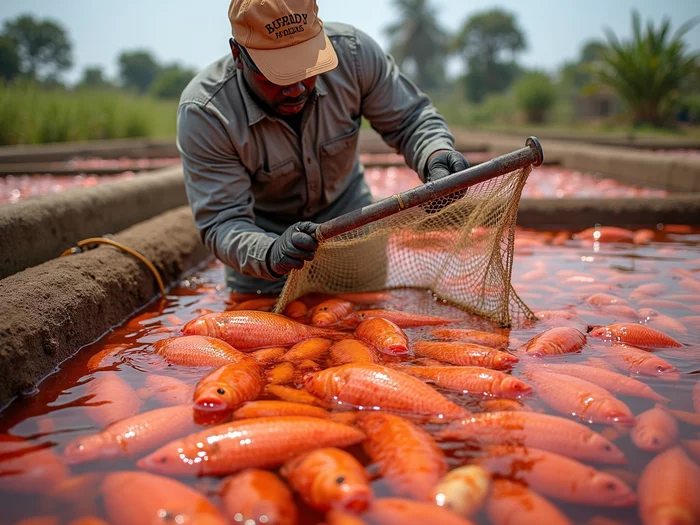
Successful red tilapia production requires attention to specific management practices that optimise the species' biological characteristics. Water temperature management proves critical—maintaining 28-32°C maximises growth rates and feed efficiency whilst temperatures below 25°C significantly slow production.
Stocking density decisions must balance production intensity with water quality management. In earthen ponds, 2-3 fish per square metre provides optimal growth without excessive water quality pressures. Cage systems can support 50-80 fish per cubic metre with adequate water exchange and aeration.
Feeding regimens should provide 3-4% of body weight daily divided into 2-3 feeding sessions. Early morning and late afternoon feeding times align with natural feeding behaviour and improve feed conversion efficiency.
Water quality monitoring requires regular attention to dissolved oxygen, ammonia, and pH levels. Weekly water changes of 10-20% help maintain optimal conditions, whilst aeration during night hours prevents oxygen depletion.
Breeding control becomes essential in grow-out ponds where unwanted reproduction reduces growth rates. Monosex male populations or regular harvesting of small fish prevents overcrowding from natural reproduction.
Challenges in Red Tilapia Farming
Despite its hardiness, red tilapia farming presents specific challenges requiring proactive management. Streptococcosis represents the primary disease threat, particularly in intensive systems with high stocking densities. This bacterial infection can cause mortality rates exceeding 50% if left untreated.
Genetic dilution poses long-term challenges for breeding programmes. Cross-breeding with other tilapia species reduces the distinctive red colouration and may compromise growth performance. Maintaining genetic purity requires careful broodstock management and regular culling of off-colour offspring.
Market saturation risks exist in areas where many farmers adopt red tilapia simultaneously. Price premiums may erode if supply significantly exceeds demand, requiring market development and diversification strategies.
Feed cost volatility affects profitability when ingredient prices fluctuate. Developing alternative feed sources and maximising natural productivity help buffer against feed cost increases.
Seasonal reproduction can disrupt production schedules in areas with pronounced dry/wet seasons. Temperature control strategies and breeding programme timing help maintain consistent production cycles.
Regulatory Considerations for Red Tilapia Farming
Red tilapia farming operates under various regulatory frameworks across Africa, requiring attention to local requirements and restrictions. Aquaculture licensing typically requires registration with national fisheries departments and compliance with environmental impact assessments.
Water use permits may be required for pond construction and operation, particularly in areas with competing water demands. Understanding local water rights and allocation procedures prevents regulatory conflicts and operational disruptions.
Import/export regulations affect stock acquisition and market access. Health certification requirements for moving fish between regions or countries require coordination with veterinary authorities and compliance with disease surveillance programmes.
Environmental compliance increasingly includes waste management and effluent discharge standards. Sustainable farming practices and waste treatment systems help ensure long-term operational viability and regulatory compliance.
Food safety regulations affect processing and marketing operations. HACCP compliance and traceability systems become essential for accessing premium markets and export opportunities.
How This Species Compares
Comparison with Related Tilapia Species
Understanding how red tilapia compares to related species helps you make informed stocking decisions based on your specific circumstances and objectives. Nile tilapia (O. niloticus) offers faster growth rates but lacks the market premium that red colouration provides. Growth rate differences of 10-15% favour Nile tilapia, but price premiums of 15-25% often make red tilapia more profitable.
Mozambique tilapia (O. mossambicus) shows superior salinity tolerance, handling up to 20 parts per thousand salinity compared to red tilapia's 15 ppt maximum. However, growth rates favour red tilapia by 20-30%, making it more suitable for commercial production despite lower environmental tolerance.
Blue tilapia (O. aureus) tolerates cooler temperatures better, surviving down to 10°C compared to red tilapia's 15°C minimum. This cold tolerance benefits highland farming but comes with slower growth rates and lower market acceptance in most African markets.
Disease resistance patterns vary among species. Red tilapia shows intermediate resistance levels—better than blue tilapia but potentially lower than Mozambique tilapia. However, overall hardiness and handling tolerance consistently favour red tilapia for commercial operations.
Feed conversion efficiency remains similar across tilapia species, with FCR ranges of 1.2-1.8 common for all varieties under optimal management. The key difference lies in market value rather than production efficiency.
Regional Suitability of Red Tilapia
Red tilapia's regional suitability across Africa varies based on climate, market conditions, and local preferences. West African markets show strong preference for red tilapia, with premium prices consistently 20-30% above Nile tilapia in Nigeria, Ghana, and Senegal.
East African adoption proceeds more slowly, with Nile tilapia maintaining market dominance in Kenya, Uganda, and Tanzania. However, urban markets increasingly accept red tilapia at premium prices, particularly in restaurants and hotels.
Southern African potential remains largely untapped, with climate conditions suitable for production but limited market development. Export opportunities to Middle Eastern markets may drive future adoption in South Africa and Namibia.
Highland regions face temperature challenges, with minimum temperatures below 15°C limiting production seasons. Pond depth management and thermal mass strategies can extend production periods in cooler areas.
Coastal regions benefit from red tilapia's salinity tolerance, allowing brackish water aquaculture in areas where freshwater is limited or expensive. This capability proves particularly valuable in Senegal, Gambia, and coastal Nigeria.
Key Takeaways for Farmers Considering Red Tilapia
Red tilapia represents a compelling opportunity for African fish farmers seeking to differentiate their products and capture premium markets. The species combines rapid growth rates of 1.5-2.5 grams daily with market premiums of 15-25%, creating strong economic incentives for adoption.
Production advantages include exceptional hardiness, disease resistance, and environmental tolerance that reduce operational risks and management complexity. Feed conversion ratios of 1.2-1.8 ensure efficient production even when feed costs fluctuate.
Market positioning provides the species' greatest advantage—red colouration creates consumer preference that translates to sustained price premiums and reliable demand channels. This market differentiation proves particularly valuable as aquaculture production increases across Africa.
Success factors centre on maintaining genetic purity, optimising water temperature management, and developing appropriate market channels. Farmers who master these elements consistently achieve superior returns compared to commodity tilapia production.
Consider red tilapia if you have access to warm water, can maintain temperatures above 25°C year-round, and have market access that rewards product differentiation. The species suits both small-scale operations seeking local premium markets and larger operations developing wholesale or export relationships. Your investment in red tilapia technology and genetics will likely provide sustainable competitive advantages as African aquaculture markets continue evolving toward higher-value products.


Yomi Adisa Lead Researcher
Yomi Adisa is the lead researcher at Fish Farming Business, where he studies what makes aquaculture ventures profitable across Africa. His research focuses on market patterns, buyer preferences, and the business decisions that determine success or failure in fish farming.