Tilapia Mariae: Biology, Farming Practices, and Market Insights
Posted on: 2025-11-16
By: Yomi Adisa
If you're considering diversifying your fish farming operation beyond the standard Nile tilapia, Tilapia mariae presents a fascinating alternative that could open new market opportunities across Africa. This spotted tilapia brings unique characteristics to aquaculture—from its distinctive substrate-spawning behaviour to its remarkable adaptability to brackish water conditions.
Understanding this species' biology and farming requirements will help you determine whether it fits your production goals and local market demands.
In This Guide
- → Why Tilapia mariae Matters for African Fish Farmers
- → Understanding Tilapia mariae
- → Biology and Habitat of Tilapia mariae
- → Reproductive Characteristics of Tilapia mariae
- → Advantages of Cultivating Tilapia mariae
- → Best Practices for Raising Tilapia mariae
- → Challenges in Farming Tilapia mariae
- → Comparing Tilapia mariae with Related Species
- → Summary of Key Takeaways for Fish Farmers
Why Tilapia mariae Matters for African Fish Farmers
The African aquaculture landscape is rapidly evolving, with farmers increasingly seeking species that can thrive in diverse environments whilst meeting growing consumer demand for variety.
Tilapia mariae, commonly known as spotted tilapia, offers precisely this combination of adaptability and market potential.
This species stands apart from conventional tilapia farming because of its exceptional ecological flexibility. Whilst most farmers focus on freshwater systems, T. mariae tolerates brackish conditions, opening opportunities for coastal aquaculture operations that other tilapia species cannot exploit.
This salinity tolerance is particularly valuable for farmers in Ghana, Nigeria, and other West African coastal regions where freshwater resources face increasing pressure.
The growing demand for diverse fish species across African markets reflects changing consumer preferences and the need for sustainable protein sources. T. mariae's smaller adult size—averaging 1.4 kilogrammes compared to Nile tilapia's 2-4 kilogrammes—positions it perfectly for household consumption and urban markets where portion control matters.
Perhaps most importantly for commercial viability, this species demonstrates the invasive characteristics that, when properly contained, translate directly to farming success: high fecundity, rapid growth, aggressive feeding behaviour, and remarkable environmental tolerance. These same traits that make it a concern in introduced ecosystems make it an excellent candidate for intensive aquaculture.
Understanding Tilapia Mariae
![]()
Scientific Classification
Tilapia mariae belongs to the family Cichlidae and was formally described by Boulenger in 1899. You'll encounter some taxonomic confusion in the literature, as recent revisions have reclassified this species under the genus Pelmatolapia. However, it remains widely referenced as Tilapia mariae in aquaculture and invasive species research.
Historical synonyms include Tilapia dubia Lonnberg, 1904 and Tilapia heudeloti, reflecting the ongoing taxonomic complexity of African tilapia classifications. For practical farming purposes, the name Tilapia mariae remains the most recognised designation.
Distinguishing Features
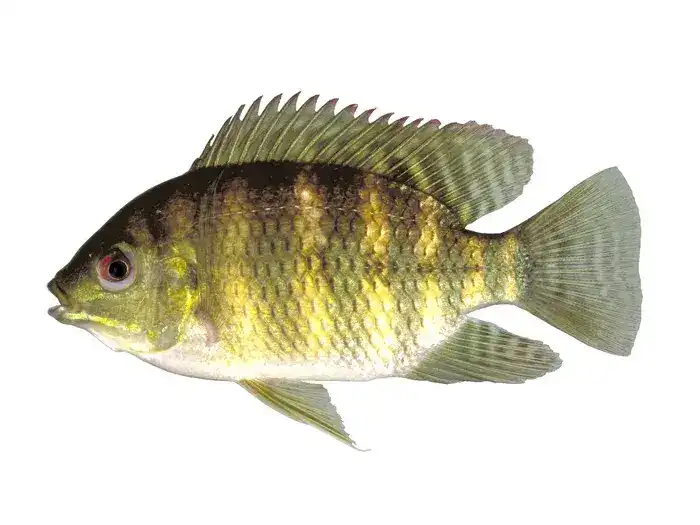
Adult T. mariae typically reach 33 centimetres in total length, with maximum recorded lengths of 39.4 centimetres. This makes them considerably smaller than Nile tilapia, which regularly exceed 40 centimetres. Adults weigh approximately 1.4 kilogrammes, though this represents average adult size rather than maximum potential weight.
Sexual dimorphism is pronounced, with males consistently larger than females—a characteristic you'll need to consider when selecting broodstock. Fingerlings reach sexual maturity at approximately 18 centimetres, enabling multiple spawning cycles within a single production year.
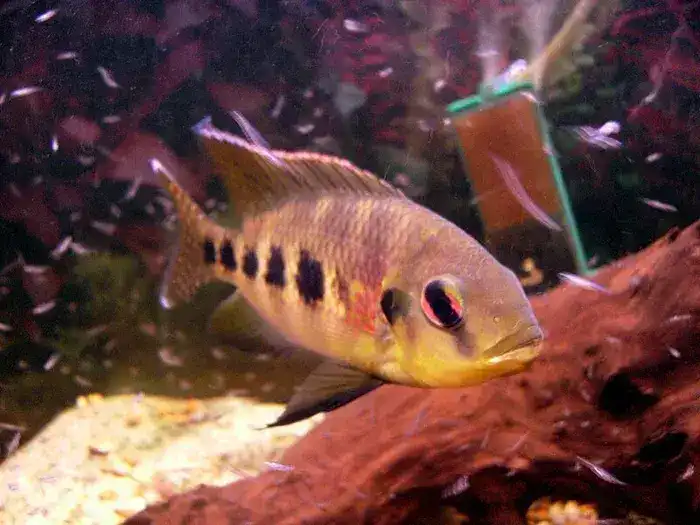
The species exhibits distinctive coloration that makes field identification straightforward. Base coloration ranges from light yellow to bronze, with 6-9 vertical bars or spots distributed along the lateral sides. This spotted pattern provides the basis for the common name and clearly distinguishes T. mariae from other tilapia species in your ponds.
One unique identifying feature is the turquoise coloration of eggs, which aids in monitoring spawning activity and reproductive success in your breeding programmes.
Field Identification Tips
When examining fish in your ponds or sourcing broodstock, focus on these key identification markers:
- Distinctive vertical bars or spots (6-9 total) along the body sides
- Smaller adult size compared to Nile tilapia
- Bronze to yellow base coloration
- Pronounced sexual size dimorphism
- Turquoise eggs during spawning periods
These features remain consistent across different environmental conditions, making T. mariae relatively easy to distinguish from other cichlids in mixed populations.
Biology and Habitat of Tilapia Mariae
![]()
Natural Habitat and Geographic Distribution
T. mariae is endemic to the coastal lagoons and river systems of western Africa, with documented native populations in Nigerian streams and Lake Volta in Ghana. This West African origin means the species is naturally adapted to the climatic conditions found across much of sub-Saharan Africa.
The species demonstrates remarkable ecological plasticity, inhabiting lakes, ponds, slow-moving canals, rivers, streams, irrigation channels, and estuaries. This habitat versatility directly translates to farming flexibility—you can successfully culture T. mariae in various pond types and water sources that might challenge other species.
Importantly, the species colonises both principal and secondary habitats, indicating strong adaptability to human-modified environments. This characteristic suggests excellent potential for integration into existing aquaculture infrastructure across Africa.
Environmental Requirements and Temperature Tolerance
Understanding T. mariae's environmental limits is crucial for successful farming. The species exhibits a lower cold temperature tolerance limit of approximately 11°C, which restricts production in highland areas or regions with significant seasonal temperature variation.
This temperature threshold is particularly relevant for farmers in Kenya's highland regions, South Africa's interior, or other areas where winter temperatures drop below 11°C. However, for most tropical and subtropical African regions, this limitation poses no practical constraints.
The species' brackish water tolerance sets it apart from most tilapia species. T. mariae thrives in estuarine conditions, making it suitable for coastal aquaculture operations where freshwater availability is limited or expensive. This salinity tolerance opens opportunities for farmers near coastal areas in Ghana, Nigeria, Senegal, and other West African nations.
Specific pH and dissolved oxygen requirements follow general cichlid parameters, though the species' invasive success suggests tolerance for suboptimal water quality conditions that might stress other species.
Feeding Behaviour and Diet
T. mariae is omnivorous, consuming both plant and animal materials. This feeding strategy provides significant advantages for farm feed formulations, as you can utilise locally available ingredients rather than expensive imported protein sources.
The species exhibits aggressive feeding behaviour characteristic of cichlids, which influences both stocking density decisions and feed management protocols. This aggressive behaviour ensures efficient feed utilisation and competitive feeding that promotes rapid growth.
The omnivorous diet suggests moderate protein requirements typical of omnivorous tilapia species. You can formulate feeds using local ingredients like groundnut cake, maize bran, and fish meal combinations, reducing production costs compared to species requiring specialised high-protein diets.
Reproductive Characteristics of Tilapia Mariae
![]()
Sexual Maturity and Spawning Behaviour
T. mariae reaches sexual maturity at 18 centimetres in length, representing relatively early maturation that enables rapid population growth and multiple spawning cycles within a single production year. This early maturity is advantageous for maintaining consistent broodstock availability.
The species exhibits distinctive reproductive characteristics that set it apart from mouthbrooding tilapia species:
- Substrate spawning: T. mariae requires hard substrates for egg deposition, necessitating rocky or structured surfaces in breeding ponds
- Biparental care: Both parents actively guard eggs, increasing egg survival rates compared to species with limited parental care
- Colonial breeding: Multiple pairs spawn in proximity, suggesting social facilitation of reproduction
- Lunar periodicity: Spawning shows lunar cycle synchronisation, enabling predictable breeding schedules
These behavioural patterns require specific hatchery management protocols different from standard tilapia operations. You'll need to provide appropriate substrate materials and maintain breeding colonies rather than individual pairs.
Incubation and Development Stages
The turquoise coloration of T. mariae eggs facilitates visual monitoring of spawning success and development progress. This distinctive egg colour allows you to assess reproductive activity without disturbing breeding pairs.
The substrate-spawning behaviour with biparental care means eggs remain attached to surfaces rather than being carried by parents. This requires different management approaches compared to mouthbrooding species, including substrate preparation and protection from disturbance during incubation periods.
Fecundity and Population Dynamics
T. mariae exhibits high fecundity, contributing to its invasive potential and rapid population establishment. This high reproductive output provides significant advantages for aquaculture, enabling quick scaling of production and consistent fingerling supply.
The combination of early maturity (18 cm), high fecundity, and biparental care creates optimal conditions for sustainable breeding programmes. You can maintain productive broodstock populations with relatively small initial investments whilst achieving consistent reproduction cycles.
Advantages of Cultivating Tilapia Mariae
![]()

Production Benefits
T. mariae demonstrates several characteristics that translate directly to farming advantages:
- Ecological plasticity: Broad tolerance for varied environmental conditions enables culture in diverse farming systems
- Aggressive feeding behaviour: Competitive feeding contributes to efficient growth and feed utilisation
- High fecundity: Rapid reproduction enables quick population expansion and consistent broodstock availability
- Environmental hardiness: Demonstrated success in non-native environments indicates robust tolerance for farming conditions
The species' invasive characteristics, when properly contained, become production assets. The same traits that enable rapid colonisation of new environments—aggressive behaviour, efficient reproduction, environmental tolerance—drive successful aquaculture operations.
Market Demand and Economic Considerations
T. mariae's smaller adult size (1.4 kilogrammes average) positions it strategically for household consumption markets across Africa. This size profile suits urban consumers seeking appropriate portion sizes and rural families requiring affordable protein sources.
The species has documented market value as both a food fish and aquarium species, providing potential for diversified marketing strategies. However, specific pricing data compared to other tilapia species requires local market research to determine optimal positioning.
The distinctive spotted coloration and smaller size may command premium prices in niche markets seeking alternatives to standard Nile tilapia. This differentiation potential could offset any size-related price disadvantages.
Stocking Density and Production Practices
The aggressive behaviour and territorial nature of T. mariae likely require lower stocking densities than less aggressive tilapia species. This management requirement helps minimise stress and cannibalism whilst potentially improving feed conversion efficiency through reduced competition stress.
The omnivorous feeding strategy allows flexible feed formulations using locally available ingredients, reducing dependency on expensive commercial feeds. You can develop cost-effective feeding programmes using agricultural by-products and local protein sources.
Best Practices for Raising Tilapia mariae
Environmental Management
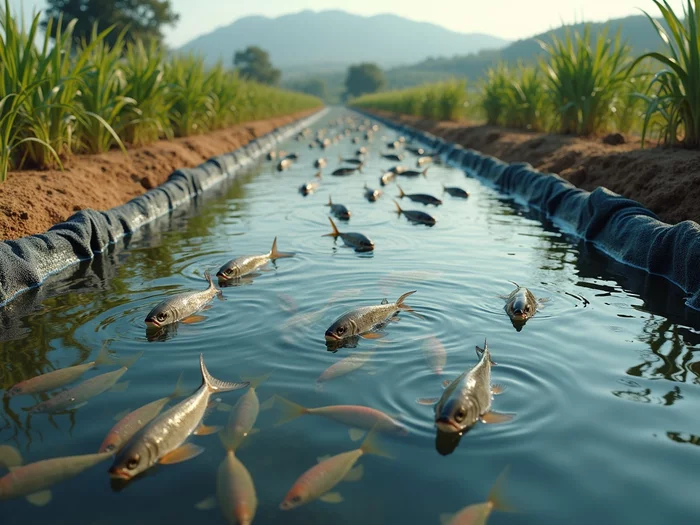
Successful T. mariae culture requires attention to specific environmental parameters:
- Maintain water temperatures above 11°C consistently
- Provide hard substrate materials for spawning in breeding ponds
- Ensure adequate dissolved oxygen levels, particularly given aggressive feeding behaviour
- Consider brackish water systems for coastal operations
The species' tolerance for varied water quality conditions provides flexibility in pond management, though maintaining optimal parameters will maximise growth and reproduction rates.
Biosecurity and Invasive Potential
T. mariae's designation as a significant pest in introduced ranges requires rigorous containment protocols. The characteristics that make it excellent for farming—high fecundity, aggressive behaviour, ecological plasticity—also create environmental risks if fish escape.
Implement comprehensive biosecurity measures including:
- Secure pond construction preventing escape during floods
- Proper waste management to prevent accidental release
- Quarantine protocols for new stock
- Regular monitoring for escaped individuals in nearby water bodies
These precautions protect both your investment and local ecosystems whilst ensuring sustainable production practices.
Challenges in Farming Tilapia mariae
Several production limitations require consideration:
The smaller adult size may limit market appeal in regions preferring large whole fish. However, this size profile suits markets emphasising portion control and household consumption.
Aggressive behaviour necessitates careful stocking density management and may complicate polyculture systems. You'll need to balance production intensity with behavioural management to optimise results.
The substrate-spawning reproductive strategy requires different hatchery infrastructure compared to mouthbrooding tilapia species, potentially increasing initial setup costs.
Comparing Tilapia Mariae with Related Species
Distinctions from Nile Tilapia (Oreochromis niloticus)
Understanding the key differences between T. mariae and the commercially dominant Nile tilapia helps inform production decisions:
Size and Growth: T. mariae adults average 33 cm and 1.4 kg compared to Nile tilapia's 40-60 cm and 2-4 kg. This size difference affects market positioning and feed conversion calculations.
Reproductive Strategy: T. mariae spawns on substrates with biparental care, whilst Nile tilapia are mouthbrooders. This fundamental difference requires completely different breeding management protocols.
Environmental Tolerance: T. mariae tolerates brackish water conditions that would stress Nile tilapia, but has a higher minimum temperature threshold (11°C vs 7°C).
Market Status: Nile tilapia dominates commercial aquaculture globally, whilst T. mariae remains a niche species with limited but growing market recognition.
Regional Suitability and Adaptation
T. mariae's established populations in Australia and the United States demonstrate successful adaptation to non-native environments. This adaptability suggests excellent potential for farming across subtropical and warm temperate African regions where temperatures remain above the 11°C minimum threshold.
The species' West African origin provides natural compatibility with climatic conditions across much of sub-Saharan Africa, particularly in coastal and lowland regions.
Considerations for Polyculture Systems
The aggressive behaviour of T. mariae requires careful species selection for polyculture systems. Compatible species must tolerate aggressive tank mates whilst occupying different ecological niches to minimise direct competition.
The omnivorous feeding strategy and substrate-spawning behaviour may complement mouthbrooding tilapia species in well-designed polyculture systems, though careful monitoring prevents aggressive interactions.
Summary of Key Takeaways for Fish Farmers
Tilapia mariae presents a compelling alternative for African fish farmers seeking to diversify beyond standard Nile tilapia production. The species offers unique advantages including brackish water tolerance, early sexual maturity at 18 centimetres, and high fecundity that ensures consistent reproduction.
The smaller adult size of 1.4 kilogrammes positions T. mariae perfectly for household consumption markets whilst the distinctive spotted coloration provides product differentiation opportunities. However, success requires understanding the species' specific needs: substrate spawning requirements, aggressive behaviour management, and temperature minimums above 11°C.
Consider T. mariae if you operate in coastal areas where brackish water tolerance provides advantages, seek species suitable for smaller market segments, or want to diversify production beyond conventional tilapia farming. The species' proven adaptability and robust reproductive characteristics make it an excellent candidate for sustainable aquaculture development across tropical and subtropical African regions.
Remember that responsible farming includes rigorous biosecurity measures to prevent environmental escape, given the species' invasive potential. With proper management, T. mariae can provide profitable production whilst meeting growing demand for diverse, sustainable protein sources across African markets.


Yomi Adisa Lead Researcher
Yomi Adisa is the lead researcher at Fish Farming Business, where he studies what makes aquaculture ventures profitable across Africa. His research focuses on market patterns, buyer preferences, and the business decisions that determine success or failure in fish farming.