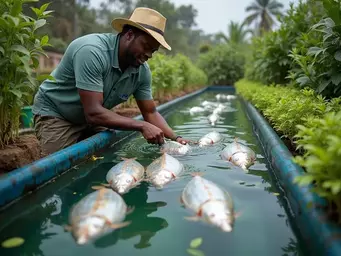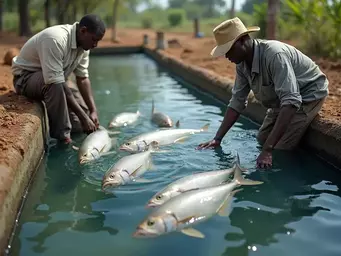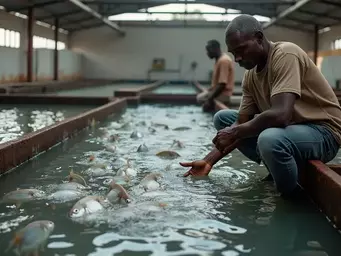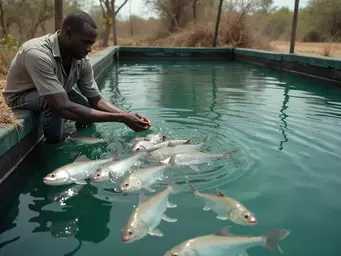
Feeding Tilapia Fingerlings: Practical Nutrition and Growth Management for Farmers
Posted on: 2025-10-22
By: Yomi Adisa
Feeding Tilapia Fingerlings: Practical Nutrition and Growth Management for Farmers
Picture this: You've successfully hatched your tilapia fry and watched them develop into healthy fingerlings, but now you're facing a critical decision that will determine your farm's profitability. How often should you feed them? What protein levels do they need? When is the right time to adjust feeding schedules?
📑 Table of Contents
These questions keep many tilapia farmers awake at night, especially when you realise that feeding costs typically represent 60-70% of your total production expenses. Getting fingerling nutrition wrong doesn't just impact growth rates—it destroys your entire operation's economics. Underfeed your fingerlings, and you'll see stunted growth that extends production cycles and reduces final harvest weights.
Overfeed them, and you're literally throwing money into the pond whilst creating water quality problems that can kill your stock. Many farmers lose 30-40% of their expected profits simply because they lack a systematic approach to fingerling feeding management. This comprehensive guide provides you with complete technical knowledge for feeding tilapia fingerlings effectively, covering nutritional requirements, feeding frequencies, water quality management, and economic considerations.
You'll learn the exact specifications, timing protocols, and management techniques that successful farmers across Africa use to achieve optimal growth rates whilst maintaining profitability. Whether you're managing a small backyard pond in Lagos or operating a commercial facility in Kampala, these proven feeding strategies will help you maximise your fish growth and minimise waste. Mastering fingerling nutrition isn't just about keeping your fish alive—it's about creating the foundation for a profitable tilapia farming operation that delivers consistent returns on your investment.
🎯 What You'll Learn
- Discover the precise protein requirements and feeding schedules for tilapia fingerlings at different growth stages to maximise growth rates and feed efficiency.
- Master effective feeding management techniques that minimise waste and optimise water quality to ensure a healthy and profitable tilapia farm.
- Learn how to calculate and analyse Feed Conversion Ratios (FCR) to assess feeding efficiency and make informed adjustments for improved production outcomes.
Understanding Tilapia Fingerlings and Their Nutritional Needs
Before diving into specific feeding protocols, you need to understand exactly what constitutes a fingerling and how their nutritional requirements change as they develop. This knowledge forms the foundation for all your feeding decisions and helps you avoid the costly mistakes that plague many beginning tilapia farmers. Proper feeding during the fingerling stage directly impacts your final harvest weight, feed conversion ratios, and overall return on investment.
Life Stages of Tilapia Fingerlings
Your tilapia progress through distinct life stages, each with specific characteristics and nutritional demands. Fry are the newly hatched fish, typically 0.1-1g in weight and measuring 1-3cm in length. At this stage, they're incredibly vulnerable and require the highest protein content in their diet.
You'll notice they swim in tight schools near the surface and feed almost continuously during daylight hours. Fingerlings represent the next growth phase, weighing 1-50g and measuring 3-10cm in length. This is your most critical management period because fingerlings are actively building muscle mass and skeletal structure whilst developing their adult feeding behaviours.
A farmer in Kisumu achieved 95% survival rates by recognising that fingerlings at 5-15g require different feeding frequencies than those approaching 30-40g. The grow-out phase begins when your fish exceed 50g and continue until harvest weight. During this stage, fish become more efficient at converting feed to body mass, but they're also more susceptible to nutritional deficiencies if you don't adjust their diet accordingly.

Nutritional Requirements Overview
Protein requirements decrease as your tilapia mature, but the absolute amounts increase significantly. Fry require 40-45% protein content in their feed because they're building fundamental body structures at an incredibly rapid rate. A 1g fry can double its weight in just 7-10 days under optimal conditions, but only if you provide adequate protein levels.
Fingerlings need 32-36% protein content, with the higher end reserved for smaller fingerlings (1-10g) and the lower end appropriate for larger ones (20-50g). This protein supports continued muscle development whilst allowing for more efficient feed conversion. A tilapia farmer in Kampala found that maintaining 35% protein for fingerlings under 20g resulted in 15% faster growth compared to using 32% protein feeds.
Beyond protein, your fingerlings require essential amino acids, particularly lysine and methionine, which support muscle development and immune function. Vitamins A, C, and E are crucial for disease resistance, whilst minerals like phosphorus and calcium support skeletal development. Essential fatty acids, particularly omega-3 and omega-6, support brain development and stress resistance.
| Life Stage | Weight Range (g) | Length Range (cm) | Protein Requirement (%) | Feeding Frequency (sessions/day) | Pellet Size (mm) |
|---|---|---|---|---|---|
| Fry | 0.1-1 | 1-3 | 40-45% | 6-8 | 0.5-1 |
| Small Fingerlings | 1-10 | 3-10 | 35-38% | 4-5 | 1-2 |
| Large Fingerlings | 10-50 | 10-25 | 32-36% | 3-4 | 2-3 |
| Grow-out | 50+ | 25+ | 28-32% | 2-3 | 3-4 |
Feed Types and Their Composition
Commercial feeds offer consistency and convenience but vary significantly in quality across African markets. In Nigeria, you'll find feeds ranging from 200-450 naira per 25kg bag, with protein content varying from 28-42%. Higher-quality feeds typically include fish meal, soybean meal, and vitamin premixes, whilst budget options may rely heavily on plant proteins with lower digestibility.
Pellet size directly affects feeding efficiency and growth rates. Use 0.5-1mm pellets for fry, 1-2mm for small fingerlings (1-10g), 2-3mm for medium fingerlings (10-30g), and 3-4mm for large fingerlings (30-50g). Floating pellets allow you to monitor feeding behaviour and prevent overfeeding, but they cost 15-25% more than sinking pellets.
Sinking pellets work well for bottom-feeding behaviour but require careful monitoring to prevent waste accumulation. Custom feed formulations can reduce costs by 20-40% if you have access to quality ingredients. A successful formulation might include 30% fish meal, 25% soybean meal, 20% maize meal, 15% wheat bran, 5% fish oil, and 5% vitamin-mineral premix.
Feeding Management Techniques
Effective feeding management combines precise timing, appropriate frequencies, and careful monitoring to maximise growth whilst minimising costs and environmental impact. Your success depends on understanding how different factors influence feeding behaviour and adjusting your protocols accordingly. Monitor and calculate Feed Conversion Ratios (FCR) monthly to track feeding efficiency and make informed adjustments.
Optimal Feeding Frequencies and Timing
Fry require 6-8 feeding sessions daily because their small stomach capacity limits individual meal sizes. Feed them every 2-3 hours from 7 AM to 6 PM, providing small amounts they can consume within 10-15 minutes. A farmer in Accra achieved 92% survival rates by feeding fry 8 times daily at 8% of body weight, split evenly across feeding sessions.
Fingerlings need 4-5 feeding sessions daily, with timing adjusted based on water temperature and fish behaviour. Feed at 7 AM, 10 AM, 1 PM, 4 PM, and optionally at 6 PM during warmer months. Reduce to 3-4 sessions during cooler periods when fish metabolism slows.
Monitor your fingerlings closely—active surface feeding indicates proper timing, whilst sluggish behaviour suggests overfeeding or poor water quality. Grow-out fish require only 2-3 feeding sessions daily, typically at 8 AM, 1 PM, and 5 PM. Their larger stomach capacity allows for bigger meals with longer intervals between feedings.

Feed Management Practices
Store your feed in cool, dry conditions to prevent spoilage and nutrient degradation. Use sealed containers or bags elevated off the ground, and maintain storage temperatures below 25°C when possible. In humid climates like coastal Nigeria or Ghana, add moisture-absorbing packets to feed containers.
Replace stored feed every 3-4 months maximum, as vitamin content degrades over time. Calculate daily feed requirements based on estimated fish biomass, adjusting weekly as fish grow. For fingerlings, feed 3-6% of estimated body weight daily, with smaller fish receiving the higher percentage.
A 100-fish group averaging 10g each (1kg total biomass) should receive 40-50g of feed daily, split across 4-5 feeding sessions. Distribute feed evenly across your pond or tank surface to ensure all fish have feeding opportunities. Scatter feed in different locations to reduce competition and prevent dominant fish from monopolising food sources.
| Feeding Frequency | Time of Day | Feed Amount (% of Body Weight) | Expected Growth Rate (g/week) | FCR Range |
|---|---|---|---|---|
| Fry: 6-8 sessions | 7 AM - 6 PM | 8-10% | 0.5-1.5 | 0.8-1.2 |
| Small Fingerlings: 4-5 sessions | 7 AM, 10 AM, 1 PM, 4 PM, 6 PM | 5-7% | 0.3-0.8 | 1.0-1.4 |
| Large Fingerlings: 3-4 sessions | 8 AM, 1 PM, 5 PM | 3-5% | 0.5-1.0 | 1.2-1.5 |
| Grow-out: 2-3 sessions | 8 AM, 1 PM, 5 PM | 2-3% | 1.0-1.5 | 1.5-2.0 |
Behavioural Indicators of Feeding Success
Healthy fingerlings display vigorous feeding behaviour, rushing to the surface when you approach with feed and competing actively for pellets. They should consume offered feed within 15-20 minutes, with minimal waste settling to the bottom. Strong feeding responses indicate good health, appropriate water quality, and proper feeding schedules.
Poor feeding behaviour manifests as sluggish responses to feed, fish remaining near the bottom during feeding times, or extended periods required to consume offered food. These signs often indicate stress, disease, or poor water quality rather than nutritional issues. A tilapia farmer in Mombasa discovered that reduced feeding activity preceded a pH crash that could have caused significant losses.
Growth rate monitoring provides the ultimate measure of feeding success. Fingerlings should gain 0.5-1.5g per week under good conditions, with faster growth in warmer water and optimal feeding regimes. Sample 10-15 fish monthly to track average weights and adjust feeding rates accordingly.
Water Quality and Its Impact on Feeding
Water quality and feeding management are inseparably linked in tilapia production, with each directly influencing the effectiveness of the other. Understanding these relationships allows you to optimise both aspects simultaneously for maximum production efficiency. Every feeding session introduces organic matter into your system, affecting nitrogen and phosphorus cycles that determine water quality.
Relationship Between Feeding and Water Quality
Every feeding session introduces organic matter into your system, affecting nitrogen and phosphorus cycles that determine water quality. Uneaten feed decomposes rapidly in tropical temperatures, consuming dissolved oxygen and producing ammonia that can stress or kill your fingerlings. A farmer in Kumasi learned this lesson when overfeeding caused an ammonia spike that killed 40% of his fingerlings within 48 hours.
Feeding frequency directly impacts waste production patterns. Multiple small meals produce steady, manageable waste loads that biological filtration can process effectively. Large, infrequent meals create waste spikes that overwhelm natural processing capacity, leading to dangerous accumulations of toxic compounds.
This relationship becomes critical in intensive systems where natural dilution is limited. Fish metabolism affects both feeding behaviour and waste production. In water temperatures of 28-30°C, fingerlings process feed efficiently and produce predictable waste loads.

Monitoring Water Quality Parameters
Test pH daily using reliable test kits or digital metres, maintaining levels between 6.5-8.5 for optimal tilapia health. pH below 6.0 or above 9.0 can kill fingerlings within hours, whilst levels outside the optimal range reduce feeding efficiency and growth rates. Early morning pH readings are typically lowest due to overnight respiration and organic decomposition.
Dissolved oxygen levels require twice-daily monitoring, particularly before dawn when levels reach daily minimums. Maintain levels above 5mg/L for fingerlings, with 6-8mg/L being optimal for maximum growth. Install simple aerators or fountains if levels consistently drop below 4mg/L, as oxygen stress immediately reduces feeding activity and growth rates.
Ammonia and nitrite testing should occur weekly in established systems, but daily during the first month after stocking or following any major changes. Ammonia levels above 0.5ppm begin stressing fingerlings, whilst levels above 1.0ppm can cause mortality. Nitrite levels should remain below 0.1ppm, as higher concentrations interfere with oxygen transport in fish blood.
| Parameter | Ideal Range | Monitoring Frequency | Impact on Feeding |
|---|---|---|---|
| pH | 6.5-8.5 | Daily | Affects feed conversion efficiency |
| Dissolved Oxygen | 6-8 mg/L | Twice daily | Directly impacts appetite and growth |
| Ammonia | Below 0.5 ppm | Weekly | High levels reduce feeding activity |
| Temperature | 26-30°C | Daily | Determines feeding frequency needs |
Managing Water Quality in Different Systems
Pond systems rely heavily on natural biological processes to maintain water quality, requiring careful balance between feeding rates and system capacity. Stock fingerlings at 2-4 per square metre in earthen ponds, allowing natural productivity to supplement artificial feeding. Monitor algae blooms carefully—moderate algae growth supports the ecosystem, but excessive blooms can cause dangerous oxygen swings.
Concrete tanks and recirculating systems require more intensive management but offer greater control over water quality parameters. Install biological filtration systems capable of processing waste from your maximum stocking density. A 10 cubic metre tank stocked with 500 fingerlings requires filtration capacity of at least 2-3 times the tank volume per hour to maintain optimal water quality.
Change 10-20% of water weekly in intensive systems, increasing to 30-40% if water quality parameters approach dangerous levels. Use dechlorinated water when possible, and ensure replacement water temperatures match existing tank temperatures within 2-3°C to prevent thermal shock. Temperature monitoring helps you adjust feeding schedules and quantities appropriately.
Economic Considerations in Feeding Protocols
Understanding the economic implications of your feeding decisions enables you to optimise profitability whilst maintaining fish health and growth performance. These calculations form the foundation of successful commercial tilapia operations. Calculate the true cost of different feeding frequencies by considering feed costs, labour requirements, and growth performance outcomes.
Cost-Benefit Analysis of Feeding Frequencies
Calculate the true cost of different feeding frequencies by considering feed costs, labour requirements, and growth performance outcomes. Feeding fingerlings 5 times daily versus 3 times daily typically increases feed costs by 15-20% but can improve growth rates by 25-35%, resulting in earlier harvest and better overall returns. A practical example from a Kenyan farmer demonstrates these calculations: feeding 1000 fingerlings 5 times daily cost 2,400 shillings monthly in feed, compared to 2,000 shillings for 3 times daily feeding.
However, the higher frequency group reached market size 3 weeks earlier, saving 1,800 shillings in additional feed costs and generating revenue sooner. Labour costs vary significantly based on farm size and automation level. Manual feeding requires 15-30 minutes per session for small farms (under 1000 fish), whilst larger operations may need 1-2 hours per feeding round.
Factor labour costs at local wage rates—typically 300-500 shillings per day in rural Kenya or 1,500-2,500 naira in Nigeria—when comparing feeding protocols. Consider opportunity costs of different feeding schedules. Intensive feeding protocols require more time commitment but generally produce better returns per unit of pond space.

Feed Cost Management Strategies
Source feed ingredients locally when possible to reduce transportation costs and ensure freshness. Fish meal from local processing plants typically costs 20-30% less than imported alternatives whilst supporting local economies. A farmer in Mwanza sources fish waste from local fish processing facilities, reducing feed costs by 35% compared to commercial alternatives.
Buy feed in bulk during dry seasons when transportation is easier and storage conditions are optimal. Purchase 3-4 months' supply when possible, but ensure proper storage to prevent spoilage. Coordinate purchases with neighbouring farmers to achieve bulk pricing—groups of 5-10 farmers can often negotiate 10-15% discounts from suppliers.
Compare feed costs on a per-unit-of-protein basis rather than simple price per kilogram. A feed costing 400 naira per 25kg bag with 35% protein provides better value than one costing 350 naira with 28% protein. Calculate protein cost as: (feed price ÷ protein percentage) × 100 to make accurate comparisons.
Long-term Economic Implications of Feeding Practices
Proper nutrition during the fingerling stage reduces mortality rates and improves final harvest weights, significantly impacting overall profitability. A 5% improvement in survival rates can increase net profits by 15-25%, whilst a 10% increase in average harvest weight can boost returns by 20-30%. Disease prevention through proper nutrition reduces treatment costs and mortality losses.
Well-nourished fingerlings develop stronger immune systems, reducing disease outbreaks that can cost 30-50% of your stock value. A farmer in Kisii attributed his 95% survival rate to consistent, high-quality feeding protocols that maintained fish health throughout the production cycle. Faster growth rates from optimal feeding reduce production cycle length, allowing for more harvests per year and better utilisation of pond infrastructure.
Reducing production time from 8 months to 6 months increases annual pond productivity by 33%, significantly improving return on investment for pond construction and equipment costs. Market timing advantages result from predictable growth rates achieved through consistent feeding management. You can plan harvests to coincide with high-demand periods like holidays or dry seasons when fish prices typically increase by 20-40% above average levels.
Troubleshooting Feeding Problems
Even experienced farmers encounter feeding challenges that require quick diagnosis and effective solutions. Recognising problems early and implementing appropriate corrections can prevent minor issues from becoming major losses. Stunted growth manifests as fingerlings failing to achieve expected size gains over 2-4 week periods.
Identifying Common Feeding Issues
Stunted growth manifests as fingerlings failing to achieve expected size gains over 2-4 week periods. Normal fingerlings should gain 0.5-1.5g weekly under good conditions. If your fish consistently gain less than 0.3g weekly, investigate feeding rates, feed quality, stocking density, and water quality parameters.
A farmer in Tamale discovered that using expired feed (stored for 8 months) caused 40% reduction in growth rates compared to fresh feed. High Feed Conversion Ratios indicate inefficient feed utilisation, typically resulting from overfeeding, poor feed quality, or environmental stress. FCRs above 2.0 for fingerlings suggest problems requiring immediate attention.
Calculate FCR monthly by dividing total feed consumed by total weight gained across your entire stock. Behavioural changes often precede measurable growth problems. Watch for reduced feeding activity, fish remaining at the bottom during feeding times, or increased aggression around feeding areas.

Solutions and Adjustments
Address stunted growth by first verifying feed quality and protein content. Test stored feed for rancidity—fresh feed should have a pleasant, grain-like smell, whilst spoiled feed smells sour or musty. Replace questionable feed immediately, as rancid feed can actually harm fish health rather than supporting growth.
Reduce high FCRs by cutting feeding rates by 20-30% for one week whilst monitoring fish behaviour. If feeding activity remains strong, the previous rates were excessive. Gradually increase feeding rates until you achieve optimal growth without waste accumulation.
A farmer in Eldoret reduced his FCR from 2.3 to 1.6 by implementing this approach. Improve feeding distribution by creating multiple feeding stations across your pond or tank. Use feeding rings or platforms to concentrate food in specific areas, then move these locations daily to ensure all fish have access.
Preventing Disease Through Nutrition
Boost immune function through proper vitamin supplementation, particularly vitamins C and E which support disease resistance. Commercial feeds should contain adequate vitamin levels, but consider supplementation if you're mixing custom feeds or if fish show signs of stress or disease susceptibility. Maintain consistent feeding schedules to reduce stress, as irregular feeding creates anxiety that suppresses immune function.
Fish anticipate feeding times and become stressed when expected meals don't arrive. This stress makes them more susceptible to bacterial and parasitic infections. Use probiotics in feed or water to support beneficial bacterial populations in fish digestive systems.
These beneficial bacteria improve feed conversion efficiency whilst crowding out harmful pathogens. Probiotic supplements cost 50-100 shillings per kilogram of feed but can reduce disease incidence by 30-50%. Monitor for early disease signs during feeding times when you can observe fish behaviour closely.
Conclusion
Successful fingerling feeding comes down to three fundamental principles: match protein levels to fish size (45% for fry, 35% for small fingerlings, 32% for larger ones), feed frequently but in controlled amounts (4-8 times daily depending on size), and monitor your fish closely to adjust feeding rates based on their behaviour and growth. Calculate your Feed Conversion Ratios monthly, maintain proper water quality during feeding, and remember that 60-70% of your production costs will be feed—so every pellet counts.
You now have the technical knowledge that successful tilapia farmers across Africa use to achieve optimal growth rates and profitability. The feeding schedules, protein requirements, and management techniques in this guide aren't theoretical—they're proven methods that work in real farming conditions. Yes, it takes practice to perfect your timing and develop an eye for proper feeding behaviour, but every experienced farmer started exactly where you are now.
Start implementing these feeding protocols gradually, beginning with proper feed storage and consistent timing, then refining your techniques as you gain experience. Keep simple records of feeding amounts, fish weights, and growth rates—this data becomes invaluable for optimising your operation. As your fingerlings develop into market-size fish, you'll need to master grow-out feeding strategies and harvest planning.
Frequently Asked Questions
How do I know if I'm overfeeding my tilapia fingerlings?
You can tell you're overfeeding if there are uneaten pellets remaining in the pond or tank 20-30 minutes after you've distributed the feed. Additionally, sluggish feeding responses or fish remaining at the bottom during feeding times can indicate overfeeding or poor water quality. Monitor your Feed Conversion Ratio (FCR) monthly; an FCR exceeding 2.0 for fingerlings suggests inefficiency.
What specific protein percentages should I use for different sizes of fingerlings?
For smaller fingerlings, those weighing 1-10g, you should aim for a higher protein content of 35-38% in their feed. As your fingerlings grow larger, to 20-50g, you can adjust this down slightly to 32-36% protein. This ensures they get adequate nutrition for muscle development without unnecessary waste.
Why is consistent storage of feed so important for my tilapia operation?
Consistent storage is crucial because improper conditions can lead to feed spoilage and nutrient degradation, directly impacting fish health and growth. Store your feed in cool, dry conditions below 25°C, in sealed containers, and replace it every 3-4 months maximum as vitamin content diminishes over time. This prevents reduced growth rates and potential harm to your fish.
Can I reduce feeding frequency for my fingerlings to save on labour costs?
While reducing feeding frequency might save on labour, it can negatively impact fingerling growth and overall profitability. Fingerlings typically need 4-5 feeding sessions daily due to their developing digestive systems and rapid growth. Reducing this could lead to slower growth rates, longer production cycles, and potentially lower final harvest weights, outweighing any labour savings.
How can I use the Feed Conversion Ratio (FCR) to improve my farm's profitability?
Monitoring and calculating your FCR monthly allows you to track feeding efficiency and identify problems early. A target FCR of 1.2-1.5 for fingerlings indicates efficient feed utilisation. If your FCR is above 2.0, it suggests issues like overfeeding, poor feed quality, or environmental stress, which you can then address to reduce waste and improve your profit margins.


Yomi Adisa Lead Researcher
Yomi Adisa is the lead researcher at Fish Farming Business, where he studies what makes aquaculture ventures profitable across Africa. His research focuses on market patterns, buyer preferences, and the business decisions that determine success or failure in fish farming.