Optimising Tilapia Feeding: When to Use Manual Feeding vs Automatic Systems
Posted on: 2025-11-04
By: Yomi Adisa
Optimising Tilapia Feeding: When to Use Manual Feeding vs Automatic Systems
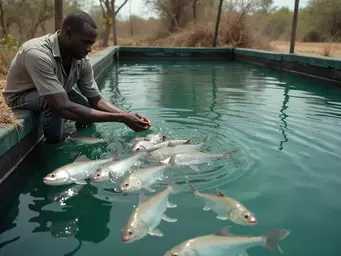
You're standing at your pond at 6 AM, scooping feed from a bag, wondering if you should invest in that automatic feeder your neighbour keeps talking about. Three hours later, you're finishing your feeding rounds across six ponds, knowing you'll repeat this same routine at noon and again at 5 PM. Meanwhile, your neighbour's automatic feeders have already delivered precise portions four times today whilst he focused on water quality testing and pond maintenance.
📑 Table of Contents
This daily dilemma faces every growing tilapia operation: when does manual feeding make sense, and when should you invest in automation? Your feeding method affects far more than just your daily routine—it directly impacts your feed conversion ratios, labour costs, fish growth uniformity, and ultimately your profit margins. With feed representing 60-70% of your production costs, choosing the wrong feeding approach can mean the difference between strong profits and barely breaking even. Yet most farmers make this critical decision based on limited information or what worked for someone else's completely different operation.
This comprehensive guide provides you with complete technical analysis of both manual and automatic feeding systems, including efficiency comparisons, cost-benefit calculations, and implementation strategies. You'll discover when each method delivers optimal results, how to evaluate automatic feeder technologies, and why hybrid approaches often provide the best solution. Whether you're managing 200-square-metre ponds in Kampala or planning a multi-pond expansion in Lagos, you'll gain the knowledge to make informed feeding system decisions that maximise your tilapia farming success whilst fitting your specific operational needs and budget constraints.
🎯 What You'll Learn
- Understand the nutritional requirements for tilapia at different growth stages to optimise feed composition and improve growth rates
- Discover the cost-effectiveness of automatic feeding systems and how they can reduce feed conversion ratios by 10-15% compared to manual methods
- Learn how to implement hybrid feeding strategies that combine manual and automatic systems for enhanced fish observation and production efficiency
Understanding Tilapia Feeding Systems
Before choosing between manual and automatic feeding, you need to understand what your tilapia require nutritionally and how different systems deliver these needs. Your feeding approach must align with your fish's growth stage, pond size, and production goals whilst fitting your operational capacity and budget constraints. The choice between feeding methods affects not just your daily routine, but your fish growth rates, feed conversion efficiency, and ultimately your farm's profitability.
Overview of Tilapia Feeding Requirements
Your tilapia's nutritional needs change dramatically as they grow from fry to market size. Fry require 45-50% protein content to support rapid cellular development and organ formation. As they develop into fingerlings weighing 5-20 grams, protein requirements drop to 35-40%, whilst market-size fish over 100 grams need only 28-32% protein content.
Beyond protein, your fish need 6-10% fat content for energy and essential fatty acid absorption. Carbohydrates should comprise 20-30% of the feed, providing readily available energy whilst keeping costs manageable. Essential vitamins include vitamin C for immune function, vitamin E for reproductive health, and B-complex vitamins for metabolism.
Feed particle size must match your fish's mouth capacity. Fry need powdered feed or crumbles under 0.5 millimetres, fingerlings require 1-3 millimetre pellets, and market-size fish can handle 4-6 millimetre pellets. Using oversized pellets wastes feed and pollutes your water, whilst undersized pellets reduce feeding efficiency for larger fish.
| Growth Stage | Protein Content (%) | Fat Content (%) | Carbohydrates (%) | Feeding Frequency (times/day) |
|---|---|---|---|---|
| Fry | 45-50 | 6-10 | 20-30 | 4-6 |
| Fingerlings (5-20 grams) | 35-40 | 6-10 | 20-30 | 3-5 |
| Market-size Fish (over 100 grams) | 28-32 | 6-10 | 20-30 | 2-3 |
Manual Feeding Systems
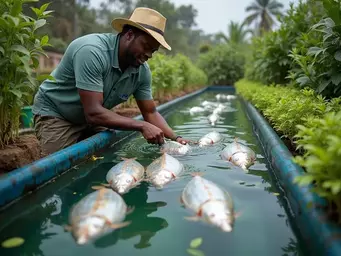
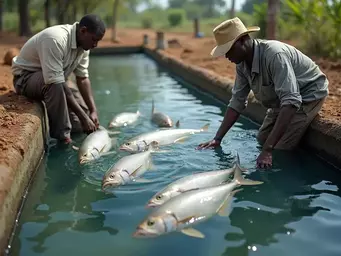
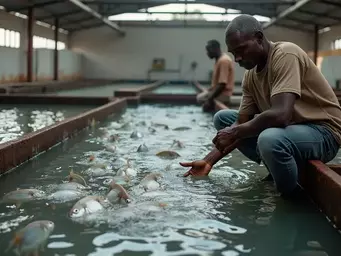
Manual feeding involves you or your workers distributing feed by hand, using buckets, scoops, or simple broadcasting tools. This traditional approach requires you to walk around your ponds, observing fish behaviour whilst scattering predetermined amounts of feed across the water surface. Most African tilapia farmers start with manual feeding because it requires minimal initial investment and gives you direct control over the feeding process.
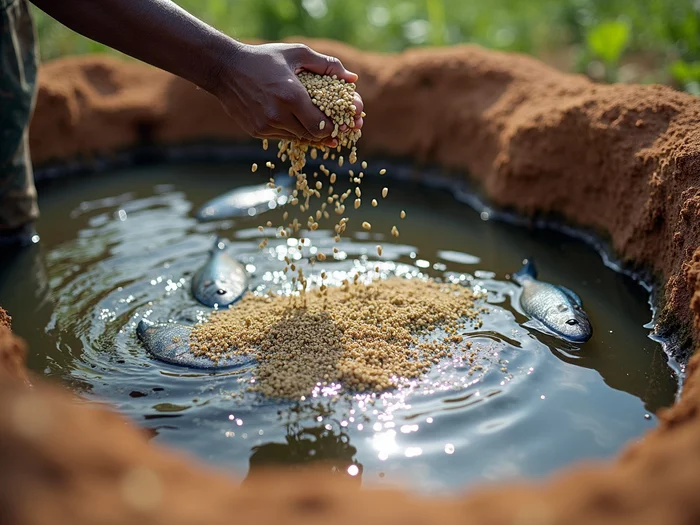
The primary advantage of manual feeding lies in your direct observation of fish behaviour and appetite. You can immediately spot health issues, adjust feeding amounts based on fish response, and ensure even feed distribution across your pond surface. This hands-on approach helps you develop an intimate understanding of your fish's patterns, seasonal appetite changes, and individual pond characteristics.
However, manual feeding demands significant labour investment, especially as your operation scales. A typical 100-square-metre pond requires 15-20 minutes per feeding session, including preparation and cleanup time. With recommended feeding frequencies of 2-4 times daily, you're investing 30-80 minutes per pond daily just for feeding.
Automatic Feeding Systems
Automatic feeders mechanically dispense predetermined amounts of feed at scheduled intervals, removing the need for constant human presence during feeding times. These systems range from simple timer-based hoppers that release feed at set intervals to sophisticated sensor-driven units that adjust feeding based on environmental conditions or fish behaviour. The most common types include gravity-fed timed dispensers, pneumatic systems that blow feed across pond surfaces, and demand feeders that activate when fish trigger underwater plates or sensors.
Automatic systems excel in consistency and labour efficiency. Once programmed, they deliver precise amounts at exact intervals, eliminating human error in portion control and timing. This consistency often improves feed conversion ratios by 10-15% compared to manual feeding, as fish receive optimal nutrition without the feast-or-famine cycles that can occur with irregular manual feeding.
The main disadvantages include higher initial investment costs and reduced direct fish observation. Basic automatic feeders cost 15,000-45,000 shillings in Kenya, whilst advanced sensor-based systems can exceed 100,000 shillings per unit. These systems also require reliable power supply, which can be challenging in rural areas with inconsistent electricity.
Comparative Analysis of Feeding Systems
Understanding the performance differences between manual and automatic feeding helps you make informed decisions based on measurable outcomes rather than assumptions. The key metrics that affect your profitability include feeding efficiency, water quality impacts, and overall cost-effectiveness across different farm sizes and management approaches. This analysis provides concrete data to guide your feeding system selection based on your specific operational requirements.
Efficiency Metrics
Feed conversion ratio (FCR) serves as your primary efficiency metric, measuring how much feed weight is required to produce one kilogram of fish weight gain. Manual feeding typically achieves FCRs of 1.8-2.2:1 in well-managed operations, whilst automatic systems often improve this to 1.6-1.9:1 through consistent portion control and optimal timing. This 10-15% improvement translates directly to reduced feed costs – your largest operational expense.
Growth rate consistency also improves with automatic feeding. Manual feeding can create size variation within your fish population due to irregular feeding patterns or uneven feed distribution. Dominant fish may consume disproportionate amounts during manual feeding sessions, whilst smaller fish receive insufficient nutrition.
Feeding accuracy represents another crucial efficiency factor. Manual feeding relies on visual estimation and experience, leading to portion variations of 20-30% between feeding sessions. Automatic systems deliver pre-programmed amounts with 95-98% accuracy, eliminating both underfeeding that slows growth and overfeeding that wastes money and degrades water quality.
| Metric | Manual Feeding | Automatic Feeding |
|---|---|---|
| Feed Conversion Ratio (FCR) | 1.8-2.2:1 | 1.6-1.9:1 |
| Labour Time Required (minutes/pond) | 30-80 | 10-30 |
| Feeding Frequency | 2-4 times/day | 4-6 times/day |
| Cost (initial investment) | 2,000-5,000 Shillings | 15,000-100,000 Shillings |
| Consistency of Feed Delivery | Variable | High |
Water Quality Management
Your feeding method directly affects water quality through uneaten feed decomposition and fish waste production. Manual feeding often results in localised feed accumulation where you stand whilst broadcasting, creating anaerobic zones that produce ammonia and hydrogen sulphide. Automatic systems distribute feed more evenly across pond surfaces, reducing these problem areas and maintaining better overall water quality.
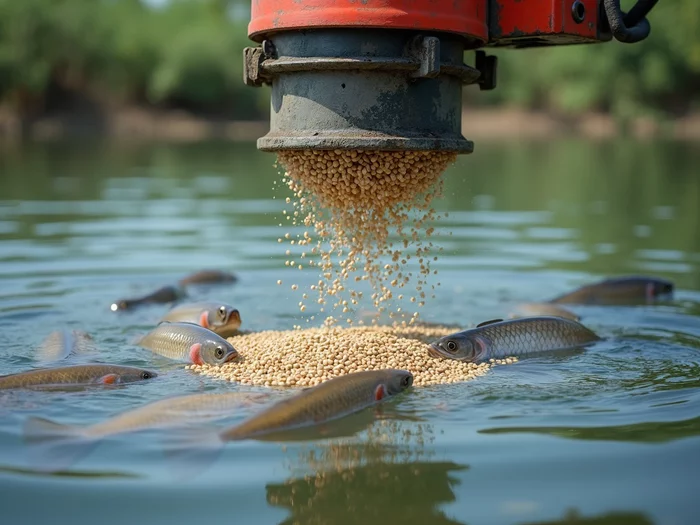
Overfeeding poses the greatest water quality risk, regardless of your feeding method. However, automatic systems' portion precision reduces overfeeding incidents compared to manual estimation. Uneaten feed decomposes within 2-4 hours in tropical temperatures of 26-30°C, consuming dissolved oxygen and releasing ammonia.
Feeding frequency also impacts water quality differently between systems. Manual feeding typically occurs 2-3 times daily in large portions, creating temporary spikes in waste production and oxygen demand. Automatic systems can deliver 4-6 smaller meals, spreading the biological load more evenly throughout the day.
Cost-Benefit Analysis and Economic Viability
Initial investment costs vary dramatically between feeding methods. Manual feeding requires only basic tools – buckets, scoops, and scales – costing 2,000-5,000 shillings in Kenya or 600-1,500 naira in Nigeria. Automatic systems demand substantial upfront investment: 15,000-45,000 shillings for basic timed feeders, 50,000-100,000 shillings for programmable units, and over 150,000 shillings for sensor-based systems with environmental monitoring capabilities.
However, labour cost analysis often favours automation as operations scale. Manual feeding requires 45-90 minutes daily per 100-square-metre pond, depending on feeding frequency and pond accessibility. At typical agricultural wages of 300-500 shillings daily in Kenya or 800-1,200 naira in Nigeria, labour costs accumulate quickly across multiple ponds.
Feed efficiency improvements provide additional economic benefits. The 10-15% FCR improvement from automatic feeding reduces your largest operational cost significantly. On a farm producing 2,000 kilograms annually with feed costs of 120 shillings per kilogram in Kenya, a 12% efficiency improvement saves 28,800 shillings yearly.
| Feeding Method | Initial Investment (Shillings) | Annual Labour Cost (Shillings) | Feed Cost Savings (Shillings) | Payback Period (Months) |
|---|---|---|---|---|
| Manual Feeding | 2,000-5,000 | 180,000 | N/A | N/A |
| Basic Automatic Feeding | 15,000-45,000 | N/A | 28,800 | 18-24 |
| Advanced Automatic Feeding | Over 100,000 | N/A | N/A | 2-3 |
Technical Deep-Dive into Feeding Technologies
Modern automatic feeding systems incorporate sophisticated technologies that go far beyond simple timer mechanisms. Understanding these technical capabilities helps you select systems that match your production goals and evaluate whether advanced features justify their additional costs in your specific farming context. The technology landscape continues evolving rapidly, offering increasingly precise control over feeding operations.
Sensor Technologies in Automatic Feeding
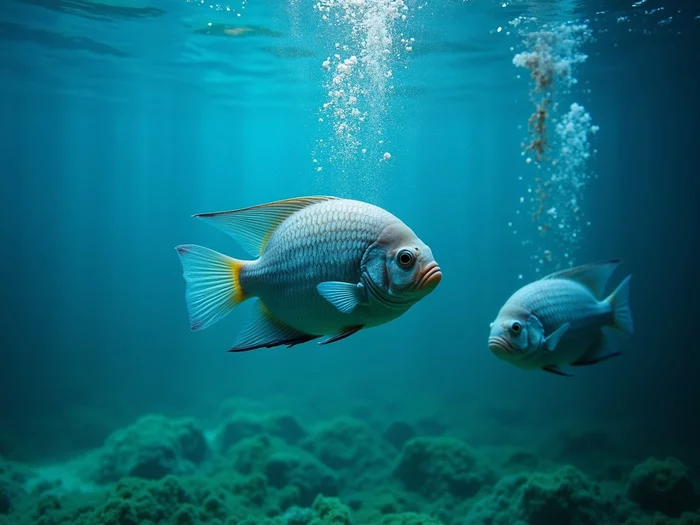
Contemporary feeding systems increasingly rely on sensor networks to optimise feed delivery based on real-time conditions. Dissolved oxygen sensors trigger feeding delays when levels drop below 4 milligrams per litre, preventing fish stress during low-oxygen periods common in early morning hours. Temperature sensors adjust feeding amounts seasonally – reducing portions when water temperatures fall below 22°C, as tilapia metabolism slows significantly in cooler conditions.
Computer vision systems represent the cutting edge of feeding technology, using underwater cameras and artificial intelligence to assess fish behaviour and appetite. These systems employ algorithms like YOLOv8 to recognise fish feeding activity, automatically stopping feed delivery when fish stop actively consuming pellets. A pilot installation in South Africa demonstrated 18% feed savings compared to timed systems, as the technology prevented overfeeding during periods of reduced appetite caused by weather changes or minor health issues.
Weight estimation sensors provide another valuable capability, using sonar or camera systems to estimate average fish size and adjust feeding amounts accordingly. As your tilapia grow from 50-gram fingerlings to 300-gram market fish, their daily feed requirements change from 4% to 2% of body weight. Advanced systems automatically calculate these adjustments, maintaining optimal growth rates without manual intervention.
Implementation and Integration
Installing automatic feeding systems requires careful planning to integrate with your existing pond infrastructure and management routines. Begin by assessing your power supply reliability, as most systems require consistent electricity for timers, motors, and sensors. Solar panel installations provide excellent alternatives in areas with unreliable grid power, with 100-watt panels sufficient for basic feeding systems and 300-500 watt systems supporting sensor-equipped units.
Feeder placement affects distribution patterns and maintenance accessibility. Position units to achieve even feed spread across your pond surface – typically requiring one feeder per 50-100 square metres of pond area. Mount feeders 1.5-2 metres above water level to prevent fish from jumping into feed hoppers, and ensure weatherproof housing to protect electronics from tropical rainfall.
System programming requires understanding your fish's daily feeding patterns and environmental conditions. Set initial feeding schedules based on standard recommendations – 4-6 meals daily for fingerlings, 3-4 meals for growing fish, and 2-3 meals for market-size tilapia. Program feeding amounts at 3-5% of estimated fish biomass daily, adjusting monthly as fish grow.
Troubleshooting and Maintenance of Feeding Systems
Regular maintenance prevents costly breakdowns and ensures consistent feeding performance. Clean feed hoppers weekly to prevent mould growth and insect infestations that can clog dispensing mechanisms. Lubricate moving parts monthly using marine-grade lubricants that resist corrosion in humid tropical conditions. Replace worn belts, gears, and seals before complete failure – keeping spare parts inventory reduces downtime when repairs are needed.
Common problems include feed bridging in hoppers, where pellets form arches that block flow. This occurs more frequently with high-moisture feed or during humid seasons. Prevent bridging by using feed with moisture content below 12% and installing agitators or vibrators in hopper designs.
Electrical issues pose particular challenges in tropical environments with high humidity and temperature fluctuations. Protect control panels with weatherproof enclosures and use corrosion-resistant wiring connections. Install surge protectors to guard against power fluctuations common in rural electrical systems.
Emerging Technologies in Feeding
Artificial intelligence and machine learning increasingly influence feeding system development, with algorithms learning your specific fish behaviour patterns and environmental conditions. These adaptive systems adjust feeding schedules based on historical data, weather patterns, and fish response, potentially improving efficiency beyond pre-programmed systems. Early trials in commercial facilities show 5-10% additional improvements in FCR compared to standard automatic feeders.
Alternative feed formulations designed specifically for automatic systems include slow-sinking pellets that remain available longer for bottom-feeding behaviour and floating pellets with extended stability in tropical waters. Some manufacturers produce feeds with attractants that encourage immediate consumption, reducing waste in automated feeding scenarios.
Remote monitoring capabilities allow you to oversee feeding operations from mobile phones or computers, receiving alerts about system malfunctions, feed level warnings, or unusual fish behaviour detected by sensors. Cloud-based systems store feeding data for analysis, helping you identify optimal schedules and amounts for different seasons or fish sizes.
Hybrid Feeding Approaches
Combining manual and automatic feeding methods often provides the optimal balance between efficiency and observation, allowing you to capture benefits from both approaches whilst mitigating their individual limitations. This strategic combination adapts to different production phases, seasonal variations, and operational constraints that pure manual or automatic systems might not address effectively. Many successful farmers find hybrid systems deliver superior results compared to relying exclusively on either feeding method.
Combining Manual and Automatic Systems
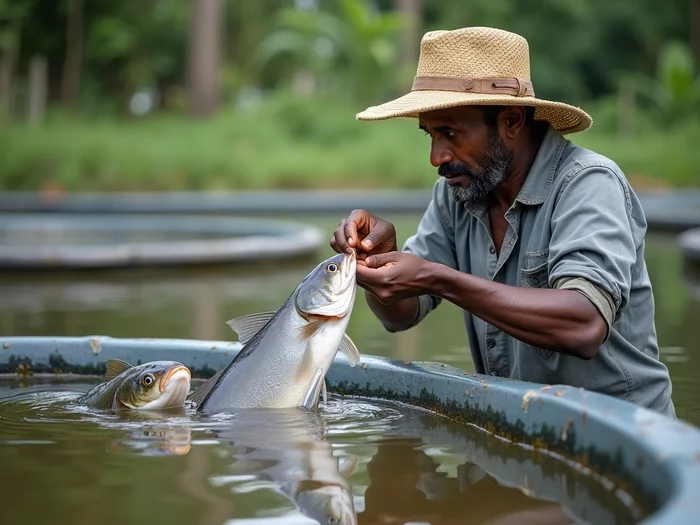
Hybrid approaches typically use automatic feeders for routine daily feeding whilst maintaining manual feeding for observation, health monitoring, and special circumstances. Many successful farmers program automatic systems to deliver 70-80% of daily feed requirements through multiple small meals, then conduct one manual feeding session for direct fish observation and appetite assessment. This combination maintains feeding consistency whilst preserving the valuable farmer-fish interaction that reveals health issues, growth patterns, and environmental stress indicators.
Seasonal variations make hybrid systems particularly valuable in African climates. During rainy seasons when pond access becomes difficult, automatic feeders maintain consistent nutrition without requiring you to traverse muddy paths multiple times daily. Conversely, during dry seasons when water levels drop and fish behaviour changes, increased manual feeding allows closer monitoring and immediate adjustments to feeding amounts and frequencies based on observed appetite changes.
Different pond sizes within your operation may justify different feeding approaches. Smaller nursery ponds containing valuable fry or fingerlings benefit from frequent manual observation and feeding precision, whilst larger grow-out ponds with established fish populations work well with automatic systems. A farmer in Kisumu uses manual feeding for his four 25-square-metre nursery ponds and automatic feeders for his three 150-square-metre production ponds, optimising both fish care and labour efficiency across his operation.
Species-Specific Feeding Strategies
Nile tilapia and red tilapia exhibit different feeding behaviours that influence your system choice. Nile tilapia demonstrate more aggressive feeding competition, making automatic feeding's even distribution particularly beneficial for maintaining uniform growth rates. Red tilapia show more cautious feeding behaviour and benefit from the gentle approach of manual feeding, especially during initial stocking periods when fish are adapting to new environments.
Growth stage transitions require different feeding intensities that hybrid systems handle effectively. Fry and early fingerling stages need frequent small meals – 6-8 times daily – that automatic systems deliver efficiently. As fish reach 50-100 grams, feeding frequency can reduce to 4-5 times daily, with some manual sessions replacing automatic ones for closer growth monitoring.
Polyculture systems incorporating tilapia with other species like catfish or prawns benefit from hybrid feeding approaches. Automatic systems can deliver floating pellets for tilapia surface feeding, whilst manual feeding allows targeted delivery of sinking feeds for bottom-dwelling species. This selective feeding approach ensures all species receive appropriate nutrition without competition or waste from inappropriate feed types reaching the wrong species.
Best Practices for Implementing Hybrid Systems
Start your hybrid approach gradually, introducing automatic feeders for one or two daily meals whilst maintaining manual feeding for primary observation sessions. This transition period allows you to calibrate automatic portions against fish appetite and adjust programming based on observed feeding behaviour. Monitor feed conversion ratios during the transition to ensure efficiency improvements justify the system complexity.
Establish clear protocols for when to override automatic systems and revert to manual feeding. Triggers include unusual weather conditions, signs of disease or stress, water quality problems, or equipment malfunctions. Train all farm workers on both feeding methods and decision criteria for switching between systems, ensuring consistent fish care regardless of who manages daily operations.
Record keeping becomes crucial with hybrid systems, tracking which ponds receive automatic versus manual feeding, portion sizes from each method, and fish response to different approaches. This data helps you optimise the manual-automatic balance for each pond and growth stage. A farmer in Mwanza improved his overall FCR from 2.0:1 to 1.7:1 by analysing six months of hybrid feeding data and adjusting the automatic-manual ratio based on fish performance patterns.
Sustainability and Regulatory Considerations
Sustainable feeding practices increasingly influence tilapia farming profitability as environmental awareness grows among consumers and regulators. Your feeding choices affect not only immediate production costs but also long-term farm viability, environmental compliance, and market access opportunities that demand demonstrable sustainability credentials. Understanding these broader implications helps you make feeding decisions that support both profitability and environmental responsibility.
Sustainable Feeding Practices
Alternative protein sources reduce dependence on expensive fishmeal whilst maintaining nutritional quality for your tilapia. Black soldier fly larvae, increasingly available from suppliers in Nairobi and Lagos, provide 42-45% protein content comparable to fishmeal at 60-70% of the cost. Cricket meal and termite meal offer similar protein levels with excellent amino acid profiles, though availability remains limited outside South Africa and Kenya.
Local feed ingredient sourcing reduces transportation costs and supports community agriculture. Maize bran, wheat middlings, and rice bran provide carbohydrate sources readily available across Africa at competitive prices. Soybean meal from local processors offers high-quality protein, whilst cassava meal provides energy at lower cost than imported grain products.
Feeding precision becomes more critical with alternative ingredients that may have variable nutrient content. Automatic feeding systems excel in this application, delivering consistent portions that allow accurate assessment of alternative feed performance. Manual feeding requires more careful measurement and record keeping to evaluate new ingredient effectiveness, but provides better observation of fish acceptance and digestive response to dietary changes.

Environmental Compliance
Effluent management regulations increasingly affect tilapia farms, particularly those near water sources or in environmentally sensitive areas. Your feeding practices directly influence effluent quality through uneaten feed and fish waste production. Automatic systems' reduced overfeeding typically decreases nitrogen and phosphorus discharge by 15-20% compared to manual feeding, helping you meet environmental standards more easily.
Feed conversion efficiency improvements from optimised feeding systems reduce overall environmental impact per kilogram of fish produced. Better FCRs mean less feed input for the same fish output, reducing the environmental footprint of feed ingredient production, processing, and transportation. This efficiency gain becomes increasingly important as environmental regulations tighten and carbon footprint considerations influence market access.
Water quality monitoring requirements often mandate regular testing of dissolved oxygen, ammonia, and pH levels. Automatic feeding systems with integrated sensors can provide continuous monitoring data that demonstrates compliance with environmental standards. Manual feeding operations require separate monitoring equipment and more frequent testing to document water quality maintenance.
Conclusion
Choosing the right feeding approach for your tilapia operation doesn't have to be an all-or-nothing decision. Start with manual feeding to develop your understanding of fish behaviour and appetite patterns, then gradually introduce automatic systems as your operation grows and labour demands increase. Remember that hybrid approaches often deliver the best results—combining automatic feeders for consistency with manual feeding sessions for observation and health monitoring.
Focus on feed conversion ratios as your key success metric, aiming for 1.8:1 or better through precise portion control and optimal timing. You now have the technical knowledge and practical frameworks to make informed feeding decisions based on your specific circumstances, pond sizes, and production goals. Whether you choose manual feeding for its direct fish observation benefits, automatic systems for their efficiency and consistency, or a hybrid approach that captures both advantages, success comes from consistent implementation and careful monitoring.
Your feeding system forms the foundation for profitable tilapia production, but it works best when integrated with proper water quality management and disease prevention strategies. Don't expect perfection immediately—developing expertise in feeding management takes time and practice, but every feeding session teaches you more about your fish's needs and behaviour patterns. Consider exploring pond management techniques next, as optimal feeding efficiency depends on maintaining healthy water conditions that support good appetite and nutrient absorption.
Frequently Asked Questions
When is it really worth investing in automatic feeders for my tilapia farm?
You should consider investing when your operation grows to multiple ponds, or if you're spending more than an hour daily on manual feeding rounds. Automatic feeders become economically viable when labour savings and improved feed conversion ratios (FCRs) of 10-15% can offset the initial cost within 2-3 years, as seen in the Mombasa farmer's case.
How can I ensure my tilapia get enough protein as they grow?
You need to adjust the protein content of your feed according to the fish's growth stage. Start with 45-50% for fry, drop to 35-40% for fingerlings, and use 28-32% for market-size fish over 100 grams. Always match the feed particle size to their mouth capacity to ensure efficient consumption.
Why is feed conversion ratio (FCR) so important, and how can I improve it?
Your FCR is crucial because feed represents 60-70% of your total production costs; a lower FCR means you're spending less to produce more fish. You can improve it by ensuring consistent, precise feeding (automatic systems often achieve 1.6-1.9:1 FCR), avoiding overfeeding, and using appropriately sized pellets, as demonstrated by the Kisumu farmer.
What are the main risks of overfeeding my tilapia, whether manually or automatically?
Overfeeding, regardless of the method, is the greatest water quality risk. Uneaten feed decomposes rapidly in warm tropical waters, consuming dissolved oxygen and releasing harmful ammonia, which can stress your fish and reduce growth rates. This can lead to reduced growth and increased disease outbreaks, as observed in Tamale.
Can I combine manual and automatic feeding to get the best of both worlds?
Yes, a hybrid approach is highly recommended. You can use automatic feeders for 70-80% of daily feed requirements, delivering frequent small meals, and then conduct one manual feeding session for direct observation of fish behaviour and health. This strategy provides consistency while allowing you to spot issues early, as practised by the Kisumu farmer.


Yomi Adisa Lead Researcher
Yomi Adisa is the lead researcher at Fish Farming Business, where he studies what makes aquaculture ventures profitable across Africa. His research focuses on market patterns, buyer preferences, and the business decisions that determine success or failure in fish farming.