Producing All-Male Tilapia: Manual Sexing and Grading Methods for Better Yields
Posted on: 2025-10-23
By: Yomi Adisa
Producing All-Male Tilapia: Manual Sexing and Grading Methods for Better Yields
Picture this scenario: You've been farming tilapia for two seasons, but your yields remain disappointingly low despite following all the feeding and pond management advice. Your fish seem healthy, but growth is uneven, and you're spending more on feed than you're earning from sales. The culprit might be something you haven't considered—mixed-sex populations in your ponds.
📑 Table of Contents
When male and female tilapia breed uncontrollably, they divert energy from growth to reproduction, whilst overcrowding from unwanted fry stunts everyone's development. This breeding chaos transforms what should be profitable fish farming into a frustrating cycle of poor growth rates and unpredictable harvests. Many farmers across Africa struggle with this exact problem, watching their investment in feed and time produce mediocre results because they're essentially raising breeding colonies instead of market-focused crops.
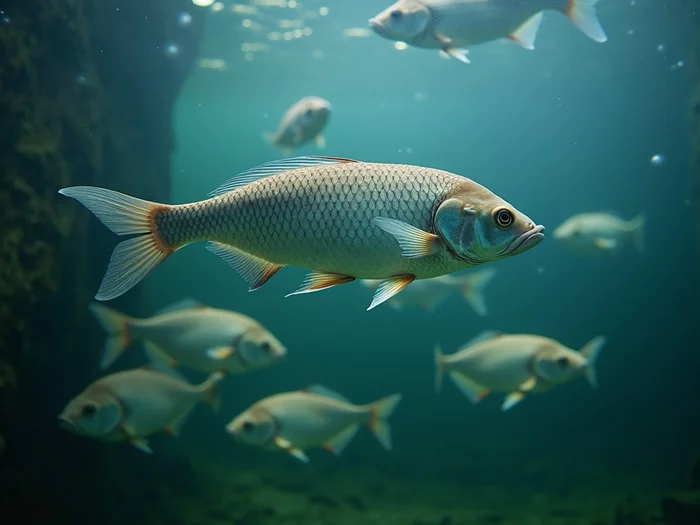
Manual sexing and grading offer you a proven solution to break this cycle without expensive chemicals or complex technology. Male tilapia grow 30-40% faster than females and reach market size 2-3 months earlier. A farmer in Kisumu reported increasing his harvest weight from 180kg to 285kg per pond simply by switching to all-male populations. With faster growth rates, higher feed conversion efficiency, and premium market prices for uniform-sized fish, mastering these techniques can transform your operation from subsistence to profitable enterprise.
This article provides you with complete technical guidance on manual sexing and grading methods to produce all-male tilapia populations. You'll learn the exact techniques for identifying and separating male fingerlings, proper grading protocols for uniform growth, and step-by-step processes you can implement using basic equipment available across Africa.
🎯 What You'll Learn
- Master manual sexing techniques to accurately identify and separate male tilapia fingerlings for improved growth rates
- Discover effective grading protocols to ensure uniform fish sizes, maximising feed efficiency and market value
- Understand the economic benefits of all-male tilapia production, including reduced feed costs and premium market prices opportunities
Understanding All-Male Tilapia Production
All-male tilapia production represents one of the most significant advances in African aquaculture, offering farmers a proven path to dramatically improved yields and profitability. The science behind this approach addresses the fundamental challenge that has limited tilapia farming success across the continent—uncontrolled breeding that diverts energy from growth and creates overcrowded ponds. By understanding the various production methods available and their practical applications, you can make informed decisions about which approach best suits your operation, resources, and market goals.
The Importance of Monosex Culture
Monosex culture refers to farming populations of a single sex, typically males in tilapia production. This approach eliminates the energy drain of reproduction and prevents overcrowding from unwanted offspring. In mixed-sex populations, female tilapia begin breeding at just 3-4 months old, often when they weigh only 50-80g.
The advantages of all-male populations extend far beyond simple growth rates. Male tilapia convert feed more efficiently, requiring 1.4-1.6kg of feed per kilogram of weight gain compared to 1.8-2.2kg for mixed populations. A farmer in Ibadan documented feeding costs dropping from 85 naira per kilogram of fish produced to 62 naira when switching to all-male culture.
| Population Type | Feed Conversion Ratio (FCR) |
|---|---|
| All-Male Population | 1.4-1.6 kg feed/kg weight gain |
| Mixed-Sex Population | 1.8-2.2 kg feed/kg weight gain |
Market advantages prove equally compelling. Uniform-sized fish command premium prices, often 15-25% higher than mixed-size harvests. Processors and restaurants favour consistent sizing for portion control, whilst consumers associate uniform appearance with quality.
Overview of Production Methods
Several methods exist for producing all-male tilapia, each with distinct advantages and implementation requirements. Hormone sex reversal using methyltestosterone remains the most common commercial method, treating newly hatched fry for 21-28 days to produce 95-98% male populations. This method requires precise timing, controlled feeding, and careful hormone handling but delivers consistently high success rates.
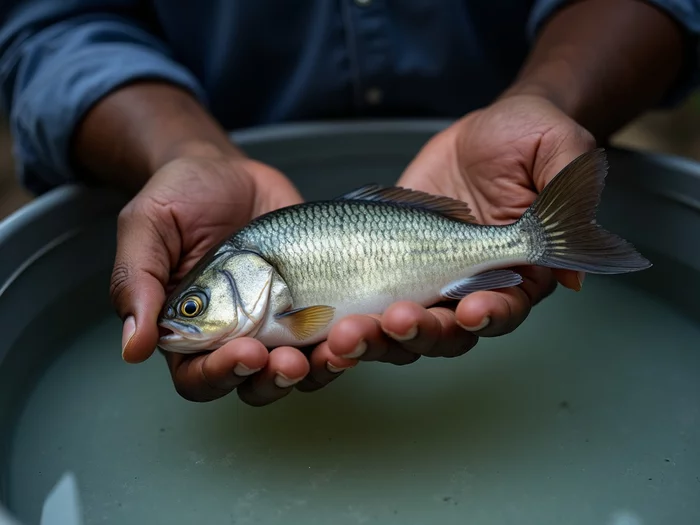
Manual sexing involves physically examining and separating male and female fingerlings at 6-8 weeks old when sexual characteristics become visible. Though labour-intensive, this method requires no chemicals or special permits and achieves 90-95% accuracy with experienced operators. Many African farmers prefer this approach for its simplicity and complete control over the process.
| Method | Advantages | Disadvantages | Cost Implications | Success Rate |
|---|---|---|---|---|
| Manual Sexing | No chemicals, complete control | Labour-intensive | 15,000-25,000 naira for 10,000 fingerlings | 90-95% |
| Hormone Treatment | Lower labour requirements | Regulatory issues | 33,000-47,000 naira for 10,000 fry | 95-98% |
| YY Technology | Guaranteed males | High costs | 150-300 naira per YY male | 100% |
Hybridisation techniques, particularly crossing female Nile tilapia with male Blue tilapia, can produce predominantly male offspring without hormones or manual sorting. However, maintaining pure breeding lines requires expertise and dedicated broodstock facilities. YY supermale technology, where genetically modified males produce 100% male offspring, represents the newest approach but remains expensive and requires specialised suppliers.
Manual Sexing Techniques
Manual sexing provides African tilapia farmers with a reliable, chemical-free method for producing all-male populations using skills and equipment readily available on most farms. This technique capitalises on the distinct physical differences that develop between male and female fingerlings at 6-8 weeks old, when fish weigh 2-5g and measure 3-5cm in length. Success depends on understanding these identifying characteristics, developing proper handling techniques, and creating optimal conditions for accurate examination.
Identifying Male vs. Female Fingerlings
The primary distinguishing feature between male and female tilapia fingerlings lies in the genital papilla structure located behind the anal fin. Male tilapia possess a single, prominent opening that appears pointed and extends slightly from the body. This urogenital opening serves for both waste elimination and sperm release, creating its distinctive elongated appearance.
Female tilapia display two distinct openings—the anus and a separate genital pore for egg release. The genital pore appears as a small, round opening positioned closer to the anal fin, whilst the anus sits slightly behind it. This dual-opening configuration creates a characteristic pattern that becomes more pronounced as fingerlings mature.
| Growth Stage | Age (Weeks) | Weight Range (g) | Length Range (cm) | Key Characteristics |
|---|---|---|---|---|
| Fingerling Stage | 6-8 | 2-5 | 3-5 | Sexual characteristics visible |
| Juvenile Stage | 8-16 | 5-50 | 5-15 | Rapid growth, more defined fins |
| Adult Stage | 16+ | 300-400 | 20-25 | Mature, ready for market |
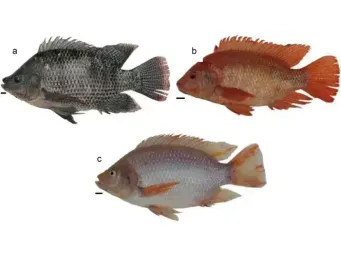
Secondary characteristics can support your identification accuracy, though they're less reliable than genital examination. Male fingerlings often develop slightly more pointed dorsal and anal fins, whilst females tend toward rounder fin shapes. Body depth may also differ slightly, with males appearing more streamlined, but these characteristics vary significantly between individual fish and shouldn't be used as primary identification methods.
Step-by-Step Manual Sexing Process
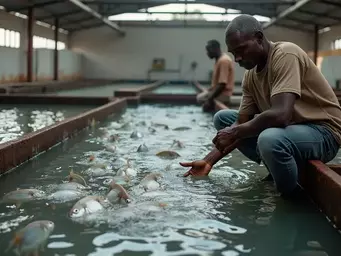
Begin your manual sexing operation by preparing a suitable workspace with adequate lighting and comfortable positioning for extended examination periods. Natural daylight provides the best illumination, but bright LED lights positioned to eliminate shadows work well for indoor operations. Set up shallow examination trays filled with clean pond water to hold fingerlings during the process.
Start by netting a small group of fingerlings—never more than you can examine within 10-15 minutes to prevent stress and mortality. Gently capture individual fingerlings using a small dip net or your cupped hands, taking care not to squeeze the delicate fish. Hold each fingerling belly-up in your palm, supporting the head with your thumb whilst using your index finger to gently expose the genital area.

Examine the genital papilla carefully, looking for the single pointed opening of males versus the dual openings of females. Take your time with each fish, as rushed examination leads to errors that compromise your final population purity. Place identified males in one container and females in another, keeping a third container for uncertain cases.
Best Practices for Successful Manual Sexing
Timing proves crucial for manual sexing success. Begin the process when fingerlings reach 6-8 weeks old and weigh 2-5g. Earlier attempts yield poor accuracy as sexual characteristics haven't fully developed, whilst waiting longer increases handling stress and mortality in larger fish.
Maintain optimal water quality during and after sexing operations to minimise stress and mortality. Keep examination water at the same temperature as your growing ponds, typically 26-28°C. Ensure adequate dissolved oxygen levels by limiting the number of fish in examination containers and changing water frequently.
Train multiple team members in sexing techniques to improve efficiency and provide backup expertise. Start with experienced operators examining obvious males and females, whilst trainees handle intermediate cases under supervision. A farmer in Kampala increased his sexing accuracy from 78% to 94% over six months through consistent practice and record-keeping.
Grading and Sorting Post-Sexing
Effective grading and sorting following your manual sexing operation ensures uniform growth rates, optimising feed utilisation, and maximising your harvest value through consistent market-ready fish. This critical step addresses the natural size variation that occurs even within single-sex populations, creating homogeneous groups that grow at similar rates and reach market size simultaneously. Proper grading reduces competition between different-sized fish, improves feed conversion efficiency, and enables you to manage multiple production cycles with predictable harvest schedules.
Importance of Grading in Tilapia Production
Size uniformity within your tilapia populations directly impacts growth performance and profitability through reduced competition and optimised feeding efficiency. When fish of varying sizes share the same pond, larger individuals dominate feeding areas and consume disproportionate amounts of feed, whilst smaller fish struggle to access adequate nutrition. This competitive dynamic creates a widening size gap that persists throughout the production cycle, resulting in harvest populations with extreme size variation that complicates marketing and reduces overall value.
Graded populations demonstrate measurably improved feed conversion ratios and growth rates. A farmer in Lagos documented average weight gains of 4.2g per day in graded all-male populations compared to 2.8g per day in ungraded mixed groups, using identical feeding and management practices. The graded fish reached 350g market weight in 6.5 months versus 8.5 months for ungraded populations, reducing production costs and increasing annual production cycles.
Market advantages of proper grading extend beyond simple price premiums. Uniform fish enable you to target specific market segments—restaurants requiring 300-400g portions, processors needing consistent sizing for filleting, or premium retail markets demanding visual uniformity. This market segmentation capability allows premium pricing strategies that can increase revenue by 20-35% compared to mixed-size harvests requiring discount pricing for smaller fish.
Grading Protocols and Standards
Establish clear size categories based on your target markets and production timelines. For fingerling production, create three grades: large (3-5g), medium (1.5-3g), and small (under 1.5g). Growing fish typically require four categories: extra-large (above 5g), large (3-5g), medium (2-3g), and small (under 2g).
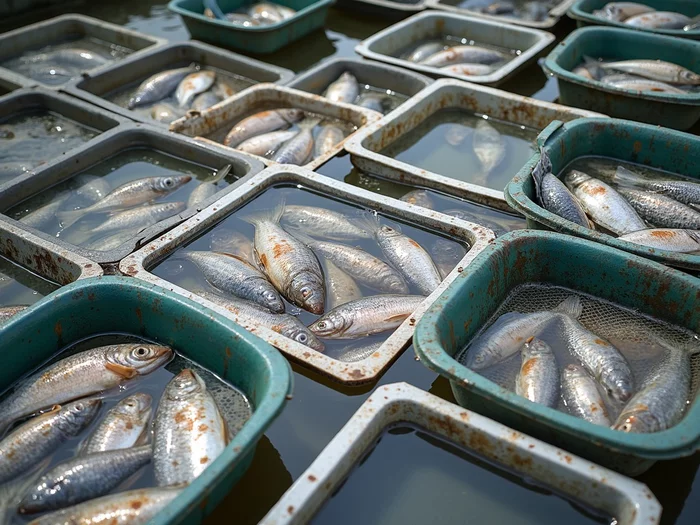
Implement grading using simple but effective equipment suited to your operation scale. Grading boxes with different mesh sizes provide the most efficient sorting method—construct wooden frames with wire mesh bottoms in your target size categories. Fish passing through larger mesh fall into the next category, creating automatic sorting with minimal handling.
| Size Category | Weight Range (g) | Recommended Stocking Strategy |
|---|---|---|
| Extra-Large | > 400 | Stock at low density for optimal growth |
| Large | 300-400 | Maintain moderate density |
| Medium | 200-300 | Stock at higher density with regular grading |
| Small | < 200 | Separate pond with extended growing period |
Conduct initial grading immediately following sexing operations whilst fish remain in handling systems. This timing minimises total stress by combining both operations rather than subjecting fish to multiple handling sessions. Perform subsequent grading every 4-6 weeks throughout the growing period, as size differences naturally develop even within initially uniform populations.
Troubleshooting Common Grading Issues
Misclassification during grading operations typically results from rushed handling, inadequate lighting, or operator fatigue during extended sessions. Address these issues by limiting grading sessions to 2-3 hours maximum, providing adequate break periods for operators, and maintaining consistent lighting throughout the workspace. Implement quality control checks by having experienced operators re-examine borderline classifications and maintain records of accuracy rates to identify training needs.
Size discrepancies within supposedly uniform groups often indicate feeding management problems rather than grading failures. Insufficient feeding frequency, poor feed distribution, or inadequate pond space can create size variation even within properly graded populations. Monitor your feeding practices carefully, ensuring feed reaches all areas of the pond and adjusting quantities based on actual fish biomass rather than initial stocking weights.
Equipment maintenance prevents many common grading problems. Clean grading meshes regularly to prevent clogging that affects size classification accuracy. Replace worn or damaged mesh that allows incorrect size passage. A farmer in Nairobi reduced grading errors by 40% simply by implementing weekly equipment checks and monthly calibration procedures.
Cost-Benefit Analysis of Production Methods
Understanding the economic implications of different all-male production methods enables you to make informed decisions based on your farm's scale, resources, and market positioning. Each approach—manual sexing, hormone treatment, and YY technology—carries distinct cost structures, labour requirements, and success rates that significantly impact your profitability and operational complexity. The key lies not in finding the universally "best" method, but in matching the approach to your specific circumstances, available resources, and risk tolerance.
Comparing Manual Sexing vs. Hormone Treatment
Manual sexing requires higher labour inputs but eliminates chemical costs and regulatory complications associated with hormone treatments. A typical manual sexing operation requires 2-3 experienced workers to process 10,000 fingerlings over 2-3 days, costing approximately 15,000-25,000 naira in wages depending on regional labour rates. Equipment costs remain minimal—examination trays, lighting, and sorting containers represent one-time investments under 50,000 naira for most farm scales.
Hormone treatment using methyltestosterone involves lower labour requirements but higher material costs and regulatory compliance expenses. Treating 10,000 fry requires 15-20g of hormone costing 8,000-12,000 naira, plus specialised feeds and controlled feeding systems adding another 25,000-35,000 naira. Success rates typically reach 95-98% male populations compared to 90-95% for experienced manual sexing operations, but the 3-5% difference rarely justifies the additional complexity for smaller farms.
Long-term cost considerations favour manual sexing for most African operations. Hormone treatments require consistent chemical supplies, often imported and subject to currency fluctuations and supply chain disruptions. Manual sexing develops internal expertise that improves with experience, reducing per-unit costs over time.
Evaluating YY Technology for All-Male Production
YY supermale technology offers 100% male offspring but requires substantial initial investments and ongoing supplier relationships that may challenge smaller operations. YY males cost 150-300 naira each compared to 8-15 naira for conventional broodstock, representing a 15-20x premium that must be recovered through improved production efficiency. However, one YY male can produce thousands of all-male offspring, spreading the cost over multiple production cycles.
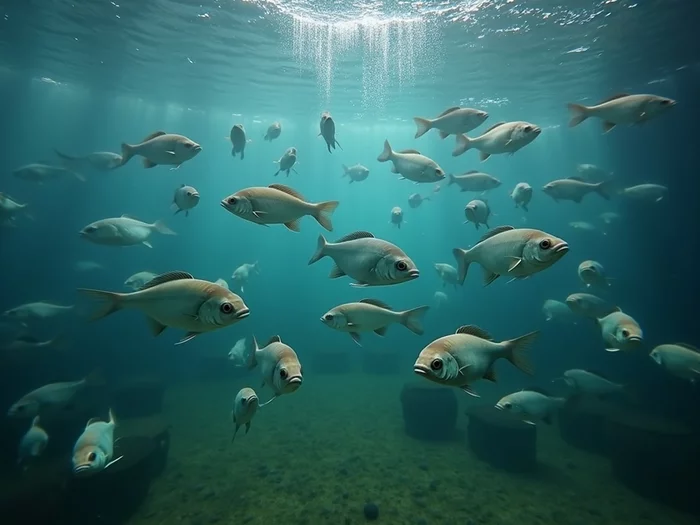
The technology eliminates labour-intensive sexing operations and chemical treatments whilst delivering guaranteed results. Production planning becomes more predictable with 100% male populations, enabling precise feed budgeting and harvest scheduling. Market positioning improves significantly when you can guarantee all-male populations to buyers seeking consistent, fast-growing fish for processing or restaurant supply.
Regulatory and supply chain considerations present significant challenges for YY technology adoption in many African markets. Limited supplier networks, import restrictions, and currency exchange risks can disrupt production schedules and increase costs unpredictably. Additionally, maintaining pure YY breeding lines requires expertise in genetics and broodstock management that exceeds most farmers' current capabilities, potentially necessitating technical support contracts that add ongoing costs.
Actionable Insights for Farmers
Start with manual sexing if you're operating at small to medium scale (under 50,000 fingerlings annually) and have access to reliable labour. This approach provides complete control over your production process whilst developing valuable skills within your operation. Invest in proper training for 2-3 workers, establish quality control procedures, and maintain detailed records to track accuracy improvements over time.
Consider hormone treatment when scaling beyond 100,000 fingerlings annually or when labour costs become prohibitive relative to chemical expenses. Ensure reliable chemical supply sources, understand regulatory requirements in your area, and invest in proper safety equipment and training. The higher success rates and reduced labour requirements justify the additional complexity at larger scales.
Evaluate YY technology only after mastering conventional production methods and achieving consistent profitability with existing approaches. The premium costs require sophisticated production management and reliable market access to justify the investment. Consider partnering with other farmers to share YY broodstock costs and technical expertise, or explore supplier financing arrangements that spread initial investments over multiple production cycles.
Equipment and Infrastructure for Manual Sexing and Grading
Successful manual sexing and grading operations require carefully planned infrastructure and appropriate equipment that balances functionality with cost-effectiveness. Your setup must accommodate the delicate nature of fingerling handling whilst enabling efficient processing of large numbers within tight timeframes. The infrastructure decisions you make directly impact worker productivity, fish survival rates, and the overall success of your all-male production program.
Essential Equipment for Manual Sexing
Your manual sexing operation centres around creating optimal conditions for accurate fish examination and efficient workflow. Begin with shallow examination trays measuring 40cm x 60cm x 8cm deep, constructed from smooth plastic or fibreglass that won't scratch delicate fingerlings. You'll need at least 6-8 trays to maintain continuous workflow—some holding fish awaiting examination, others containing sorted males and females, and spares for water changes.
Lighting represents your most critical equipment investment for accurate sexing. Position adjustable LED lights to eliminate shadows whilst providing bright, even illumination across examination areas. Battery-powered LED panels work well in areas with unreliable electricity, whilst solar-charged systems offer sustainable operation for remote farms.
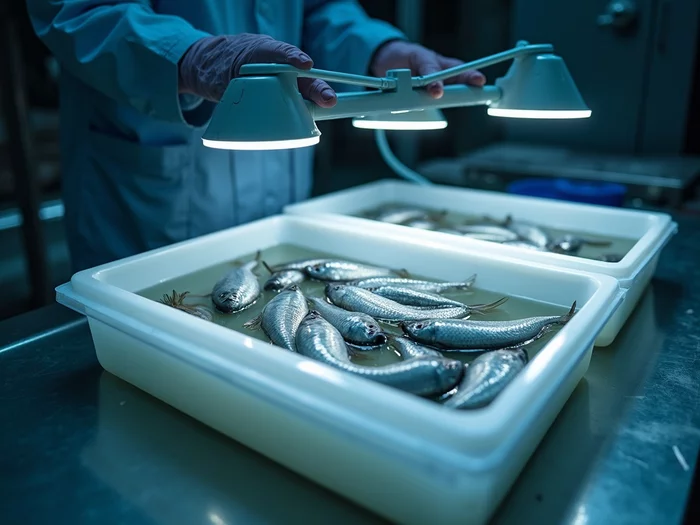
Water management equipment ensures proper conditions throughout the sexing process. Install small aerators or air stones in holding trays to maintain dissolved oxygen levels during extended operations. Keep water thermometers in each tray to monitor temperature consistency with source ponds. Maintain several buckets for fresh water changes and waste water disposal, plus fine-mesh dip nets (2-3mm mesh) for gentle fish handling without damage to fins or scales.
Infrastructure Considerations for Grading
Design your grading facility layout to minimise fish handling and reduce stress throughout the sorting process. Create a linear workflow from incoming fish through examination to final sorted containers, avoiding backtracking that increases handling time and mortality risk. Position examination stations at comfortable working height—typically 80-90cm—to prevent operator fatigue during extended sessions.
Water supply infrastructure must deliver consistent quality and temperature throughout grading operations. Install multiple water inlets to maintain flow in examination trays without creating excessive currents that stress fingerlings. Provide drainage systems that prevent water accumulation whilst allowing easy cleaning between sessions.
Environmental control significantly impacts grading success rates and worker productivity. Provide shade or covered work areas to prevent direct sunlight that creates glare and temperature fluctuations. Ensure adequate ventilation to prevent humid conditions that fog glasses and reduce visibility. In areas with extreme temperatures, consider simple cooling systems such as evaporative coolers or fans to maintain comfortable working conditions that support sustained accuracy throughout long grading sessions.
Conclusion
Mastering manual sexing and grading techniques provides you with powerful tools to transform your tilapia farming operation from basic subsistence to profitable enterprise. The methods outlined in this article—from identifying genital characteristics in 6-8 week fingerlings to implementing systematic grading protocols—represent proven approaches that African farmers are successfully using to increase yields by 30-40% whilst reducing production costs. You now understand the complete process for producing all-male populations without chemicals or expensive technology, using skills and equipment readily available on most farms.
The economic advantages of implementing these techniques extend far beyond simple growth improvements. Your ability to produce uniform, fast-growing fish opens premium market opportunities that can increase revenue by 20-35% compared to mixed-sex harvests. The predictable harvest schedules enable better planning and cash flow management, whilst the elimination of unwanted breeding reduces feed costs and pond management complexity.
Success with manual sexing and grading requires patience, practice, and attention to detail, but the techniques are well within reach of dedicated farmers willing to invest time in developing these skills. Start with small batches to build confidence and accuracy before scaling to your full operation. Remember that even experienced operators continue learning and refining their techniques—the 90-95% accuracy rates achieved by skilled practitioners develop through consistent practice and commitment to quality.
Your journey toward all-male tilapia production represents an investment in your farm's future competitiveness and sustainability. The knowledge and skills you develop through implementing these methods position you to take advantage of growing market demand for high-quality, uniform fish whilst reducing your dependence on external inputs and suppliers. Focus on mastering the identification of genital characteristics in 6-8 week fingerlings, maintain proper water conditions during handling, and establish systematic grading protocols that create uniform growth groups.
Frequently Asked Questions
Why is it so important to produce all-male tilapia populations for my farm?
Producing all-male tilapia is crucial because males grow 30-40% faster and reach market size 2-3 months earlier than females. This eliminates uncontrolled breeding, which diverts energy from growth and causes overcrowding, leading to significantly higher yields and feed conversion efficiency. Uniform-sized male fish also fetch premium market prices.
How can I identify male and female tilapia fingerlings during manual sexing?
You can identify them by examining the genital papilla located behind the anal fin. Male tilapia have a single, prominent, pointed opening, while females display two distinct openings—the anus and a separate, small, round genital pore. Practice and good lighting are key to achieving high accuracy.
When is the best time to perform manual sexing on my tilapia fingerlings?
The best time to perform manual sexing is when fingerlings are 6-8 weeks old and weigh 2-5g, measuring 3-5cm in length. At this stage, their sexual characteristics are developed enough for accurate identification without excessive stress from handling larger fish.
What simple equipment do I need to set up for manual sexing and grading on my farm?
For manual sexing, you'll need shallow, light-coloured examination trays, adjustable bright LED lights, small aerators for holding trays, and fine-mesh dip nets. For grading, construct simple wooden frames with different mesh sizes to create grading boxes, and set up a linear workflow with comfortable working heights.
Should I consider hormone treatment or YY supermale technology instead of manual sexing for my operation?
For small to medium-scale operations (under 50,000 fingerlings annually), manual sexing is recommended due to lower costs, no chemical use, and the development of internal expertise. Consider hormone treatment if scaling beyond 100,000 fingerlings, and evaluate YY technology only after mastering conventional methods and achieving consistent profitability, as it requires substantial investment and technical expertise.


Yomi Adisa Lead Researcher
Yomi Adisa is the lead researcher at Fish Farming Business, where he studies what makes aquaculture ventures profitable across Africa. His research focuses on market patterns, buyer preferences, and the business decisions that determine success or failure in fish farming.