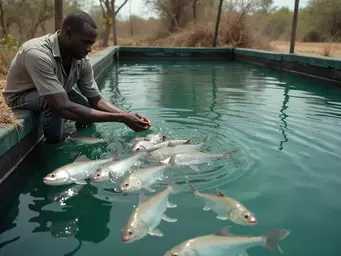
Maximising Natural Food in Tilapia Ponds: Practical Guide to Growing Plankton and Algae for Better Fish Production
Posted on: 2025-10-31
By: Yomi Adisa
Maximising Natural Food in Tilapia Ponds: Practical Guide to Growing Plankton and Algae for Better Fish Production
You've watched your feed costs climb month after month whilst your tilapia growth rates remain disappointingly slow. Despite spending thousands on commercial pellets, your fish seem lethargic, and you're starting to wonder if there's something missing from their diet. Meanwhile, other farmers in your area are achieving faster growth rates with seemingly less commercial feed, and their fish display vibrant colours and robust health that yours lack.
📑 Table of Contents
- Understanding the Role of Natural Food in Tilapia Farming
- Designing the Ideal Tilapia Pond for Natural Food Production
- Pond Preparation for Natural Food Production
- Fertilisation Strategies to Enhance Plankton and Algae Growth
- Monitoring Water Quality for Optimal Natural Food Production
- Cultivating Plankton and Algae
The secret lies in harnessing the power of natural food production within your ponds. When you successfully cultivate plankton and algae, you're creating a living ecosystem that feeds your fish around the clock, provides essential nutrients that commercial feeds often lack, and can reduce your feed costs by 30-40%. Natural foods like phytoplankton and zooplankton contain omega-3 fatty acids, vitamins, and amino acids in forms that tilapia can easily digest and utilise for optimal growth.
More importantly, fish raised on abundant natural food develop better taste, texture, and market appeal, often commanding 15-25% higher premium prices than conventionally raised tilapia. This comprehensive guide provides you with complete technical knowledge for transforming your ponds into productive natural food factories. You'll learn exact pond design specifications that maximise plankton growth, precise fertilisation schedules that maintain optimal water conditions, step-by-step cultivation techniques for both phytoplankton and zooplankton, and monitoring methods that ensure consistent natural food production.
🎯 What You'll Learn
- Discover effective pond design features that optimise natural food production for tilapia, including depth and surface area specifications
- Master fertilisation strategies that enhance plankton growth, utilising both organic and inorganic sources to balance nutrient ratios
- Understand the critical water quality parameters to monitor, ensuring optimal conditions for both plankton and tilapia health
Understanding the Role of Natural Food in Tilapia Farming
Natural food forms the foundation of successful tilapia production, yet many farmers underestimate its potential to transform their operations. When you properly cultivate plankton and algae in your ponds, you're creating a complete ecosystem that works continuously to nourish your fish, reduce production costs, and improve overall farm sustainability. Understanding how to maximise natural food production matters because it directly impacts your bottom line and fish quality.
Importance of Plankton and Algae in Tilapia Diet
Phytoplankton and zooplankton provide tilapia with essential nutrients that commercial feeds struggle to replicate completely. Phytoplankton, the microscopic plants floating in your pond water, contain high levels of omega-3 fatty acids, vitamins A and E, and carotenoids that give tilapia their natural colour and flavour. These single-celled algae also provide easily digestible proteins ranging from 30-50% crude protein content, often exceeding the protein levels in standard commercial feeds.

Zooplankton, the tiny animals that feed on phytoplankton, offer complete amino acid profiles essential for tilapia growth and development. Species like Daphnia, Cyclops, and rotifers contain 45-60% protein and provide natural enzymes that improve fish digestion and nutrient absorption. A farmer in Kisumu discovered that tilapia fed primarily on natural plankton showed 25% faster growth rates compared to fish receiving only commercial pellets, reaching market size of 300-350 grams in just six months rather than eight.
The continuous availability of natural food also supports better feeding behaviour in tilapia. Unlike scheduled commercial feeding, plankton and algae remain available throughout the day and night, allowing fish to graze naturally and maintain steady growth rates. This constant food source reduces stress, improves immune function, and results in higher survival rates, particularly during the critical fingerling stage.
| Nutrient Content | Cost | Growth Rate Impact | Fish Quality |
|---|---|---|---|
| Phytoplankton - 30-50% crude protein | Lower cost | Faster growth rates | Improved taste and colour |
| Zooplankton - 45-60% crude protein | Moderate cost | Significant growth boost | Enhanced immune function |
| Commercial Feed - Varies (e.g., 25-40% protein) | Higher cost | Slower growth rates | Standard quality |
Economic Benefits of Maximising Natural Food
The financial impact of natural food production becomes clear when you examine feed cost reductions across different farm sizes. A 200-square-metre pond producing abundant natural food can reduce commercial feed requirements by 35-45%, translating to monthly savings of 8,000-12,000 naira in Nigeria or 15,000-20,000 shillings in Kenya. Over a complete production cycle, these savings often exceed 100,000 naira or 150,000 shillings per pond.
Beyond direct cost savings, natural food enhances fish quality in ways that command premium prices. Tilapia raised on plankton-rich diets develop better flesh texture, improved taste, and natural colouration that consumers prefer. In markets across Lagos, Nairobi, and Kampala, naturally-fed tilapia sell for 15-25% higher prices than fish raised solely on commercial feeds.
The improved growth rates from natural food also increase your annual production capacity. When tilapia reach market size 4-6 weeks earlier, you can complete additional production cycles per year. This means a pond that typically produces two harvests annually might achieve 2.5 cycles, representing a 25% increase in annual income without expanding pond infrastructure or increasing stocking densities.
Designing the Ideal Tilapia Pond for Natural Food Production
Creating optimal conditions for natural food production requires thoughtful pond design that balances tilapia habitat needs with plankton cultivation requirements. The physical characteristics of your pond directly influence light penetration, nutrient circulation, and the microscopic ecosystems that support abundant natural food growth. Proper design establishes the foundation for sustainable natural food production throughout your farming operation.
Key Pond Design Features
Pond depth plays a crucial role in natural food production, with optimal depths ranging from 1.0-1.5 metres for maximum plankton growth. Shallow areas of 0.8-1.0 metres allow sunlight to penetrate completely, supporting phytoplankton photosynthesis, whilst deeper sections of 1.2-1.5 metres provide refuge areas for fish and prevent complete water mixing. A farmer in Tamale successfully uses ponds with graduated depths: 0.8 metres at one end increasing to 1.4 metres at the opposite end, creating diverse microhabitats that support different plankton species.

Surface area significantly impacts natural food production capacity, with rectangular ponds measuring 20 metres by 10 metres (200 square metres) providing ideal dimensions for small-scale operations. This size allows effective fertiliser distribution, adequate water circulation, and manageable monitoring whilst supporting 1,500-2,000 fingerlings at optimal stocking densities. The length-to-width ratio of 2:1 promotes better water circulation and prevents dead zones where organic matter accumulates without contributing to plankton growth.
Water circulation becomes critical in larger ponds, where gentle movement prevents stratification and ensures nutrients reach all areas. Installing simple bamboo or PVC pipe systems that direct water flow in circular patterns helps distribute fertilisers evenly and prevents algae from settling in corners. Avoid excessive water movement that disrupts delicate plankton communities; gentle circulation that moves the entire water volume once every 2-3 hours provides optimal conditions.
Creating a Fertile Environment for Growth
Soil composition affects natural food production through nutrient release and water chemistry. Clay-loam soils with 20-30% clay content provide ideal conditions, holding nutrients whilst allowing gradual release into pond water. These soils maintain stable pond bottoms and support beneficial bacteria populations that break down organic matter into nutrients usable by phytoplankton.
Bottom preparation involves creating gentle slopes of 2-3% towards the deepest areas to facilitate harvesting and cleaning. Remove all vegetation and debris, then compact the bottom to prevent excessive seepage. Some farmers in the Nile Delta add a 10-15 centimetre layer of aged cow manure mixed with clay before filling, creating a slow-release nutrient base that supports plankton growth for months.
Pond banks should slope at 45-60 degree angles to prevent erosion whilst allowing easy access for maintenance and harvesting. Grass or other vegetation on banks prevents soil erosion during rains whilst providing organic matter that gradually enters the pond ecosystem. Many successful farmers plant napier grass or similar species around pond perimeters, harvesting periodically for livestock feed whilst maintaining bank stability.
Pond Preparation for Natural Food Production
Proper pond preparation establishes the foundation for successful natural food cultivation, requiring systematic steps that create optimal conditions for plankton growth whilst ensuring tilapia health and survival. The preparation process varies slightly based on whether you're working with new construction or renovating existing ponds, but fundamental principles remain consistent. Thorough preparation prevents many common problems that can derail natural food production efforts.
Initial Pond Setup and Maintenance
Begin pond preparation by completely draining and cleaning existing ponds or allowing new construction to cure for 2-3 weeks after completion. Remove all fish, vegetation, and accumulated organic debris, then expose the pond bottom to direct sunlight for 7-10 days. This drying period eliminates harmful bacteria, parasites, and unwanted organisms whilst allowing soil pH to stabilise naturally through oxidation processes.
Lime application follows the drying period, using agricultural lime at rates of 200-300 kilograms per hectare (20-30 grams per square metre) to neutralise acidic soils and provide calcium for plankton shell formation. Spread lime evenly across the pond bottom, then till or rake into the top 10-15 centimetres of soil. Allow the lime to react for 5-7 days before adding water, as fresh lime can harm fish and beneficial microorganisms if applied immediately before filling.
Water filling requires gradual addition over 3-5 days to prevent disturbing bottom sediments and to allow beneficial bacteria colonisation. Fill to 50% capacity initially, then add organic matter like aged chicken manure (50-100 grams per square metre) or compost to kickstart nutrient cycling. Complete filling after organic matter has been distributed, bringing water levels to 80-90% of maximum depth to allow for seasonal variations and feeding activities.

Seasonal Considerations for Pond Readiness
Dry season preparation requires different strategies than wet season management, particularly regarding water levels and nutrient concentration. During dry months, maintain higher water levels (1.3-1.5 metres maximum depth) to compensate for evaporation losses and concentrate nutrients for plankton growth. Increase fertilisation frequency to weekly applications, as reduced water volume means faster nutrient depletion and the need for more frequent replenishment.
Wet season management focuses on preventing nutrient dilution and maintaining stable growing conditions despite variable rainfall. Lower initial water levels to 1.0-1.2 metres allow for rainwater influx without overflow, whilst concentrated nutrient levels support plankton populations even when diluted by rainfall. Install simple overflow systems using PVC pipes positioned 10-15 centimetres below maximum pond capacity to prevent complete washout during heavy rains.
Seasonal stocking adjustments align fish introduction with peak natural food availability. Stock fingerlings 2-3 weeks after initial fertilisation when plankton populations reach visible levels (light green water colour). Avoid stocking during transition periods between seasons when temperature and rainfall patterns create unstable conditions that stress both fish and plankton communities.
| Season | Water Level | Fertilisation Frequency | Special Considerations |
|---|---|---|---|
| Dry Season | 1.3-1.5m maximum | Weekly applications | Compensate for evaporation |
| Wet Season | 1.0-1.2m initial | Concentrated applications | Install overflow systems |
| Cool Season | Standard levels | Reduced frequency | Consider temporary covers |
Fertilisation Strategies to Enhance Plankton and Algae Growth
Effective fertilisation forms the cornerstone of successful natural food production, providing essential nutrients that fuel plankton growth whilst maintaining water quality suitable for tilapia survival. Understanding nutrient requirements, application timing, and fertiliser types enables you to create productive aquatic ecosystems that consistently support fish growth throughout production cycles. Proper fertilisation balances nutrient supply with environmental conditions to maximise plankton productivity.
Types of Fertilisers: Organic vs. Inorganic
Organic fertilisers provide slow-release nutrients whilst improving overall pond ecology through beneficial bacteria development and long-term soil fertility enhancement. Aged chicken manure offers the highest nutrient density among readily available organic options, containing 3-4% nitrogen, 2-3% phosphorus, and essential trace elements. Apply at 100-150 grams per square metre monthly, ensuring complete decomposition before application by aging manure for at least 30 days in covered piles.
Cow manure provides gentler nutrient release suitable for newly established ponds or when maintaining stable plankton populations. Fresh cow manure contains 1.5-2% nitrogen and 0.8-1.2% phosphorus, requiring application rates of 200-250 grams per square metre every 2-3 weeks. A farmer in Mbarara successfully uses cow manure from his dairy operation, composting it with grass clippings for 45 days before pond application, resulting in steady plankton growth without water quality problems.
Inorganic fertilisers provide precise nutrient control and rapid plankton response but require more frequent applications and careful monitoring to prevent nutrient imbalances. Diammonium phosphate (DAP) supplies both nitrogen and phosphorus in readily available forms, applied at 10-15 grams per square metre weekly. Triple superphosphate addresses phosphorus deficiencies common in many African soils, particularly important during initial pond establishment.

Application Techniques and Timing
Morning application between 6:00-8:00 AM provides optimal conditions for nutrient uptake and plankton response. Cool morning temperatures reduce ammonia volatilisation from organic fertilisers, whilst increasing daylight hours allow immediate phytoplankton utilisation of available nutrients. Avoid afternoon applications during hot weather when high temperatures can cause rapid organic matter decomposition and oxygen depletion.
Distribution methods significantly impact fertiliser effectiveness and water quality maintenance. For organic fertilisers, create a slurry by mixing with pond water in a 1:3 ratio, then broadcast evenly across the pond surface using a watering can or similar container. This pre-mixing prevents concentrated deposits that can create anaerobic zones and ensures rapid nutrient availability throughout the water column.
Weekly monitoring guides application timing based on water colour and plankton density rather than rigid schedules. Optimal water colour ranges from light green to yellow-green, indicating healthy phytoplankton populations. Clear water suggests insufficient nutrients requiring increased fertilisation, whilst dark green or brown water indicates excessive nutrients and potential oxygen depletion problems requiring reduced applications or temporary cessation.
| Fertiliser Type | Nutrient Content | Application Rate | Frequency |
|---|---|---|---|
| Aged Chicken Manure | 3-4% N | 100-150 g/m² | Monthly |
| Cow Manure | 1.5-2% N | 200-250 g/m² | Every 2-3 weeks |
| Pig Manure | High N | 75-100 g/m² | Monthly (well-aged) |
| Diammonium Phosphate (DAP) | N & P | 10-15 g/m² | Weekly |
Monitoring Water Quality for Optimal Natural Food Production
Consistent water quality monitoring ensures your natural food production efforts create healthy conditions for both plankton growth and tilapia survival. Understanding key parameters, measurement techniques, and response strategies enables you to maintain productive pond ecosystems whilst preventing problems that could harm fish or reduce plankton populations. Regular monitoring allows you to make timely adjustments that optimise natural food production throughout your farming cycle.
Key Water Quality Parameters
pH levels directly affect nutrient availability and plankton reproduction, with optimal ranges between 6.8-8.5 for maximum productivity. Morning pH readings typically measure 0.2-0.5 units lower than afternoon readings due to photosynthesis and respiration cycles, so establish consistent testing times to track trends accurately. pH below 6.5 indicates excessive organic matter decomposition requiring reduced fertilisation, whilst pH above 8.8 suggests algae blooms consuming carbon dioxide faster than respiration replaces it.
Dissolved oxygen concentrations determine both fish survival and plankton community composition, requiring careful balance between production and consumption. Maintain dissolved oxygen above 5 milligrams per litre at all times, with optimal levels ranging from 6-8 milligrams per litre during daylight hours. Early morning readings provide the most critical measurements, as overnight respiration by fish, plankton, and bacteria reduces oxygen to daily minimums between 5:00-6:00 AM.
Ammonia levels indicate organic matter decomposition rates and potential toxicity to fish, with total ammonia concentrations below 0.5 milligrams per litre ensuring fish health. Temperature affects all biological processes in pond ecosystems, with optimal ranges of 26-30°C supporting maximum tilapia growth and plankton reproduction. Monitor temperatures at multiple depths, as stratification can create oxygen-depleted bottom layers harmful to fish health.
Tools and Techniques for Monitoring
Digital pH metres provide accurate readings essential for managing natural food production, with waterproof models costing 15,000-25,000 naira in Nigeria or 20,000-35,000 shillings in Kenya offering long-term reliability. Calibrate metres weekly using standard buffer solutions (pH 7.0 and pH 10.0) to maintain accuracy, storing electrodes in proper solution between uses to prevent damage and drift. Test strip kits offer affordable alternatives for basic parameter monitoring, measuring pH, ammonia, nitrite, and hardness simultaneously.

Dissolved oxygen test kits using chemical titration provide accurate measurements critical for preventing fish kills and optimising plankton growth. Digital oxygen metres cost 40,000-60,000 naira but provide instant readings and long-term cost savings for larger operations. Simple visual indicators supplement instrument measurements and provide immediate pond condition assessments.
Water colour indicates plankton density: clear water suggests insufficient nutrients, light green indicates optimal conditions, dark green warns of potential problems, and brown or red water signals serious imbalances requiring immediate attention. Fish behaviour observations reveal water quality problems before instruments detect changes: gasping at surface indicates low oxygen, reduced feeding suggests ammonia stress, and erratic swimming patterns warn of pH or temperature problems.
| Parameter | Optimal Range | Measurement Technique | Impact on Fish |
|---|---|---|---|
| pH | 6.8-8.5 | pH meter/test strips | Affects nutrient availability |
| Dissolved Oxygen | 6-8 mg/L | Digital oxygen meter | Crucial for fish survival |
| Ammonia | <0.5 mg/L | Ammonia test kit | Toxicity affects fish health |
| Temperature | 26-30°C | Thermometer | Influences growth rates |
Cultivating Plankton and Algae
Successful plankton cultivation requires understanding the different organisms that comprise natural fish food and implementing specific techniques that encourage their growth whilst maintaining ecological balance. Mastering both phytoplankton and zooplankton production creates complete food webs that support optimal tilapia growth throughout production cycles. Effective cultivation techniques transform your pond into a self-sustaining food production system.
Techniques for Growing Phytoplankton
Phytoplankton cultivation begins with establishing optimal nutrient ratios that support diverse algae communities rather than single-species dominance. The ideal nitrogen to phosphorus ratio ranges from 10:1 to 16:1, achieved through balanced fertilisation strategies combining organic and inorganic sources. Monitor this ratio by observing water colour changes: balanced nutrition produces light green water, whilst excessive nitrogen creates blue-green algae blooms that fish avoid and can produce toxins.
Chlorella species respond well to controlled fertilisation programmes, producing dense populations that tilapia readily consume. Encourage Chlorella growth by maintaining water temperatures between 25-30°C and providing adequate sunlight exposure for 6-8 hours daily. These algae multiply rapidly under optimal conditions, doubling their population every 12-24 hours and providing continuous food availability for your fish.
Light management becomes crucial for sustained phytoplankton production, requiring balance between adequate illumination and preventing excessive algae blooms. Position ponds to receive morning sunlight whilst providing partial afternoon shade during hot seasons. This lighting pattern promotes steady phytoplankton growth without creating temperature stress or oxygen depletion problems that harm both algae and fish populations.
Maximising natural food production in your tilapia ponds represents one of the most effective ways to reduce feed costs whilst improving fish quality and growth rates. By implementing proper pond design, systematic fertilisation programmes, and consistent water quality monitoring, you can create productive ecosystems that feed your fish around the clock. Remember the fundamentals: maintain water depths of 1.0-1.5 metres for optimal light penetration, apply organic fertilisers at 100-150 grams per square metre monthly, and monitor water colour to guide your fertilisation timing.
Success with natural food cultivation doesn't happen overnight—it requires patience, observation, and willingness to adjust your approach based on seasonal conditions and pond responses. You now have the technical knowledge to transform your ponds into living food factories, but developing the practical skills takes time and hands-on experience. Trust the process, keep detailed records of what works in your specific conditions, and don't be discouraged if your first attempts don't achieve perfect results immediately.
Your investment in mastering natural food production will pay dividends throughout your tilapia farming journey. As your plankton cultivation skills develop, you'll find yourself spending less on commercial feeds whilst achieving better growth rates and higher-quality fish that command premium prices. Next, consider exploring advanced pond management techniques like polyculture systems or integrated farming approaches that can further enhance your natural food production and overall farm profitability.
Frequently Asked Questions
What's the ideal pond depth to maximise natural food for my tilapia?
For optimal plankton growth, your pond should have depths ranging from 1.0-1.5 metres. Shallower areas (0.8-1.0m) maximise sunlight penetration for phytoplankton, while deeper sections (1.2-1.5m) offer fish refuge and prevent complete water mixing. Graduated depths, like 0.8m increasing to 1.4m, create diverse microhabitats that support various plankton species.
How can I tell if my pond has enough natural food, or if I need to adjust my fertilisation?
You can use simple visual indicators like water colour. Optimal water colour for healthy phytoplankton populations ranges from light green to yellow-green. Clear water suggests insufficient nutrients, requiring increased fertilisation, whilst dark green or brown water indicates excessive nutrients and potential oxygen depletion, meaning you should reduce applications.
Why are natural foods like plankton better for my tilapia than just commercial pellets?
Natural foods provide essential nutrients like omega-3 fatty acids, vitamins A and E, and carotenoids that commercial feeds often lack, leading to better-tasting fish with improved texture and colour. Zooplankton also offer complete amino acid profiles and natural enzymes that aid digestion, resulting in 25% faster growth rates and higher market prices.
When should I apply fertilisers to get the best plankton growth in my pond?
For optimal nutrient uptake and plankton response, you should apply fertilisers in the morning between 6:00-8:00 AM. This timing takes advantage of cooler temperatures, which reduce ammonia volatilisation, and increasing daylight hours for immediate phytoplankton utilisation of nutrients. Avoid afternoon applications during hot weather to prevent rapid organic matter decomposition and oxygen depletion.
Can I use fresh manure directly from my animals to fertilise my tilapia pond?
It's best to use well-aged or composted manure rather than fresh. For chicken manure, age it for at least 30 days, and for pig manure, compost it for 60+ days, to ensure complete decomposition before application. Fresh manure can cause rapid decomposition, leading to ammonia spikes and oxygen depletion that harm your fish.


Yomi Adisa Lead Researcher
Yomi Adisa is the lead researcher at Fish Farming Business, where he studies what makes aquaculture ventures profitable across Africa. His research focuses on market patterns, buyer preferences, and the business decisions that determine success or failure in fish farming.