Early Disease Detection in Tilapia: Identifying Visual Signs and Behaviour Changes on the Farm
Posted on: 2025-10-22
By: Yomi Adisa
Early Disease Detection in Tilapia: Identifying Visual Signs and Behaviour Changes on the Farm
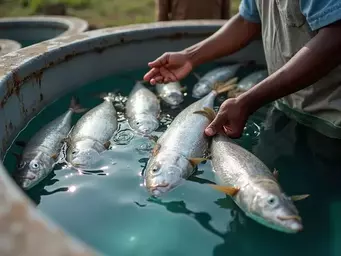
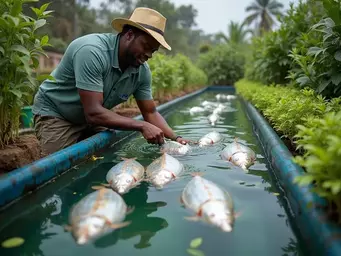
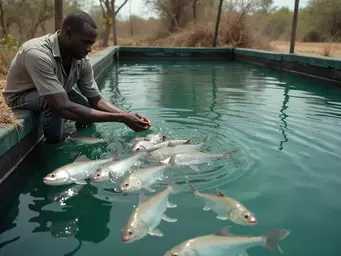
You walk to your pond at dawn, expecting to see the usual gentle ripples as your tilapia move through the water. Instead, you find three fish floating belly-up near the aerator, their eyes cloudy and fins frayed. By evening, five more have died, and the survivors huddle motionless in the corner, refusing their usual enthusiastic response to feeding time.
📑 Table of Contents
This scenario unfolds on tilapia farms across Africa every week, often escalating from a few sick fish to devastating losses within days. Yet most of these disasters begin with subtle warning signs that appear weeks before the first fish dies—if you know what to look for. The difference between catching disease early and losing your entire stock often comes down to recognising behavioural changes like altered swimming patterns, reduced feeding response, or unusual grouping behaviours that signal trouble long before obvious symptoms appear.
Disease outbreaks can wipe out months of careful management and investment in a matter of days. When you can spot the earliest signs—from slight changes in skin colour to modified schooling behaviour—you gain precious time to intervene, treat problems, and save your stock. Early detection isn't just about preventing fish deaths; it's about protecting your entire farming operation from financial disaster.
This comprehensive guide provides you with the complete technical knowledge to identify the earliest visual signs and behavioural changes that signal disease in your tilapia. You'll learn to recognise subtle indicators that appear days or weeks before fish begin dying, master the visual inspection techniques that work in field conditions, understand when to escalate to professional diagnosis, and implement practical daily monitoring systems that catch problems before they become catastrophic.
🎯 What You'll Learn
- Learn to identify early visual signs and behavioural changes in tilapia that indicate potential disease outbreaks
- Master systematic monitoring techniques for daily health checks to ensure proactive disease management on your farm
- Understand the importance of environmental monitoring and its direct impact on fish health and disease prevention strategies
Picture this: You arrive at your tilapia pond in Kampala one morning to find dozens of fish floating belly-up, their once-vibrant silver scales now dull and lifeless. The surviving fish huddle in one corner, refusing to feed despite your usual morning routine. What started as a thriving 200-fish operation worth 800,000 shillings has suddenly become a potential total loss.
This comprehensive guide provides you with the complete technical knowledge needed to identify the earliest visual signs and behavioural changes that signal disease in your tilapia stock. You'll learn to recognise the subtle indicators that appear days or even weeks before fish begin dying, giving you crucial time to intervene and save your investment. From the initial stress responses that manifest as altered swimming patterns to the clinical signs like skin discolouration and eye cloudiness, you'll master the art of reading your fish like an experienced veterinarian.
Early disease detection isn't just about preventing fish deaths – it's about protecting your entire farming operation. A single undetected outbreak can devastate months of careful feeding, water management, and growth monitoring. When you can spot problems early, you maintain higher survival rates, reduce treatment costs, preserve your breeding stock, and ensure consistent harvests that keep your business profitable.
Common Diseases in Tilapia
Understanding the major disease categories affecting tilapia helps you recognise patterns and respond appropriately when symptoms appear. Tilapia face three primary disease threats: viral infections that spread rapidly through populations, bacterial infections that often follow stress or injury, and parasitic infestations that weaken fish over time. Each category produces distinct visual signs and behavioural changes, though some symptoms overlap, making accurate identification crucial for effective treatment.
Viral Diseases
Tilapia Lake Virus (TiLV) represents the most significant viral threat to your farm, causing mass mortality rates of 10-90% within affected populations. This virus primarily affects Nile tilapia, the species most commonly farmed across Kenya, Uganda, Tanzania, and Nigeria. Fish infected with TiLV initially show subtle behavioural changes – they become lethargic, gather near water inlets where oxygen levels are higher, and exhibit reduced appetite during feeding times.
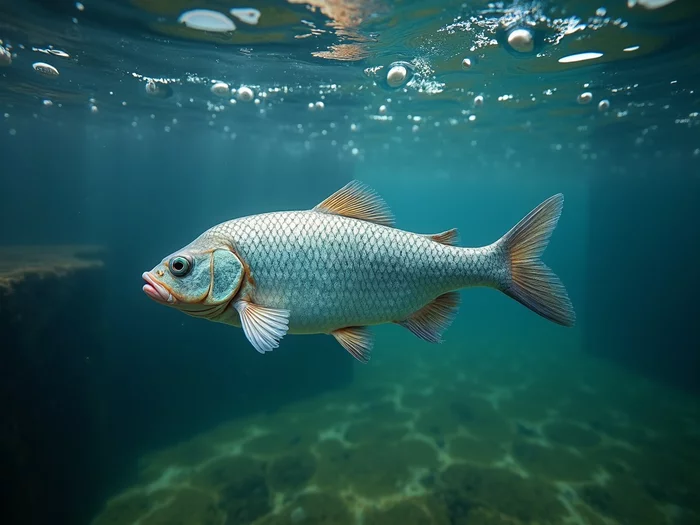
Visual symptoms of viral infections develop progressively over 7-14 days. Early signs include skin darkening, particularly around the head and dorsal area, giving fish a mottled appearance. Eye cloudiness (corneal opacity) often appears within the first week, starting as a slight haziness and progressing to complete opacity.
The most distinctive behavioural indicator of viral infection is the development of abnormal swimming patterns. Infected fish often swim in tight circles, lose their ability to maintain proper buoyancy, or exhibit erratic darting movements followed by periods of listlessness. Unlike bacterial infections that typically affect individual fish, viral diseases spread rapidly through your entire stock, with new cases appearing daily once the outbreak begins.
Bacterial Infections
Streptococcus agalactiae stands as the most common bacterial pathogen affecting tilapia farms across Africa, particularly in intensive systems with high stocking densities. This bacterium typically enters through wounds, gill damage, or during periods of environmental stress when fish immunity is compromised. Bacterial infections often follow handling stress, poor water quality, or overcrowding situations.
The visual progression of bacterial infections differs markedly from viral diseases. Affected fish develop distinctive eye protrusion (exophthalmia), where one or both eyes bulge outward from their sockets. This symptom appears within 3-5 days of infection and serves as a reliable early indicator.
Behavioural changes associated with bacterial infections include increased surface breathing, loss of schooling behaviour, and reduced response to feeding. Unlike the erratic swimming seen in viral infections, bacterially infected fish typically become sluggish and separate from healthy groups. They often position themselves near aerators or water inlets, indicating respiratory distress as the bacteria affect gill function.
Parasitic Infections
External parasites like Ichthyophthirius (white spot disease) and Trichodina commonly affect tilapia in both earthen ponds and concrete tanks across African farming systems. These parasites multiply rapidly in warm water temperatures (above 25°C), making them particularly problematic during hot seasons. Parasitic infections typically develop slowly, making early detection challenging but crucial for preventing severe infestations.
The earliest visual sign of parasitic infection is increased mucus production, giving fish a slimy appearance and causing their natural colours to appear dulled. Small white spots may appear on fins and body surfaces, starting with just a few scattered spots and multiplying rapidly if left untreated. Gill parasites cause visible gill flaring and increased breathing rates as fish struggle to extract oxygen from water.
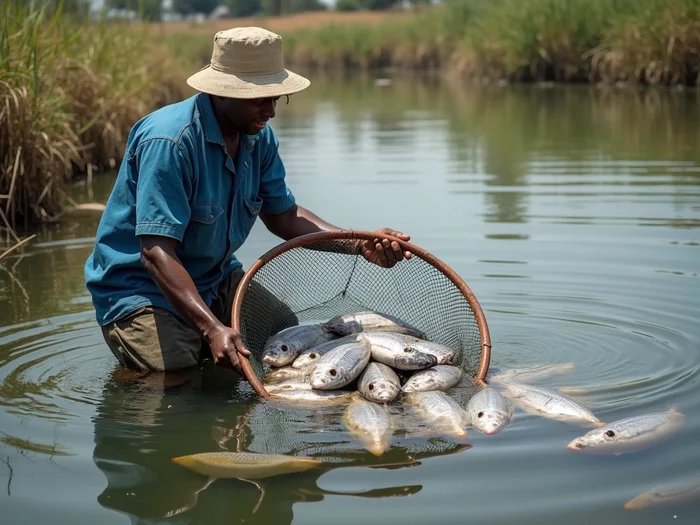
Parasitised fish exhibit characteristic scratching behaviour, rubbing against pond sides, aerators, or any available surfaces in attempts to dislodge irritating parasites. This behaviour, combined with reduced feeding activity and increased surface swimming, provides clear early warning signs. Severely affected fish may also display clamped fins, holding their fins close to their bodies rather than spreading them naturally during swimming.
| Disease Type | Visual Symptoms | Behavioural Changes | Treatment Options |
|---|---|---|---|
| Viral Diseases: TiLV | Skin darkening, eye cloudiness | Lethargy, abnormal swimming patterns | Supportive care, biosecurity measures |
| Bacterial Infections: Streptococcus agalactiae | Eye protrusion, skin ulcerations | Increased surface breathing | Antibiotic treatment |
| Parasitic Infections: Ichthyophthirius | Increased mucus, white spots | Scratching behaviour | Antiparasitic treatment |
Signs of Disease
Recognising disease signs requires systematic observation combining visual inspection with behavioural monitoring. Disease symptoms rarely appear suddenly – they develop progressively over days or weeks, giving observant farmers multiple opportunities for early intervention. Understanding both obvious clinical signs and subtle behavioural changes enables you to detect problems before they become critical, potentially saving your entire stock from devastating losses.
Clinical Signs to Monitor
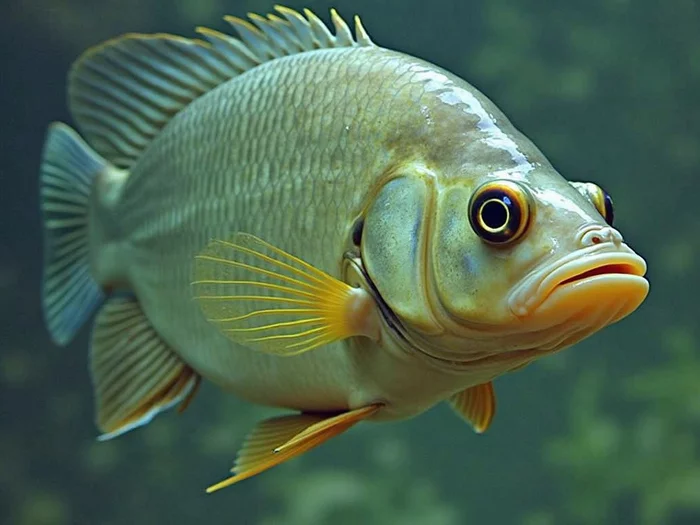
External examination reveals the most obvious disease indicators, starting with skin condition changes that appear before fish show severe illness. Healthy tilapia display consistent silver-grey colouration with clear, bright eyes and intact fins. Disease disrupts this normal appearance through various mechanisms, creating visual clues you can spot during routine pond inspections.
Skin discolouration serves as one of the earliest visual indicators of fish stress or disease. Affected fish may develop darker patches, particularly around the head and dorsal regions, or show unusual pale areas where normal pigmentation disappears. Haemorrhages appear as red streaks or spots under the skin, most commonly visible along the belly, fin bases, and around the eyes.
Fin condition provides another reliable health indicator that changes noticeably during disease development. Healthy fins appear intact with smooth edges and natural transparency. Diseased fish develop frayed, rotting fin edges (fin rot), white cotton-like growths (fungal infections), or clamped fins held close to the body.
Behavioural Changes Indicative of Stress
Swimming behaviour changes provide some of the earliest disease indicators, often appearing days before visible clinical signs develop. Healthy tilapia swim actively throughout the water column, maintain proper buoyancy, and respond quickly to feeding or disturbances. Disease disrupts these normal behaviours in predictable patterns that alert farmers to developing problems.
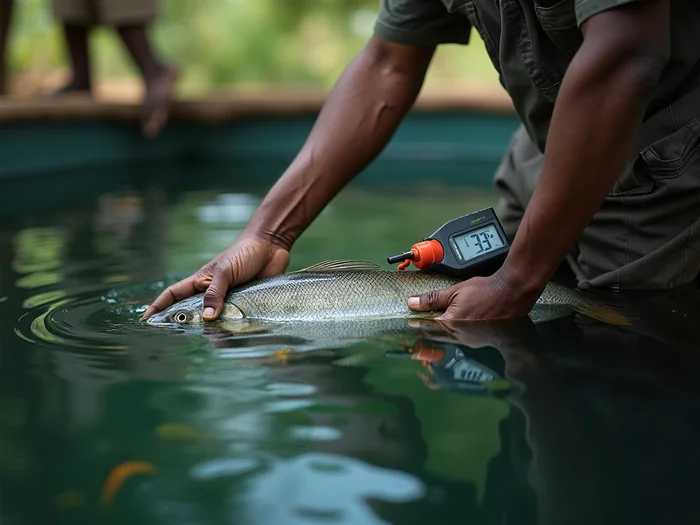
Erratic swimming patterns signal neurological effects or severe physiological stress. Affected fish may swim in circles, lose their ability to maintain proper orientation, or exhibit jerky, uncontrolled movements. Some fish develop difficulty maintaining their position in the water column, either sinking to the bottom or floating uncontrollably at the surface.
Schooling behaviour disruption provides another early warning sign, as sick fish typically separate from healthy groups. Tilapia naturally form loose schools during feeding and when threatened, but diseased individuals often isolate themselves in corners or along pond edges. This separation behaviour helps prevent disease transmission but also makes affected fish easier to identify during routine inspections.
Environmental Indicators
Environmental stressors create conditions that predispose fish to disease while also producing visible effects that mimic disease symptoms. Poor water quality weakens fish immunity and creates ideal conditions for pathogen multiplication, making environmental monitoring essential for disease prevention. Understanding how environmental problems affect fish appearance and behaviour helps distinguish between primary environmental stress and secondary disease development.
Ammonia toxicity produces distinctive signs including increased surface breathing, gill inflammation visible as red or swollen gill covers, and behavioural changes like increased activity followed by lethargy. Fish affected by ammonia stress often gather near water inlets or aerators, seeking areas with better water quality. Chronic ammonia exposure causes gill damage that appears as brown or black gill filaments visible when gill covers are lifted.
Low dissolved oxygen creates immediately recognisable symptoms as fish concentrate at the water surface, displaying rapid gill movements and gasping behaviour. This "piping" behaviour typically occurs during early morning hours when oxygen levels reach their lowest point. Severely oxygen-stressed fish may hang vertically in the water with their heads at the surface, a behaviour called "head-up" positioning.
| Clinical Signs | Behavioural Changes | Recommended Action |
|---|---|---|
| Skin discolouration | Erratic swimming | Increase monitoring, consider diagnostics. |
| Eye cloudiness | Separation from school | Initiate treatment, consult veterinarian if severe. |
| Increased mucus | Scratching behaviour | Treat for parasites, improve water quality. |
Diagnostic Methods for Early Detection
Effective disease detection combines multiple diagnostic approaches, from simple visual observation techniques you can perform daily to sophisticated laboratory methods used when problems become severe. Early detection relies primarily on your observational skills and systematic monitoring protocols, while advanced diagnostics help confirm specific pathogens and guide treatment decisions. Understanding when and how to use each diagnostic method ensures you catch problems early while avoiding unnecessary expenses.
Visual Observation Techniques
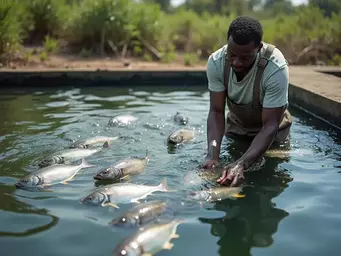
Daily visual health checks form the foundation of effective disease detection, requiring systematic examination of both individual fish and group behaviour patterns. Establish a routine inspection schedule that covers all areas of your farming system, examining fish during different times of day to capture varying behaviour patterns. Morning inspections before feeding reveal natural swimming and schooling behaviours, while afternoon checks show feeding responses and activity levels.
Begin each inspection by observing overall group behaviour from a distance before approaching closely. Healthy tilapia distribute evenly throughout available space, show active swimming patterns, and respond immediately to your presence by either approaching (if accustomed to feeding) or moving away quickly. Note any fish that remain separate from groups, show unusual positioning, or fail to respond to disturbances.

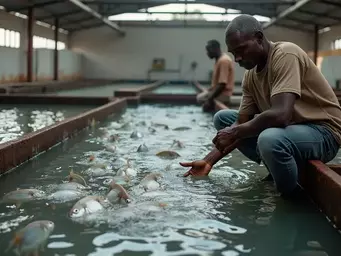
Conduct close visual examinations by netting a representative sample of 10-15 fish weekly, handling them gently to minimise stress while checking for clinical signs. Examine skin condition, fin integrity, eye clarity, and gill colour systematically on each fish. Healthy gills appear bright red, while pale, dark, or swollen gills indicate problems.
Molecular Diagnostic Techniques
Laboratory diagnostics become necessary when visual observation suggests disease but specific pathogen identification is required for effective treatment. Polymerase Chain Reaction (PCR) testing provides accurate identification of viral pathogens like TiLV, while bacterial culture and sensitivity testing guides antibiotic selection for bacterial infections. These techniques require professional laboratory services but provide definitive diagnoses worth the investment during serious outbreaks.
Histopathological examination involves microscopic analysis of tissue samples to identify disease-causing organisms and assess organ damage. This technique proves particularly valuable for diagnosing internal parasites, viral infections, and chronic diseases that don't produce obvious external signs. Veterinary laboratories in major cities like Lagos, Nairobi, and Johannesburg offer these services, typically costing 2,000-5,000 naira or equivalent local currency per sample.
Sample collection for laboratory diagnosis requires proper technique to ensure accurate results. Collect samples from both sick and apparently healthy fish to establish baseline comparisons. For bacterial culture, swab lesions or internal organs using sterile technique, placing samples in appropriate transport media.
Emerging Technologies
Modern diagnostic tools increasingly offer practical applications for tilapia farmers, though costs and technical requirements currently limit widespread adoption. Biosensors capable of detecting specific pathogens in pond water show promise for early disease detection, potentially identifying problems before clinical signs appear. These devices, when they become commercially available and affordable, could revolutionise disease management on African farms.
Artificial intelligence-based behaviour analysis systems use underwater cameras and computer algorithms to identify abnormal swimming patterns indicative of disease or stress. While currently expensive and requiring stable electricity, these systems may become practical for larger commercial operations as technology costs decrease. Early versions focus on detecting changes in swimming speed, schooling behaviour, and feeding activity.
Water quality monitoring sensors provide real-time data on parameters affecting fish health, including dissolved oxygen, pH, temperature, and ammonia levels. Smartphone-connected devices allow remote monitoring and can send alerts when parameters exceed safe ranges. Costs range from 50,000-200,000 naira for basic systems, making them practical for medium to large-scale operations.
| Method | Description | When to Use |
|---|---|---|
| Visual Observation | Daily checks for clinical signs and behaviour | Regular monitoring |
| Molecular Diagnostics | Laboratory tests for specific pathogens | When visual signs are ambiguous |
| Environmental Testing | Water quality analysis | Routine checks to prevent stress |
Practical Monitoring Techniques on Farms
Implementing systematic monitoring protocols transforms disease detection from reactive crisis management into proactive health maintenance. Effective monitoring requires consistent daily observations, accurate record-keeping, and clear protocols for escalating concerns to professional veterinary services. These techniques work within typical African farming constraints, using readily available tools and methods that don't require expensive equipment or extensive technical training.
Daily Behavioural Monitoring Protocols
Establish morning and evening observation routines that capture fish behaviour during their most active periods. Begin morning inspections 30 minutes before sunrise when dissolved oxygen levels are lowest and fish behaviour most clearly reflects their health status. Healthy fish should be swimming actively throughout the water column, while stressed or diseased individuals often concentrate near aerators or water inlets seeking better conditions.
Document your observations using a simple logbook system recording date, time, weather conditions, water temperature, and general fish behaviour. Note any unusual swimming patterns, changes in schooling behaviour, or individual fish showing signs of distress. Record feeding responses during meal times, including appetite levels, competition intensity, and any fish failing to participate in feeding activity.
Create a numerical scoring system for quick daily assessment: score overall activity level from 1-5 (1 = very sluggish, 5 = very active), feeding response from 1-5 (1 = no interest, 5 = aggressive feeding), and general appearance from 1-5 (1 = many visible problems, 5 = excellent condition). This system helps identify trends over time and provides objective measures for comparing different periods.
Environmental Parameter Monitoring
Monitor water quality parameters daily using affordable test kits available from aquaculture suppliers in major cities. Essential parameters include dissolved oxygen (maintain above 5mg/L), pH (keep between 6.5-8.5), temperature (optimal 26-30°C for tilapia), ammonia (below 0.5ppm), and nitrite (below 0.1ppm). Test at consistent times, preferably early morning when oxygen levels are lowest and other parameters most variable.
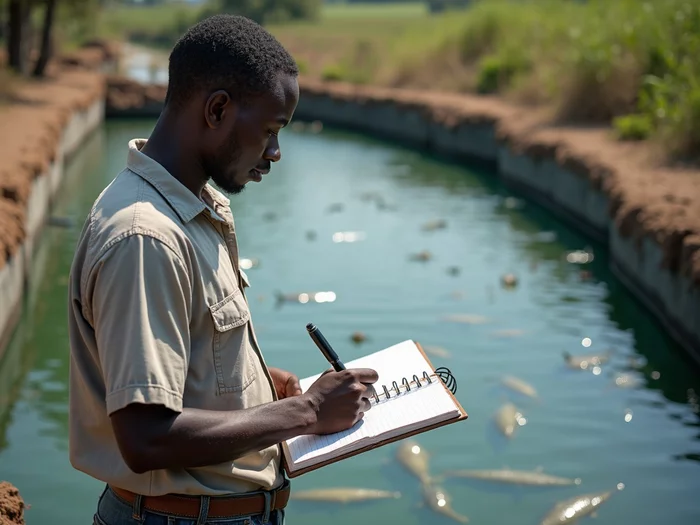
Record water quality measurements in the same logbook used for behavioural observations, creating a comprehensive health monitoring system. Note relationships between parameter changes and fish behaviour, as these correlations help predict problems before they become severe. For example, rising ammonia levels often precede increased surface breathing and reduced feeding activity.
Use simple, reliable test methods appropriate for field conditions. Digital pH metres provide accurate readings but require calibration and battery maintenance. Liquid reagent test kits, while less precise, work reliably without power requirements and cost 1,000-3,000 naira for basic parameter testing.
| Parameter | Optimal Range | Effects of Deviations |
|---|---|---|
| Dissolved Oxygen | 5-8 mg/L | Low levels cause stress and increased mortality. |
| pH | 6.5-8.5 | Low/high levels can lead to disease susceptibility and gill damage. |
| Temperature | 26-30°C | High temperatures cause stress; low temperatures increase disease risk. |
| Ammonia | <0.5 ppm | High levels lead to respiratory distress and increased mortality. |
When to Escalate to Lab Diagnosis
Seek professional veterinary assistance when mortality rates exceed 2-3% weekly, when multiple fish show similar clinical signs, or when initial treatment attempts fail to improve conditions. Early professional intervention often prevents minor problems from becoming major disasters, making consultation fees worthwhile investments in farm protection. Document all relevant information before contacting veterinary services: recent mortality numbers, clinical signs observed, behavioural changes noted, water quality measurements, recent management changes, and any treatments already attempted.
Establish relationships with aquaculture veterinarians or extension officers in your area before problems occur. Identify available services, consultation fees, and sample submission procedures for laboratory testing. Many government extension services provide free or low-cost diagnostic assistance, while private veterinary clinics offer faster service at higher costs.
Consider group consultation arrangements with neighbouring farmers to share veterinary costs and expertise. Veterinarians often provide more cost-effective services when examining multiple farms during single trips, and shared experiences help all participants learn from each other's challenges and successes. Maintain emergency contact information for veterinary services, including phone numbers, addresses, and hours of operation.
Preventative Measures and Farm Management
Prevention remains far more effective and economical than treating established diseases, requiring proactive management strategies that maintain optimal conditions for fish health while minimising pathogen exposure and multiplication. Successful prevention integrates proper biosecurity measures, environmental management, nutrition optimisation, and regular health monitoring into comprehensive farm management systems. These preventative approaches work within typical African farming constraints while providing maximum protection for your investment.
Best Practices for Disease Prevention
Implement strict biosecurity protocols to prevent pathogen introduction from external sources. Quarantine all new fish for 14-21 days in separate facilities before introducing them to your main production system, observing them daily for signs of disease during this period. Source fingerlings only from reputable suppliers with health certification, avoiding fish from unknown sources or areas with recent disease outbreaks.
Disinfect all equipment, nets, and containers that move between different ponds or farms using appropriate disinfectants like potassium permanganate or bleach solutions. Maintain separate equipment for each pond when possible, and always clean and disinfect tools after handling sick fish. Restrict visitor access to your farm, and require anyone entering production areas to disinfect footwear and hands.
Control stocking densities to prevent overcrowding stress that weakens fish immunity and facilitates disease transmission. Maintain appropriate fish-to-water ratios based on your pond size, aeration capacity, and management intensity. Monitor growth rates regularly and adjust feeding schedules to prevent competition stress that can trigger disease outbreaks.
| Practice | Implementation | Benefits |
|---|---|---|
| Biosecurity Protocols | Quarantine new fish, disinfect equipment | Prevents pathogen introduction |
| Water Quality Management | Regular testing and maintenance | Maintains fish immunity |
| Proper Nutrition | Quality feed, appropriate feeding rates | Strengthens disease resistance |
Mastering early disease detection puts you firmly in control of your tilapia farming success. By conducting daily visual inspections, monitoring fish behaviour during feeding times, and maintaining simple records of what you observe, you can catch problems days or weeks before they become devastating outbreaks. Remember the key warning signs: changes in swimming patterns, reduced feeding response, skin discolouration, and any fish separating from the group.
You now possess the knowledge that separates successful tilapia farmers from those who struggle with recurring losses. Start with consistent morning observations—even five minutes of focused watching can reveal critical changes in your fish. Trust what you see, document what concerns you, and don't hesitate to seek professional help when multiple fish show similar symptoms.
This diagnostic knowledge forms the foundation of profitable tilapia production, but it works best when combined with proper prevention strategies. Focus next on implementing the biosecurity measures and water quality management protocols that prevent diseases from taking hold in the first place. When you can both prevent problems and catch them early, you'll have built a resilient farming operation that consistently delivers healthy fish and reliable income for your family.
Frequently Asked Questions
What are the absolute earliest signs I should look for to detect disease in my tilapia, even before fish start dying?
The earliest signs are often subtle behavioural changes. Look for reduced feeding activity, fish separating from the main group, unusual lethargy or hyperactivity, and altered swimming patterns like circling or difficulty maintaining buoyancy, as these can appear days or weeks before mortalities.
How can I tell the difference between a viral, bacterial, or parasitic infection just by looking at my fish?
Viral infections like TiLV often cause lethargy, skin darkening, eye cloudiness, and erratic swimming. Bacterial infections, such as Streptococcus, typically lead to bulging eyes (exophthalmia) and open skin ulcers. Parasitic infections usually manifest as increased mucus, white spots on the body, and fish scratching against surfaces.
Why is it important to monitor water quality daily, even if my fish look healthy?
Poor water quality, like high ammonia or low dissolved oxygen, significantly weakens your fish's immune system, making them highly susceptible to diseases. By monitoring daily, you can correct these environmental stressors before they compromise fish health and trigger an outbreak.
When should I consider sending samples to a laboratory for diagnosis instead of just trying to treat the fish myself?
You should consider laboratory diagnosis if mortality rates exceed 2-3% weekly, if multiple fish show similar clinical signs, or if your initial treatment attempts fail to improve conditions. Lab tests like PCR or bacterial culture provide definitive diagnoses, guiding you to the most effective treatment.
What simple, cost-effective tools can I use on my farm for daily disease monitoring?
You can use a simple logbook to record daily observations of fish behaviour, feeding responses, and water temperature. Affordable liquid reagent test kits are excellent for monitoring essential water quality parameters like pH, dissolved oxygen, and ammonia without needing electricity. Your mobile phone can also be used to photograph or video unusual behaviours for documentation.


Yomi Adisa Lead Researcher
Yomi Adisa is the lead researcher at Fish Farming Business, where he studies what makes aquaculture ventures profitable across Africa. His research focuses on market patterns, buyer preferences, and the business decisions that determine success or failure in fish farming.